

The Trilateral Sulu Sea Air Patrols and the Maritime Patrol Capabilities

Three notable Southeast Asian Nations kickstart an activity that aims to protect their porous borders from various eminent threats which include terrorism. And that means stepping up to the capabilities game which will redefine "interoperability".

IN THE HEADLINES
Defense Ministers of three countries shake hands as the operation
starts. Source
With the primary purpose of strengthening border patrol and relations among these nations, air forces from Indonesia, Malaysia, and the Philippines started the Trilateral Air Patrol Operations last October 12, 2017.

The Sulu Sea is notorious for piracy as well as the known transit of terrorists and smuggled goods which these things are a primary cause of concern as it affects trade and security in the area. 

Add to that the threat ISIS poses these days with the Marawi conflict serving as a reason that comes up to this undertaking as well as enhancing the regional ties among these neighbors where all of the parties will benefit in these operations. 

The air patrols in the area will be done by long-range patrol aircraft or any useful assets that are brought in to conduct the operations. In the case of the Philippines, it doesn't have any aircraft that is specifically designed to undertake this operation which may be done by the Defense Department's procurement of Long Range Patrol Aircrafts as part of the Armed Forces' modernization program.

With the lacking of specialized aircraft it needs to carry out for maritime patrol, the Philippine Air Force is opted to use other aircraft especially from the ones intended for transport (see PAF C-130 plane on the first photo) to conduct this operation away from its very purpose. And this goes with the necessity that the slow-moving project shall make up its pace a bit further.

REGIONAL AIR FORCE'S PATROL CAPABILITIES
Tentara Nasional Indonesia - Angkatan Udara (TNI-AU)
CN-235 Maritime Patrol Aircraft. Source: Jet Thrust Images.
Talking about maritime patrol capabilities, both Malaysia and Indonesia have such capabilities to conduct maritime patrol operations especially under this agreement which the Philippines is presently lacking where its LRPA procurement project will surely cover.

The Indonesians through their air force the Tentara Nasional Indonesia - Angkatan Udara (TNI-AU) obtains the CN-235 Maritime Patrol Aircraft which are considered as cousins of the Philippine Air Force C-295 Medium Lift Aircraft where this was produced under the partnership of Airbus Military and PT Digantara Indonesia.

The Indonesian patrol aircraft contains most of its sensors coming from Thales Airborne Systems especially the airborne maritime situation control system or AMASCOS which it includes the Ocean Master search radar produced by Thales and EADS Deutschland, the Elettronica ALR 733 radar warning receiver, the Chlio thermal imager developed by Thales Optronique, the Gemini navigation computer from Thales (formerly Sextant) Avionics and the AN/ASQ-508 magnetic anomaly detection (MAD) system from CAE. 

Add to that its capabilities to carry Harpoon or Exocet anti-ship missiles as well as two mk46 torpedoes in its three hardpoints under each wing (Air Force Technology). This capability alone shows how capable maritime patrol aircraft Indonesia obtains for operations like this agreed Trilateral Air Patrols.

Malaysia meanwhile like Indonesia also has aircraft specified for maritime operations. Add to that the programs to upgrade such capability that the Royal Malaysian Air Force, also known locally as Tentera Udara Diraja Malaysia (TUDM) presently obtains that are also opted for maritime patrol purposes. 

One of those aircraft is the Beechcraft Super King Air B200T Maritime Patrol Aircraft that is primarily opted for this job where the Philippines also obtain such aircraft in the form of Leased TC-90 (King Air) from Japan Maritime Self-Defense Force (JMSDF). Like the Indonesian MPAs, the Beechcraft B200T that RMAF obtains also contains sensors from Thales Airborne Systems which is the AMASCOS that makes it a better platform than its TC-90 counterparts that only contain Mk. 1 Mod 0 Eyeball as its only sensor.

This may be shown as an indirect challenge for the Philippines to improve its own capabilities wherein having one effective platform to conduct maritime patrol operations is ideal for the country to have where interoperability wise, nations effectively doing their part exchanging information and knowledge that will make this deal an ideal one. Add to that, all nations involved do seem to need C-130 planes just to cover up more areas of the sea than the aircraft being intended.

LRPA STATUS
PC-3 Orions are once considered but were not push through in favor
of newer MPAs. Source
The Department of National Defense released both a Supplemental Bid Bulletin and Initial Technical Specifications dated July 24, 2014, specified as a guideline for the supplier to follow the first stage and the second stage of the bidding. These are for Long Range Patrol Aircraft Project for the Philippine Air Force to have.

Skipping to the present year, this program is plagued with problems that it made it stall that it affects the timelines that have made it much delayed as it is intended where if it was made on time, it may either be the planes getting delivered on its way or maybe already delivered to be on Trilateral Patrols which it may help PAF improved its capabilities and somehow, getting at par to its neighbors by having its own dedicated Maritime Patrol Aircraft.

Just so we know, the latest reports pertain to the bid opening that supposedly opens on September 22, 2017, and there are no updates after that. Apparently, the previous bid before this one was failed due to all suppliers getting disqualified or rather, not getting up to the standards that the bids and awards committee is looking for a Long Range Patrol Aircraft. 

This unfavorable series of events shows worries about the uncertain fate that may bring to this project that affects the capabilities Philippine Air Force may have that aids to the country in surveillance matters like this trilateral patrol. That being said, no updates may not mean that the project in itself is not moving. Rather, the planners may have found a way to resolve this problem that, it may take time but with the hopes that the procurement project will be successful this time.

With this project and several others getting in limbo, perhaps one may get a nice reflection as to how other countries succeed in their modernization program. In that case, China and its leverage over disputed territories at present do take place all thanks to the legacy of Admiral Wu Shengli that overlooks the growing strength of the People's Liberation Army, Navy, and Air Force. 

To take note, some forum starter in that linked reflection shares with our question about the duration of the AFP planners and program managers materializing their respective projects including the Long Range Patrol Aircraft project. This is something to worth ponder upon as the community waits for updates.

One may consider the trilateral exercises to be an indirect challenge for the Armed Forces to further improve the capabilities of the beloved organization whose mandate is to defend the nation, its sovereignty, and national interest. And speaking of capabilities, this is some sort of motivation for the project planners to make the procurement successful in due time upon their efforts.


OTHER CAPABILITY ENHANCEMENTS
An artist rendition of SC-130 Maritime Patrol Aircraft.
The Philippines will have Palletized ISR kits for its C-130 planes.
Photo Source
There are other projects aside from the Long Range Patrol Aircraft project that also aims to enhance Maritime Patrol capabilities as the country badly needs it to patrol its waters from above as well as enhancing its mandate.

The United States is providing the Philippine Air Force the Maritime Patrol Aircraft (MPA) palletized ISR kit that can be installed on a C-130 which is the mainstay of the air force's transport fleet. 

This kits, known in the linked Lockheed Martin Presentation as roll-on roll-off Maritime Aircraft will give the transport-oriented C-130s the sensors or the eyes it needs for such kind of maritime operations. Its capabilities are based on the P-3 investment which is primarily on Anti-surface warfare that primarily focuses on surface assets like terrorist fast-crafts. Meanwhile, Lockheed Martin also has another platform still based on C-130 but with capabilities against submarines. 

That is, the SC-130J Sea Hercules. With regards to what the Philippine Air Force soon have, the palletized ISR kits for C-130s are a welcome addition for the armed forces to have which it can be fitted on the existing platforms available in the inventory rather than acquiring SC-130J Sea Hercules which there are no plans on acquiring it considering that the practicality for buying newer platforms go to the winning LRPA bidder presuming that they qualified the standards set by the bidding committee.

The kits are a big help to cope with the shortcomings for PAF's maritime patrol capabilities while the LRPA project is still being materialized.

These things are in the hopes that such capabilities may help the authorities effectively patrol the territorial waters especially the disputed West Philippine Sea and the porous Southern Border so that in an event of an incursion taking place in the area, the planners may have the sufficient intelligence and reaction time to their advantage which that may help them came up in a decision clearly.

Such capabilities may help the Philippines later on to be a more effective trilateral partner than it is at present where interoperability among the nations participating will be more significant where each nation's armed forces effectively share their respective capabilities, information and coordination that, if done together will further attain their primary objective like in this case, patrolling the borders of imminent threats like terrorism.

PROMISING INSIGHTS AND TIDBITS
A maritime patrol aircraft with more sensors is something
The Philippines need by the due time.
The Trilateral Sulu Sea Air Patrols are a welcoming deal made by Indonesia, Philippines, and Malaysia where it will definitely solve the problem that affects these nations made especially on the terrorism threatening to gain influence and territory which it may prevent by foiling it at seas.

The patrols will help these nations further coordinate as well as to enhance the relations between these nations as these actions coincide better opportunities for business growth, better security and improving trade and exchange of cultures considering that Indonesia, Malaysia, and the Philippines are part of the Association of Southeast Asian Nations or ASEAN. 

By that matter, as in the case of the Philippines, such coordination and the opportunities it coincides require an effort that includes enhancing the capabilities of its Armed Forces especially the Air Force to work on their mandate like this one that involves maritime patrol missions. 

Good enough, the C-130s that PAF presently have will soon obtain the palletized ISR kits from the United States that are helpful to conduct missions where such kits give transport-oriented C-130s the eyes it needs so that it can clearly detect any threats whenever it sees one. Add to that the LRPA project where, despite the lack of updates, still goes the hope that a bidder complying with the requirements will bag the project and wholeheartedly fulfilling it for the best of capabilities needed for maritime patrol.

With this, it goes with the hopes that security in the southern border will be better than ever that threats will be foiled in due time. And with that comes the hopes that the Philippines will have the capabilities it needs for better maritime patrol operations that its southern neighbors have. These things go the eventuality for a peaceful life with numerous opportunities coming along the way as this may further enhance trade that is for the benefit of all.
Share:

Distinctions between a Corvette and a Frigate in a Navy Fleet

Warships have its own distinctions in the fleet varying to its roles as well as the way nations categorize their naval ships. And with different nations categorizing their vessels the way they want, there comes a small distinction between a naval corvette or a frigate where there is a thin line separating these two kinds of warships.

OVERVIEW
Navantia's Avante 2200 was once tendered as a frigate in the deal
won by Hyundai Heavy Industries, albeit that it served in Venezuelan
Navy as Patrol Vessel or a Corvette once armed further to the teeth.
Photo from Navantia's Flickr account.
Navy ships serving within the fleet have its own duties and responsibilities considering that each vessel is essential for the Naval Group to do its mandate which is primarily to defend the territorial waters from both internal and external elements coming through the sea. They are also to augment the role of the coast guard with that regard with maritime security and domain awareness in mind.

The warships by that detail play different roles in the fleet. One type serves as a patrol vessel for conducting presence in a disputed area or to practice sovereign rights within its area of designation. Another type serves as a logistics vessel where it transports primary military needs ranging from supplies like ammunition and basic needs like food to military equipment like artillery and armored personnel carriers which are needed by ground troops in the battle zone for their mission as well as for humanitarian purposes when calamity strikes. 

And there are types of warships specified for surface/subsurface combat missions that are loaded with weapons designed to destroy other warships as well as the ones lurking underwater such as submarines. Corvettes and Frigates in this case falls under the combatant category which, aside from patrolling like patrol vessels usually do, these ships pack some sheer firepower to eliminate hostile elements seeking to wreak violence within territorial and exclusive economic zone waters.

Talking about corvettes and frigates, it usually made some confusion to the ones who are not keen on defense-related matters where platform size, combat capabilities and roles seem to be similar in nature where it varies as to what the way a navy categorizes them and their primary purposes. This discussion is to seek to understand their distinctions and variations on their roles.

Note: This was meant for educating people that are less knowledgeable which by themselves also wanted to minimize the burden of researching up the search engine just to distinguish these warships. Add to this, the discussion will cover the Philippine Navy’s categorization of the ships as specified in its Sail Plan.

 THE MIX-UP IN AN UNTRAINED EYE
GRSE tenders its Frigate based on INS Kamorta where
in the Indian Navy, it served as an Anti-submarine Corvette.
Credits to the photo owner.
It is worth remembering about the Frigate Acquisition Project that the Department of National Defense initiated in which Hyundai Heavy Industries won and presently facing setbacks that only they can have a say about it. During the bidding, different prospective suppliers presented their products based on designs that were used as corvettes in other navies. One notable example is the Kamorta-class Corvette which was tendered as Frigate in the bid wherein Garden Reach Shipbuilding and Engineering almost won as the lowest bidder but lost to Hyundai due to financing standards as dictated by the Procurement Laws. 


This notable mixup may be confusing at first, but it gets clarified when details are presented especially on the specifications that the end-user like in this case, the Philippine Navy, is looking for a Frigate or in a Corvette. And speaking of the end-user, it definitely seems like it takes all the lessons taken from the mistakes in the Frigate Acquisition Project where as far as prospective Corvettes of Horizon 2 are concerned (If the budget requested for it is approved), it may get more capable than what Hyundai offered for FAP where a swap of roles from Frigates to Corvettes and vice versa may get happened in due time. Take note, it is still liquid, but it may happen in due time.

With interchangeability of classification of vessels varying as to how the Navy names them, these are influenced by factors such as tonnage, roles, politics, and the most essential of all, it's mission profile.

POINTS TO BE TAKEN

For in-depth on differentiating things out, here is an article from CIMSEC written by Chuck Hill.

One nation's frigate is another nation's corvette. There really is no formal distinction. That would really depend on the end-user though. That goes the explanation as to why Kamorta corvettes are being tendered in a frigate project which also goes with Navantia's Avante 2200.

Summarizing the CIMSEC article, a frigate is a league a bit higher than the corvette, and size and displacement really don't matter on this one. The distinction between the two classifications for small warships is thin where only the end-user designates them as such. 

Different nations have different measurements as to classifying their warships and, basically speaking, a warship only armed with medium caliber gun and heavy machine guns become more of an Offshore Patrol Vessel. 

Goes to say, mission profile weighs heavy in determining the difference on the ships where displacement, roles, size, capabilities, and at several times politics influencing such distinction of its own worth.

Given these details, these are simply measurements that serve as a guide for any Navy where they still are the ones who will determine as to how they classify the naval assets they obtain where, with their best knowledge, determine the fleet set up just like the way Philippine Navy wants it in their Sail Plan under the AFP Modernization Program.

THE WAY PHILIPPINE NAVY WANTS IT
This is the Philippine Navy Capability Upgrade Program that calls for 12 corvettes
and 6 frigates. Plans such as this are liquid and may change from
time to time.
Now it is understandable that it is upon the discretion of the end-user such as the Philippine Navy as to how they will categorize the ship they obtain in the fleet. Notwithstanding, the Navy's Desired Force Mix identifies the distinction between its Navy Frigate and Corvette.

Frigates by this nature will be the guided-missile ones where the roles will be more on 
anti-air and anti-surface mission profiles while the corvettes will be emphasized more on anti-submarine roles. 

Add to that the Del Pilar-class Frigates which are formerly Hamilton Cutters of the US Coast Guard presently categorized as Patrol Frigates until these ships will be upgrading its sensors as well as being armed with anti-surface weapons which it will become more capable than the downgraded ships Hyundai offered. 

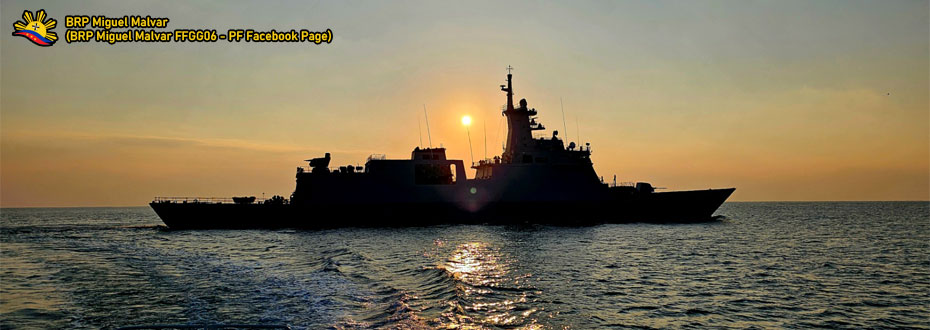
Also to add, numerous World War 2-era vessels are still within the Navy and they are classified as corvettes like the Miguel Malvar-class which these ships will be replaced by more modern and more sophisticated ones as part of the Modernization Program. 

The Navy has their own specifications or requirements looking on a corvette or a frigate where they will never encounter any issues if these are met upon, taking the lessons from the Frigate Acquisition Project.

Speaking of roles, the way Philippine Navy categorizes them goes hand in hand with Chuck Hill's CIMSEC entry which mission profiles define more of the ship's classification rather than displacement and size. 

Add to that, the Navy's Desired Force Mix sets as a guide aside from the factors aforementioned as well as the lessons from previous deals which defines their standards that in turn defines the distinction between corvettes and frigates.

BOTTOMLINE
This was originally the Hyundai Heavy Industries' offer to the
Philippine Navy before the scale-down. Add to that, it's
capabilities will be surpassed by that of upcoming Corvette
and Frigate Projects which have doubled contract price per unit.
Photo from Hyundai. Labeling by both MaxDefense and Pitz Defense Analysis
Distinctions between a corvette and a frigate vary from different navies of the world and the way they classified it as such where it is their call to do it so. The same also applies to other ships such as destroyers and cruisers which there are different interpretations and categorizations per nation.

Narrowing it down under the Philippine Navy's context through its Desired Force Mix, a corvette and a frigate are specified on their mission roles which, capabilities-wise, can be swapped and get interchangeable upon their discretion depending on what they see as fit on the naval assets they obtain. Add to that displacement, capabilities, size and at times political factors may influence the categorization of the ships.

Both of these combatants are essential things that define a Navy fleet where it is on their mandate to defend the maritime waters from various threats that may happen at any time. And with the Modernization Program being on the roll with Horizon 2 coming next year, it will be exciting to see what to unveil especially on the upcoming projects that go side-to-side with the progress the country is undertaking.
Share:

Understanding the Role of AFP and Military Professionalism in Connection to Martial Law

Laws, Rules, and Regulations are a thing that keeps a community, a city, or even a country in order. But with that sometimes comes some misunderstanding about its primary functions or its purpose as to how it was created in the first place. And that includes the bad perceptions that associate with unjust violence and maltreatment where it gives the martial law a bad eye in some people. Hence, its image shall get right.

OVERVIEW
The Martial Law back in the 70s gives a bad taste among
several Filipinos, leading to this. Source

The stigma of the Marcos-era Martial Law gets into the hearts and minds of each and every Filipino with various experiences and insights about it. Some may say it is as harsh wherein torture, injustices, and Human Rights Violations have taken place. Others may say that implementing it was the best thing a president would do that it coincides a peace of mind from petty criminals attempting to do heinous acts. 

Honest to goodness taken from the viewpoint of somebody raised and lived in the Western Part of Mindanao which is under Martial Law, its implementation is just as normal as it really is to be. To take some note, this is based on experience which takes place at present which is still in effect not until Marawi City gets flushed from bad elements. This is a far cry from the so-called atrocities as what the militant groups keep on reiterating throughout the protests they conduct in connections with Martial Law.

But this was just some insights taken from the people which go common on their stance with given variations of perspective. We are simply looking at the surface about the main interpretation of Martial Law which is within the understanding of an average person and their viewpoints of it. It is worthy to know more about the functions of the armed forces as well as the legal interpretations of Martial Law to understand its workings.

THE 1987 CONSTITUTION
Embed from Getty Images


The 1987 constitution, after all of the so-called atrocities taken place under the "previous regime" of Marcos administration, is still stipulating the terms with regards to martial law. To know it further, it is situated on Article VII Sec. 18 of the constitution and it goes on as follows:

The President as Commander in Chief can place the Philippines or any part of it under martial law or suspend the privilege of the writ of habeas corpus “in case of invasion or rebellion when the public safety requires it”

In this case, it can be seen as a necessity for it to get implemented for the aim of getting things in order as well as for the protection of the citizens from further harm that can be caused by sheer violence made by a local rebel force or a foreign power invading the homeland. This is some sort of emergency to put innocent lives out of harm's way in case a situation such as a battle conflict gets worse that it may incur casualties.

But, take note of this: The powers vested by the president in declaring martial law is limited where the rest lies to the legislative body like the congress to shorten or to lengthen the declaration. Add to that in this martial law, the civilian government still functions as it is as well as the local judicial courts. The only thing here is that there will be more checkpoints for inspection, soldiers deployed across the community, and people involved in rebellion getting arrested and gets freed if not judicially charged within three days. Obtained from Inquirer.net

Given the limits provided by the constitution, this is a martial law that doesn't equate to dictatorship as what protesters suggest given that checks and balances are all provided just to prevent any abuse of power such as this one as well as to mark out any possibility of injustices made throughout the process. And to understand it further, we shall learn about the role of the AFP as one who implements Martial Law.

AFP AND PROFESSIONALISM
More protests against Martial Law where it divides
the masses.

In a news report provided by GMA News about the martial law still taking place in Mindanao, it is ascertained that the AFP will do its job implementing it without doing any human rights violations as well as to keep their actions within the scope of the law, in particular, the 1987 constitution whereas mentioned earlier, judicial courts still functions and the citizens can report for any violable actions taken place.

Taking this through personal accounts, there are no reports of any violations taking place only except for checkpoints where showing Valid I.Ds as a necessity as well as the ever-increased visibility of soldiers downtown which is a no-surprise considering that it is a usual thing taking place in Mindanao. This validates a little bit further that the AFP is keen on its actions carefully which in itself is a welcoming thing to say.

Concerning Professionalism prevailing within the Armed Forces of the Philippines, it is worthy to know how it started and get evolved as time passes by. Taking this Thesis by Mr. Manuel Carlos of the Naval Postgraduate School in the United States about military professionalism (See PDF file here), The era of the Philippine colonial period under the United States influence and shaping the professionalist stance of the military until the present day. 

But there are periods in history that as provided in the thesis paper, give into account the times that military professionalism is in the crisis brought by the turbulent situation taking place in the country. Just for instance the martial law period in the 1970s under the Marcos regime where the Armed Forces get politicized due to the appointment of officers that are related or more loyal to the administration which resulted in de-professionalization of the military as it is primed more on authoritarian rule rather than its intended mandate to protect the country and its citizens. 

This kind of power gives the chills of those abused where their voices still echoing at present where the bad stigma of Martial Law prevails all thanks to the so-called authoritarian rule.

Taken to the context since the 1986 revolution, the Armed Forces of today is more professionalized than it was 30 years ago when a new civilian government under the first Aquino administration replaced the Marcos regime. 

The military professionalism, in this case, gets improved from the struggles made back then where military coups initiated by the Reform the Armed Forces (RAM) are prevalent which it shows the fragmented structure of the organization which by context a sad state that the first Aquino administration somehow overcome where reforms like having Philippine Constabulary integrated to what is become the civilian-controlled Philippine National Police and reforms that make the Armed Forces become at the present day.

With the lessons of the past, it may be worthy to say that many things can be learned out from the 1970s era of Martial Law where present constitutional parameters are put in place to prevent it from happening again. Add to that, the Armed Forces may be taken the lesson of the past which gives uttermost significance about military professionalism which at present still prevails. Hence, even with these things are in their respective place, it is still good as a citizen of this beloved country to keep vigilant about it where injustices and abuses still take place today.

AN OPINION FROM A CITIZEN FROM MINDANAO
Martial law is intended to protect society
from rebellion, invasion and any lawless
elements it coincides.
Here comes the account of yours truly who lived under the shadows of Martial Law in connection to the on-going conflict in Marawi City.

Life simply goes on as normal. There are no reports of any atrocities except for the number of checkpoints and visibility of the troops in the city. Add to that the numerous fly-by of military helicopters in the sky which is normal in that sense.

The feeling of being safe is there but with it comes the number of threats, sightings, and rumors where bandits in Marawi may spread across other cities. In the mind, it goes as one of the reasons why Martial Law is in effect across the island which is to prevent the violence to spread out and to simply contain it in one place like Marawi. 

The military is so far doing its job well retaking the city from the terrorists which they affiliate themselves to the Islamic State adhere to the Middle East. The military professionalism stance is showcased well where operations don't include various injustices and instead opted more to take the City back to normal where its citizens can live peacefully.

So, there is no surprise why people from Mindanao support the implementation of Martial Law where it is far from the atrocities made in the 70s. Peaceful lives prevail and the civilian government still functions as intended. However, with the stigma still echoing around, the protest continues with the essence of paranoia that atrocities may happen again. To take it to note, it is better to understand for a fact that the military of today is different from those in the past as well as that the constitutional safeguards that there will be no abuse of power.

BOTTOMLINE
A soldier has the mandate to protect his country from rebellion
and foreign invasion. And that is worthy to emphasize. Photo Source

The Armed Forces of the Philippines have one mandate which is worthy to emphasize. It is to defend the country and its constitution. To take note, Article XVI of the General Provisions of the 1987 Constitution outlines the role of the military especially Section 5 which is about defending the constitution and preservation of military professionalism by insulating the Armed Forces from partisan politics.

Simply speaking, there is only little to worry about the atrocities given the details aforementioned in this article. The Armed Forces are in line with the constitution and are practicing military professionalism based on the given provisions. This is something worth taking note of now, especially that several people have little idea about Martial Law, its provisions nor the roles taken by the military about it. Hence, every citizen deserves to know about it lest not to be simply gone ignorant about the provisions and parameters about it.

The soldiers have taken the oath which is for the country and its citizens. They are the ones willing to sacrifice their own lives for the country's survival, sustainability, and stability as well as to preserve law and order and the written constitution which defines the standpoint of the nation. The atrocities of the past may never be forgotten, but take note that today's situation is different from the past taking along the mistakes that have made and the lessons taken from it.
Share:

Faring the Airbus Military Helicopter Offer to the Philippine Government

The Armed Forces of the Philippines, as well as other agencies, are opting for additional helicopters whether it may be for utility use or as light attack gunship, where Airbus recently offers its products. With regard to the offer, one may ask: "How will this fare with the ones the military obtains, especially of those in Philippine Air Force inventory?"

INTRODUCTION
Airbus H-135 Attack Helicopter, a military equivalent of
EC-135 helicopter.
For Reference Only. Source: Airbus Helicopters
The Philippine Government through its Defense Department which its scope includes the Armed Forces of the Philippines are opting to procure helicopters which are considered useful in conflicts especially the one that is recently happening in Mindanao where the battle in Marawi is slowly coming to its end as the ground troops are on its final push and military assets being used thoroughly

In line with this, there comes the possibility that additional AW-109s from Leonardo may not happen soon given the shortcoming of its capabilities in a sense where, coincidentally speaking, coincides with this report obtained from GMA News which came just several hours after a certain defense outlet posts about the AW-109s. The said report pertains to the offer given by Airbus Helicopters for the AFP and agencies like the PCG of helicopters like the H-145s and H-135s fitted for light attack configuration. This may be just as promising to obtain, but various matters are needed to clarify to fare these helicopters out in terms of performance and other technicalities with the ones AFP obtains such as the Bell 412s and AW-109s Philippine Air Force presently obtain.

Assessing the offer will aim to understand as to the feasibility of it as well as to give insights into whether it will be good to procure or not. Just as so, the points given will be stated with facts and references from various reputable sources to give a clear image as well as the potential approaches that will take on the offer.

THE OFFER
It is the larger H-145 helicopter and the H-135s
that are being offered to the Armed Forces of the Philippines. Source
The offer given by the Airbus Helicopters is primarily focused on covering the requirements of having helicopters by the Armed Forces through the Philippine Navy and Air Force as well as notable agencies like the Philippine Coast Guard. Hence, the said helicopters being offered by Airbus are the H-135 and H-145 military helicopters. The details of the said helicopters are given below.

H-145M
More information is provided for this link.

According to Airbus, the H-145M is a military equivalent of multi-role EC-145 which can be opted either as a light attack gunship or a light combat utility helicopter where according to the requirements given by the Department of National Defense (DND), the Philippine Air Force is opting for helicopters having such roles.

Aside from the things pointed out, it can also opt for special operations, surveillance, intelligence gathering as well as for Humanitarian Assistance/Disaster Response or HADR in the event of any calamities that are ravaging the country. To add it up further, this, if procured, may help the nation in its maritime security and operations where it can be used for ship replenishment, maritime counter-terrorism, and search and rescue operations. Taking up notes, it is known that the Philippine Coast Guard is seeking more helicopters for such purposes especially in terms of rescue operation should any vessel at sea within Philippine Territory is in distress. If the deal is at any doubt given the chances where the offer is accepted presumably, then it may complement the existing MBB Bo-105 PCG obtains. Also unto that, this helicopter, being the one offered, is also considered by the Philippine Air Force aside from additional AW-109s and MD-900 Explorer series according to this recent report.

Being the prime helicopter that Airbus markets to the Philippine Government, it goes with the hopes that this offer will be grabbed upon where the H-145M obtains the capabilities it possesses. It may be the government's call to accept the offer or not, but lest to say, it can get to any mission an archipelagic nation like the Philippines needs for a helicopter. More unto this, there is another helicopter in Airbus where it is the H-145M minus 10 in designation, it is just as promising as this rotary-blade aircraft.

H-135M
More information is provided for this link.

Just like the H-145M, this helicopter is capable of Combat Utility Helicopter. However, its capability may not be as sufficient as H-145M as a light attack helicopter where its firepower may appropriate more for armed scout or ground support operations just like Philippine Air Force's MD-520 or the U.S. MD-530 Scout Attack Helicopter.

If given the role as either a Combat Utility Helicopter or as an armed scout one, it may be redundant where the Philippine Air Force already obtains MD-520s/AW-109s and Bell 412s that are doing such roles respectively. Add to that, it is capable of Medical and Casualty Evacuation which is usually what air ambulance do just in the case of Philippine Air Force's Sikorsky S-76 and PZL Sokol Helicopters where it may come in handy in the case of Humanitarian Assistance/Disaster Response matters just like pulling casualties and injured troops out of the battlefield.

With the requirements of the Philippine Government seeking more helicopters, Airbus without a doubt is showcasing these offers as it would mean a better deal that will benefit both sides. Notwithstanding, as being mentioned here before, it is at best for the parties involved especially the end user to assess it which will make the best decisions there is for the best outcome which clearly enhances the existing capabilities of the armed forces and other agencies.

Aside from this, this helicopter will be less likely to be the one offer where the H-145M is the one that is presently marketed by the company. These in which, remain to be seen as there are sudden changes that may happen as time goes by.

THE CHALLENGERS
Bell 412. From Getty Images.
Knowing the helicopters Airbus offer and the capabilities it can promise to give such as in the case of the Philippines is only one thing. In this matter, it is worthy to consider that there are several workhorses within the Philippine Air Force which may serve as an obstacle whereby nature, decreasing the chance of grabbing up this offer so as to highlight the streamlining of spare logistics and interoperability, among others.

As an attack helicopter
Leonardo (Formerly AugustaWestland) AW-109e Power
See Details from Manufacturer here. Philippine-related details can be seen here.

One thing that needs to be considered with regards to the challenge Airbus Helicopter can encounter is this helicopter gunship procured four years ago from another helicopter company AugustaWestland which is now presently called Leonardo Helicopters.

Awarded October 2013, the Philippine Air Force successfully procured 8 units of these said helicopters which were all considered as attack helicopters as far as the air force is concerned. These things, however, do not dismiss the fact that these units, primarily designed as multi-purpose civilian design much like what Airbus offered, cannot sustain heavy gunfire unlike its fully-fledged counterparts but it is still sufficient enough to do its job against insurgent groups like in Marawi City. To add it up, there is actually the bit armored military version of such helicopter which is the AW-109 LUH which is also a bit more expensive and heavier.

Giving the details further with regards to the additional Attack Helicopter Project, Leonardo may still opt to push this helicopter aside from Airbus and McDonnell Douglas MD 901 Explorer. The expected budget cost that can be given in this project will be at around 11.8 billion pesos to 12.3 billion depending on the details that will come up months from now.

The bid opening for this project presents the opportunity for both Airbus and Leonardo where the offers can be fared up as to which suppliers, together of those with McDonnell Douglas, bags the deal. 

McDonnell Douglas MD-900/901/902 Explorer
The civilian version and its details (for 902) can be seen here.

It goes with some surprise so this helicopter is considered by the Philippine Air Force considering that as per research, this aircraft has primarily opted for civilian purposes. Not to dig in further, it is worth to wait until the first bid opening is out so as to understand further about this offer. To take note, this is the same supplier that made the MD-520s Philippine Air Force also obtains. This thing remains to be seen and updates will be made once it is on the roll.

As a utility helicopter

The Airbus Helicopters may have a helicopter offer where it may include the capability of having as a combat utility, but this is something worth pondering with regards to this portion that pertains to a troop transport.

To take some notes, the Philippine Air Force is inching closer to have a deal with Canadian Commercial Corp or CCC with regards to additional Combat Utility Helicopters such as the Bell 412s which will be done through a Government-to-Government deal or G2G.

Several Bell 412s are already in service with the Philippine Air Force as well as its Presidential Aircraft Wing which serves as a transport for the President. Additional units of the same aircraft will increase the transport capabilities of the air force as well as streamlining spare parts stash that will make it an ideal workforce aside from UH-1 Hueys.

Despite this thing, Airbus still has the chance especially on the attack helicopter procurement deal which there is the potential that they will bag the contract if they are up to the specifications, terms, and the laws the procurement program specifies. 

THE H-FORCE WEAPONS SYSTEM

Inline to the product Airbus Helicopters offered to the Philippine Air Force, they recently reported that pertains to the marketed H-145M's first flight with HForce Generic Weapons System which it can sweeten up the offer a bit as this system may mean improving its capabilities even further.

This development comes from Airbus' experience in Tiger Attack Helicopters where, these systems come with the integration of any kind of weapons such as air-to-air, air-to-ground, ballistic or guided rounds wherein to be specific, the HForce consists of one central “core” unit which can be used regardless of the aircraft type, monocular HMSD and EOS, gunner armament grips and weapon pods that can choose either ballistic such as cannons, machine guns, and rocket or missiles. These things though are helpful for internal operations against counterinsurgencies where this system is flexible to have weapons as a choice in a given mission and its nature which, increases helicopters like H-145's adaptability if it is given a task that enforces the mandate of defense. With regards to weapons, here are the operational spectrum the HForce Weapons System covers:

Air-to-ground
- Tanks, armored vehicles, troops, fire support to troops in contact

Air-to-air
- Aircraft, drones, attack helicopters

Air-to-surface
- Maritime counter-terrorism and counter-piracy speedboats

Ballistic:
- Cannon 20mm

- Machine gun 12.7mm

- Rocket 68 and 70mm

Guided:
- Laser-guided rocket

- Air-to-ground missile

- Air-to-air missile

This increase in comprehensive weapons capability is something Airbus can offer together with its helicopter unit like the H-145M where the Philippine Government may consider in its attack helicopter requirement through upcoming bidding together with other suppliers aforementioned. This opportunity is for them like any other supplier to prove and to supplement equipment that is up to the specifications given that satisfies the end user like the Philippine Air Force.

CONCLUSION AND HEADS UP

With the offer Airbus Helicopters give for end users like the Philippine Air Force, it is somewhat promising now that the products they offer become much capable as it gets integrated with its comprehensive, reflexive weapons system that enhances the adaptability of these helicopters. 

What remains to be seen is whether it can make it along the way depending on its offer, the specifications given as well as the offers given by other suppliers. It is still uncertain at present though, but with the offer Airbus Helicopters give, it is a welcoming thing to see where a supplier is willing to supply the needs of the local Philippine Market where it may benefit all of those involved especially the end-user. These will all up to the planners with regards to the assessment of these units.

The main point is that this offer goes the promising capabilities it offers which enhances the military's mandate of protecting the nation should this helicopter is considered or those of other suppliers. All of these in which goes to aim that it will increase firepower that requires in needing close air support for the troops on the ground. These in which are part of the Modernization program that keeps on rolling at present with the second horizon coming from the distance, signifying a bright future up ahead.
Share:

Time

Translate

Articles

Total Pageviews To-Date

Webpage Visitors

Free counters!
