







The Philippine government enacted the 2026 General Appropriations Act, which includes portions of the country's defense budget for the said year. As always, the figures presented for the defense budget in this calendar year as compared to previous years will come as a presentation of the current trends that also correlate to the urgency of the country's overall policy for its national security, especially with the challenges that external forces pose against the territorial integrity of the Filipino Nation.
OVERVIEW
 |
| The 2026 General Appropriations Act funds all projects of the government for the said year. That includes the ones under the Revised AFP Modernization Program. |
On January 5, 2026, President Ferdinand R. Marcos Jr. signed Republic Act 12314, more commonly known by many as the 2026 General Appropriations Act, into law. This enacted law, at a glance, defines the allotments provided by the national government through the recommendations set by the Development Budget Coordination Committee (DBCC) after collating the plans and programs presented by various agencies, which then undertook budget deliberations at the legislative level before it got the presidential signature.
Amounting to Php 6.793 trillion, the law provides authorization to all government agencies and instrumentalities to use the budget according to their set plans and programs as defined by their various annual procurement plans or APP, as governed by respective procurement, accounting, and auditing rules and regulations set at the time this article got published, especially the recently enacted Republic Act 12009 or the New Government Procurement Act (NGPA).
As the law now takes its course as being under implementation all throughout the year 2026 plus the subsequent continuing appropriations validity of the 2026 General Appropriations Act extended to the year 2027 in terms of obligations for MOOE and Capital Outlay, giving an in-depth look on the allotments provided to the Department of National Defense, including those under the Revised AFP Modernization Program, provides a picture that entails changes and developments on the presented figures.
Of course, the defense budget deliberations also came with scrutiny, especially with calls within the halls of the legislative bodies relating to un-programmed appropriations, along with the calls of the Department of National Defense on provisions regarding to the flexible financing options that might enable them to undertake contracts and other deals that entail the expansion of the capabilities provided to the Armed Forces of the Philippines as aligned to the Republic Act 10349 or the Revised AFP Modernization Law.
For this topic, the discussion will not only cover the figures relating to the allotments provided to the Defense Department for the fiscal period of 2026, but also to cover other matters relating to the defense budget during the deliberation, the calls for minimizing the need of including un-programmed appropriations in the written legislature, and the hurdles entailing an old presidential decree which undermines a special provision in the law relating to the Revised AFP Modernization Program.
THE BREAKDOWN UNDER DND REGULAR APPROPRIATIONS
 |
| Here is the programmed budget intended for National Defense under the 2026 General Appropriations Act. From Republic Act 12314. |
In the provided figures above, referencing the 2026 General Appropriations Act encompassing the entire budgetary allotments that the Department of National Defense have for the said fiscal period, the total amount provided for the said department for the said year amounts to the total of Php 305.872 billion, of which Php 292.483 billion of the budget are intended to the financial requirements of the entire Armed Forces of the Philippines under this regular fund.
Going into the specifics, the Philippine Army received the largest portion of the budgetary pie of the Armed Forces of the Philippines, with a total allotment of Php 145.161 billion, followed by the Philippine Air Force with a total budgetary allotment of Php 60.634 billion.
The Philippine Navy received the smallest allotment among the three (3) major branches of the Philippine Armed Forces, with a budgetary allotment of Php 59.929 billion, and completing the amount is GHQ-AFP with Php 26.758 billion.
Other than the Armed Forces of the Philippines, the remaining budgetary allotments of the Department of National Defense go to other agencies attached to the department, including the Office of the Secretary itself.
That includes self-reliance defense posture efforts of the Government Arsenal (GA), disaster and calamity response units belonging to the Office of Civil Defense (OCD), military support institutions for career enhancement (NDCP), and veterans-related support.
As compared to the allotments provided by the Department of Budget and Management (DBM) to the Department of National Defense in 2025 for the Armed Forces of the Philippines, there is a significant increase in allotment for the country’s military in 2026, in which the variance in comparison amounts to around Php 32,245,003,000.00, up from 2025’s Php 260.238 billion in allotment. Each of the major branches received an increase in its allotment, encompassing its entire Personnel Services, MOOE, and Capital Outlay expenditure items.
In the breakdown, each of the major service branches of the Armed Forces of the Philippines, including the General Headquarters, received an increase in allotment for 2026 that comes with the following amounts: Php 6,933,151,000.00 for the Philippine Army, Php 9,060,027,000.00 for the Philippine Air Force, Php 8,894,742,000.00 for the Philippine Navy, and Php 7,357,083,000.00 for the General Headquarters, AFP and AFP-Wide Service Support Units, totalling to the said Php 32.245 billion increase.
As always, the large portion of the budget of the major branches of the Philippine Armed Forces goes to the Personnel Services of its officers and troops, specifically for the salaries and benefits of its currently active personnel plus retirement benefits for those who already reached their mandatory age of exiting from active duty.
The second largest allotment, as presented on the graph, goes to the maintenance and upkeep of both military hardware and facilities, and the remaining amount goes to their capital outlay projects.
In totality, the Armed Forces of the Philippines saw a significant increase on its allotments, sufficiently aligning to the ongoing sustainment of its personnel and operational requirements, along with its continuous effort of upgrading its facilities, buying capital outlay items that are not part of the Revised AFP Modernization Program, and its transformation to a more capable force aligned with its current posture pointing for external defense deterrence.
REVISED AFP MODERNIZATION PROGRAM
 |
| The amount set by the 2026 General Appropriations Act for the Revised AFP Modernization Program comes at around Php 40 billion. |
For fiscal year 2026, the budget allotted for the Revised AFP Modernization Program under the General Appropriations Act of the said year is around Php 40,000,000,000.00 - an increase compared to the 2025 allotment of Php 35,000,000,000.00 and similar to the allotment provided by the Department of Budget and Management (DBM) for this specific budgetary expenditure item for the year 2024.
This clearly emphasizes the consistency provided in the amount allotted by Congress for this program.
It is also at this consistency of the provided allotments for the Revised AFP Modernization Program that the Armed Forces of the Philippines found constrained into providing its multi-billion acquisition projects spanning all the three (3) major service branches of the organization, some of which are way beyond the fiscal space provided by the DBM such as the multi-role fighter jet package proposals pushed by the Department of National Defense for the Philippine Air Force.
While the amount provided increases by Php 5,000,000,000.00 compared to the figures provided under the 2025 General Appropriations Act, the overall allotment provided for the year 2026 still comes insufficient from this point of view, especially that there are still projects funded under multi-year arrangements that will probably use the funding under this allotment for the projects to push through. This gives the DND budget planners minimal fiscal space to move and select key programs under this arrangement.
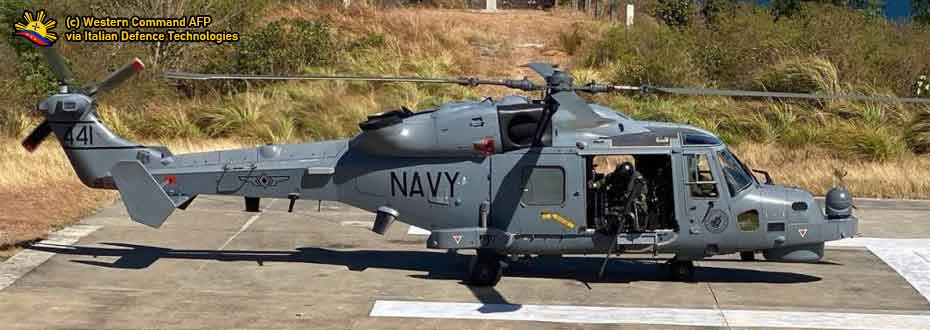
For context, several projects pushed by the Department of National Defense based on their Procurement Monitoring Report encompassing the 2nd semester of year 2026 includes the Frigate Acquisition Project - Full Complement (which calls for the purchase of two (2) additional Miguel Malvar-class frigate/HDF-3200 variant), six (6) anti-submarine warfare helicopters (likely the Leonardo AW-159 Wildcat), additional 155mm Self-Propelled Howitzer of the Philippine Army, among others.
While the allotment for the Revised AFP Modernization Program under the 2026 General Appropriations Act remains constant, the overall budget for this object of expenditure actually increased significantly, especially when factoring in the next part of this discussion, this time encompassing the one categorized under Un-programmed Appropriations, itself faced with controversy at the period when the overall budget itself faced full scrutiny at the light of budget-related issues riddled in the year 2025.
UNPROGRAMMED APPROPRIATIONS
 |
| Most of the items under the Un-programmed Appropriations got slashed out as the result of the Presidential Veto, leaving the Revised AFP Modernization Program and Support to Foreign-Assisted Projects. |
As complementary to the allotments provided for the Revised AFP Modernization Program, the 2026 General Appropriations Act also provided some additional fiscal space for the said item of expenditure through this important yet equally controversial feature of the enacted law - the Un-Programmed Appropriations allotment.
As discussed previously on various topics on the defense budget, this provision can go into effect if any of the conditions provided for the un-programmed appropriations takes place.
For the Revised AFP Modernization Program, such allotment equates to around Php 50 billion, totalling the allotment that gets set aside for this program under the 2026 General Appropriations Act to around Php 90 billion - the highest allotment there is to-date since the time this article gets published.
For context, the 2025 General Appropriations Act set aside around Php 75 billion for this expenditure item, while the 2024 General Appropriations Act only set aside Php 50 billion.
This is also the highest one provided under the Un-Programmed Appropriations allotment intended for the Revised AFP Modernization Program to-date, as it is higher by Php 10 billion compared to the 2025 General Appropriations Act’s Php 40 billion, and even higher further than the 2024 General Appropriations Act’s Php 10 billion.
The increase gives emphasis that while the national government provides the needed budget for the item, its dependency on the government’s revenue performance does not give it full guarantee.
The uncertainty that this provision gives means a lot for any earmarked acquisition projects that the Department of National Defense has in line under the Revised AFP Modernization, aside from the other flexible financing scheme that is also highlighted on the special provisions of its budgetary use as it gets discussed separately on this article writeup. Any progress aligned with the budget allotted under this current year's enactment is likely reflected in the semestral release of the DND’s procurement report.
Enacting the General Appropriations Act for 2026, especially the un-programmed appropriations act, doesn't always come smoothly, as the very core definition of this provision always comes riddled with its own sets of controversy.
At one point, concerned groups highlighted the constitutionality of simply having the concept of un-programmed appropriations in the enacted law, further implying that any agency plans under these appropriations will fail if there is no available funding to cover them.
At the time this article is written, there is an ongoing deliberation of oral arguments relating to the constitutionality concerns of the un-programmed appropriations before the Supreme Court, as its critics highlight of its concerned legality that might affect the Php 50 billion allotments of the Revised AFP Modernization Program especially if there is a basis that there is a problem on its legality. The question on its decision, however, will probably happen at a time that is beyond what is now provided in this writeup.
While the question on un-programmed appropriations, where the large pie of the Revised AFP Modernization Program allotment, makes it uneasy on the overall implementation of key Acquisition Projects earmarked using this fund which might likely include the most sophisticated weaponry that either of the three major service branches of the organization aims to get, the next point of this discussion will cover another aspect of this topic - which on the special provisions relating various financing schemes.
SPECIAL PROVISIONS FOR THE REVISED AFP MODERNIZATION PROGRAM
 |
| The provided special provisions highlighted the use of Foreign and Domestic Financing Requirements to fund big ticket acquisition projects under the Revised AFP Modernization Program. |
In an itemized budget release, such as with the Revised AFP Modernization Program, it always comes with a special provision that is primarily intended for guidance on how the budget will be released by the Department of Budget and Management to fund the modernization-related requirements of the Armed Forces of the Philippines earmarked in this object of expenditure, along with the reporting and posting requirements intended for accounting and auditing reasons as expected on a public office.
While the special provisions on both the release and reporting come as a regular case for the Revised AFP Modernization Program allotment item, this writeup in 2026 now includes something that might, as what several lawmakers pushed, help the planners within the Department of National Defense and the Armed Forces of the Philippines, in their desire to secure far more sophisticated military weaponry and the expensive price tag that it comes with, especially when it is an entire force package.
This said special provision mentioned here refers to the ‘Foreign and Domestic Financing Arrangements’, which itself comes as a complementary mechanism to the allotments set aside for the Revised AFP Modernization Program, as the annual allotments provided by the national government are likely insufficient to other big ticket projects that are beyond the allotments provided on the enacted laws. One key example of a project that might require this arrangement is on a package involving multi-role fighter jets.
Detailing the arrangement as written in the special provisions of the law governing the Revised AFP Modernization Program under the 2026 General Appropriations Act, it says that the Secretary of Finance has the authority to negotiate, contract, and undertake into foreign and domestic financing schemes and arrangements, with consultation provided from the Department of National Defense, which then will undertake the approval directly from the President, with limitations as provided by law.
The ‘limitations as provided’ itself is one big stumbling block in attaining multiple large acquisition projects that go beyond what’s allowed in the budget, as there is another law written way back in the 1970s that explicitly limits the amount needed for the national government to secure a loan or any other credit and financing mechanisms in place. This specific law directly refers to Presidential Decree No. 415, which gives authority to the Secretary of National Defense to undertake defense contracts primarily focused on SRDP.
The provision on the Presidential Decree No. 415 that presents as a stumbling block into attaining better financing schemes lie on Section 3 of the said decree, whereby the President of the Philippines has the power to contract various financing mechanisms not limited to loans and credit lines, of which it should not exceed the amount of around Three Hundred Million United States dollars (US$300 million), of which only equates to Php 18.135 billion as per April 23, 2026 exchange rate.
That limitation, which is even lesser than the budget provided to the Revised AFP Modernization Program under the current and the two previous enacted General Appropriations Act, means that the Armed Forces of the Philippines will probably be stuck into getting the more ‘cost effective’ option in improving its capabilities. This means limiting into securing additional FA-50PH lead-in fighter trainer jets, Sabrah light tanks or their equivalent, and Miguel Malvar-class guided missile frigates.
ENDING NOTE
 |
| Infrastructure support is as important as the military hardware purchased. Image from the 5th Fighter Wing, Philippine Air Force. |
The Philippine defense budget for the year 2026 is indeed higher compared to the previous years that the national government set aside for key big ticket acquisition projects needed for the Armed Forces of the Philippines’ various service branches, although the actual requirements provided in each horizon of the Revised AFP Modernization Program are still not met given that the allotments available is still not sufficient for this endeavor.
This comes as the un-programmed appropriations of the Philippine defense budget under the 2026 General Appropriations Act for the Revised AFP Modernization Program come higher than the one allotted for the programmed appropriations, with the former having more than half of the allotments intended for the purchase of intended big-ticket, military hardware-oriented projects that each of the service branches have in mind, in line with the Horizon 3 phase and the previous Horizon 1 and 2 lineups.
Added to this is the provision that welcomes soft loans and similar-crafted financing schemes related to credit lines and flexible payment arrangements, although this still needs adhering to the provisions stipulated in the Presidential Decree No. 415, especially in the ceiling it provides for the Secretary of National Defense in authorizing as to the extent of the amount allowable for multiple acquisition projects to push through. This put key projects with comprehensive packages like the multirole fighter jets in a dilemma.
Aside from the key problems presented on both the budgetary allotment and the financing schemes, one another area not discussed on is on the investment needed for the supporting infrastructure that allows the Philippine Armed Forces to accommodate and properly maintain its expensive military hardware, let alone expand the welfare of its personnel as part of a necessary policy direction governed by a proper process as specified using the DOTMLPF-P analysis.
Ultimately, the 2026 Philippine defense budget presents two different yet justifiable perspectives relative to the overall efforts needed to push for a professional and highly capable Philippine Armed Forces.
On one hand, they received the largest share for their modernization efforts compared to the previous year's figures, while on the other hand, it presents that the budget, while commendable, is still insufficient.
Ultimately, it is a clear indicator that investing to ensure this country’s freedom always comes at a cost.
To access the documents, here are the following links below.

(c) 2026 PDA.
Published from a station in Eastern Visayas.



