

The Iveco VBTP-MR Gurani 6x6 Armored Vehicle and the Elbit Offer to the Philippine Army

Made by partnerships, this platform really much helped Brazil improve its armored vehicle capabilities in the sense that it may find its way to the inventory of the Armed Forces of the Philippines through a marketing pitch made by an Israeli company that contributed to the enhancements made on this armored vehicle.

This product goes along with the awarding of another project in the Philippine Army which also involves sophisticated armored vehicles.

OVERVIEW
A set of  VBTP-MR Guarani Armored Personnel Carriers
in a Brazilian Army Parade. Obtained from Wikimedia Commons.
Armored Vehicles are essential for an Armed Forces to have especially on the mobilization of troops and firepower across the land to the areas of concern especially with the safeguards that the troops needed for deployment are safe from ambushes, especially from small-arms fire.

Current armored platforms in service range from troop-carrying armored personnel carriers to APC, to an armed one such as an infantry fighting vehicle or IFV which is usually an APC with a gun turret fitted above designed for support against enemy infantry and armor depending on its configuration, and eventually a dedicated light or medium tanks which carries more firepower than a typical infantry fighting vehicle that can eliminate enemy infantry and armor at an increased lethality.

The Philippine Army currently obtains a significant number of armored personnel carriers such as the M-113 APCs and wheeled ones like the GKN Simbas made by GKN Systems (now part of BAE Land Systems) and V-150 Cadillac Gage Commandos that are still in service within the service branch's Armor "Pambato" Division which is soon to have newer assets within its inventory such as the one which will be discussed throughout the length of this article.

These newer assets aim to have the number of units within the armored division increase as it may augment the older, existing platforms in active service as more troops needed protection and support on their deployment and effectively improve the counter-insurgency drive of the Armed Forces against the enemy elements that endanger the peace and security of the country such as the Moro radicals in the south of the country or the Communist Reds scattered all across the nation's remote areas.

In this discussion, we will cover more in detail about the vehicle that the Israeli Defense Company Elbit Land Systems and C4I promoted to the Philippine Army through the Department of National Defense especially with the partnerships forged, the role that its main manufacturer Iveco played in the development, the company's profile and information existed from other defense pages which will be added for the context of this discussion matter.

THE BACKGROUND A CONTEXT ABOUT THE PROCUREMENT RESULTS
The Philippine Army Guarani offer from Elbit also came with the option of
carrying a Remote-Controlled Weapons System.

Image Source.
The Elbit's offer of the Iveco Guarani Armored Personnel Carrier is just one of the candidates for the Philippine Army's Armored Personnel Carrier (APC) Acquisition Project wherein it faced competition against the offers made by other manufacturers such as PT Pindad's Panser Anoa 6x6 APC, Otokar's Arma APC, Excalibur Army's Pandur II, as well as others not mentioned here.

These reports came out from a page extension made by a fellow defense outlet MaxDefense Philippines wherein they also provided details about the acquisition which came with 28 units, at the Allocated Budget for the Contract (ABC) price of Php 2,265,200,000.00 (or basically Php 80,900,000.00 per APC unit) of which it will have a weapons mount which can be seen on a link highlighted in red above.

The said deal is said to be done through a government-to-government deal in which the Israeli government played a role in making this procurement possible in the same manner that was done for the Light Tank Acquisition Project which was also won by Elbit with its Sabrah Light Tank offer (which is basically a modified ASCOD and Pandur platforms fitted with the Sabrah turret) wherein it may get discussed on a separate entry.

It is said in those reports that these Armored Personnel Carriers may have an option to be fitted with Remote-Controlled Weapons System that may come in place to the original manned turret offer (which are either a 12.7mm machine gun or a 40mm grenade launcher), weaponry that has already been proven onboard M-113s which was also supplied by the same Israeli weapons provider to the Philippine Army.

While the discussions of the procurement have already been covered by our fellow defense outlet and its extension page, we will not dwell much on its detail and instead, we will cover more about the platform itself and the manufacturer set up to have a greater picture of the details covering the future Armored Personnel Carrier that the Philippine Army is set to have.

DEVELOPMENT RESULTED FROM FORGING PARTNERSHIPS 
The production line that manufactures the VBTP-MR Guarani
APCs in IVECO's Brazilian Plant.
File Image.
The development of the Guarani Armored Personnel Carriers started between the collaboration of IVECO Defense Vehicles and the Brazilian Military's Army Technology Center wherein both parties aimed to produce these 6x6 armored vehicles to replace the EE-11 Urutu and the EE-9 Cascavel Armored Personnel Carriers that the Brazilian Army attained through the years which were both produced by the former Brazilian defense company Engesa which went bankrupt in the late 1990s.

It is detailed that the VBTP-MR Guarani 6x6 Armored Vehicle, on the collaboration made, will be produced in Brazil which continues and carries on the legacy that the former Brazilian defense company made in producing the EE-11 Urutu and the EE-9 Cascavel during its time, wherein there is still the essence that these platforms, although it is marketed under IVECO Defense Vehicle's portfolio, is considered an armored vehicle proudly made in Brazil.

A partial number of 86 units for this type of armored vehicle were purchased by the Brazilian Army in 2012 at the contract cost of $246 Million which can be equated to the contract unit cost of $2.86 Million, or if converted to the Philippine Peso is at around Php 143 Million which is higher than the offer made by Elbit to the Philippine Army at the difference of Php 63 Million as the cost of production minimized a bit which may influence the pricing, along with the difference in the terms of the deal between the ones that Brazil took as opposed to the one took by the Philippine Army about packages (spare parts, training, ammunition, support, etc).

Take note that the first deal took place in 2012 between IVECO Defense Vehicles and the Brazilian Military wherein many developments took place between that date and the current date this article has published, wherein they have a primary objective to have at least 2,044 vehicles produced at the rate of 100 units manufactured at the given timeline of 20 years which is up until 2030 in a sense that the duration of production for these units of Guarani Armored Personnel Carriers may benefit the Philippine Army in the long run at the logistical point of view.

Elbit came into the picture wherein it provided armaments for these platforms to have the needed firepower necessary to provide support for the Brazilian armed forces, in a manner that during its first production phase in 2012, the Brazilian Army ordered unmanned turrets through the Elbit Subsidiary AEL Sistemas in which they provided the UT-30BR (30mm caliber) turrets for these armored personnel carriers and to take note, such family of weapons systems was also provided by the said Israeli company to the Philippine Army's M-113 APCs in the form of UT-25 (25mm caliber) ORCWS turrets.

It is with Elbit's contribution of armaments on this primarily Brazilian Army-IVECO armored personnel carrier project that it has the leverage of marketing this platform to the Philippine Army, in a way that it came with a different configuration per the specifications set by the service branch for its own use.

From the deals set, IVECO Defense Vehicles and the Brazilian plant that the VBTP-MR Guarani 6x6 Armored Personnel Carrier produces may indirectly benefit from this project aside from the direct deals that both the Philippine Army and the Elbit Systems Land and C4I on the procurement of these vehicles as it ramps up the production line even further and benefits the defense business model which provides labor to the local Brazilians working on the manufacturing of these platforms aside from the orders made by the Brazilian Army.

PLATFORM SPECIFICATIONS
The vehicle's specifications.
Image Source.
Additional details: 12.7mm manual machine gun mount or a 40mm grenade launcher, with an option to add RCWS based on UT-25 (25mm) that the Philippine Army primarily uses. Take note that such weapons loadout is also available in other units of the Armored Division such as the V-150 Commando, GKN Simba (excluding the UT-25 RCWS), and M-113 Armored Personnel Carriers.

Comparing this to the specifications provided for a GKN Simba which is currently in service in the Philippine Army, it obtained a similar crew count and a similar number of passengers that can be fitted onboard the platform, essentially idealistic on augmentations as it keeps familiarity on the usage of both platforms with regards to its operations.

Moreover, the VBTP-MR Guarani 6x6 Armored Vehicle is heavier than the GKN Simba by an extra 5 tons while as well as being larger than the latter,  giving an idea about its inner compartments being a bit spacious for extra amenities or armaments to fit on or it goes with regards to its engine horsepower which will be detailed in the next paragraph.

The engine is powered by IVECO's Cursor 9 Diesel Engine which is also used on its other product line of vehicles that can be found on its civilian lineup wherein it came up with a more powerful engine output of 383hp as opposed to the GKN Simba's 210hp Perkins 210 TI Diesel Engine wherein it goes along with its justification in parallel to the weight and size of both platforms.

Comparing it to the other candidate of the Armored Personnel Carrier acquisition project of the Philippine Army such as the APS-3 Panser Anoa 6x6 Armored Personnel Carrier that PT Pindad offered alongside the Harimau Hitam Tank, it also came with almost the same number of personnel to be fitted on-board, only that it came with an extra crew as compared to this platform offered by Elbit.

Just like the GKN Simba, the Panser Anoa is also seen as a smaller platform with a lesser weight tonnage of 14 tons although its height is higher at 2.5 meters as opposed to the Guarani at 2.43 meters. The Panser Anoa's dimension also influences its engine layout being a lesser-powerful one than the Guarani at 320 horsepower (hp) while having a similar range and a bit-slower on its speed.

The similarities in specifications may render the line of necessities within the Philippine Army especially that it obtains existing platforms that have such configuration, wherein the attainment of such new platforms like the IVECO Guarani 6x6 Armored Vehicle may currently augment the number of wheeled Armored Personnel Carriers in service until such time that the older ones may go phased out.

KNOWING IVECO DEFENSE VEHICLES
IVECO Defense Vehicles sells an array of armored and utility vehicle platforms especially the ones like the VBTP-MR Guarani. Take note that it is Elbit who offered such platforms to the Philippine Army. 
Screengrab obtained from this link here.
The company that sells multiple armored and utility vehicle platforms like the VBTP-MR Guarani, IVECO Defense Vehicles, is a defense-oriented subsidiary of the CNH Industrial Company that also owns other IVECO brands that produce multiple variants of trucks, buses, and tractors that are intended for civilian use, catering various industries such as logistics, tours, mining, and heavy construction.

The formation of this company resulted in the merging of five (5) key European companies of its time in 1975: Fiat (Turin, Italy) OM (Brescia, Italy), Lancia Special Vehicles (Italy) Unic (France), and Magirus Deutz (Germany) with the name IVECO abbreviated from Industrial Vehicle Corporation which has a huge company network spanning across the globe at the present date.

Focusing in detail on the IVECO Defense Vehicles which included the VBTP-MR Guarani on its portfolio, let it be noted that it offers an array of military vehicles specifically on the image seen above wherein it caters to the different specifications that various military users seek for their own use, as well as to the different purpose of its usage within the armed forces that procure its platforms.

One of the products that IVECO Defense Vehicles markets on are the SuperAV 8x8 Amphibious Armored Vehicle that was introduced in 2009 (by the time the VBTP-MR Guarani was also unveiled for the Brazilian Army use), wherein it was chosen later on by the United States Marine Corps (USMC) for its Amphibious Combat Vehicle Acquisition, wherein it was pitched on by the joined IVECO-BAE Systems partnership wherein the SuperAV 8x8 Amphibious Armored Vehicle and the VBTP-MR Guarani 6x6 Armored Personnel Carrier shared the same design attributes.

Another set of products that the IVECO Defense Vehicles have on its own portfolio is the Centauro Family of armored vehicles wherein it was made possible with the joint collaboration between IVECO and OTO Melara with one of the vehicles produced herein is the Centauro II Wheeled Tank Destroyer that was produced for its use within the Italian Army.

Other products that the IVECO Defense Vehicles market on their portfolio includes the Light Multirole Vehicle (which was procured by the Norwegian Armed Forces in 2013), Medium Protected Vehicle wherein it is currently in service within the German, British and Swiss Armies, and other utility, tactical, and logistical vehicles which can be seen here on their website's products section.

The array of military vehicles that IVECO Defense Vehicles offer shows the experience that the company has in providing military assets for other armed forces even before the Israeli defense company in the form of Elbit Systems Land and C4I offer the VBTP-MR Guarani 6x6 Armored Personnel Carrier to the Philippine Army, in which the country is added on the list of users that obtain such armored vehicle on its inventory.

OTHER USERS OF VBTP-MR GUARANI 6X6 ARMORED VEHICLE
Lebanon possesses several units of VBTP-MR Guarani on its
array of weaponry. The Philippines is set to be the 4th country
to obtain the platform, after Brazil, Argentina, and this country.
Having other users of the VBTP-MR Guarani Armored Personnel Carrier in multiple militaries across the world came with two benefits, of which the first one is the additional sources of spare parts for the Philippine Army to seek especially for spare parts outsource to keep its own platform operational, and second the compliance in prerequisites with regards to its procurement.

Let it be known that for the Philippines to procure it, the platform is needed to be either in service in the country of origin that it was produced or in two countries other than the origin that utilizes the platform. The IVECO VBTP-MR Guarani satisfies all of these needed requirements, and it will not be problematic since aside from Brazil, the armored vehicle is also in service with both the Argentinian and Lebanese Armed Forces.

The first customer outside Brazil who procured the VBTP-MR Guarani Armored Personnel Carriers is the fellow South American nation of Argentina, wherein they procure at least 14 units of such platform from the Brazilian plant which is a half less than the number of units that the Philippine Army is set to receive from IVECO through the dealings made with Elbit.

The second customer who received and obtained the platform in its military is the Middle Eastern nation of Lebanon which was said to have procured 10 units from IVECO which is far less than what Argentina and the Philippines receive, wherein it renders the latter being the largest customer for the VBTP-MR Guarani 6x6 Armored Vehicles outside Brazil since its production which surpassed the two other customers.

It may be interesting along the way as the Philippine Army is planning to procure additional armored vehicles of multiple types in the future, ranging from light tanks to armored personnel carriers wherein the VBTP-MR Guarani may stand a chance of being offered by Elbit once again shall the prospects for additional orders may take place along the way in time.

WHAT REMAINS TO BE SEEN
The platform that the Philippine Army will soon have.
Image Source.
The original number of wheeled Armored Personnel Carriers that the Philippine Army aspires to have throughout the implementation of the Revised AFP Modernization Program (RAPMP) or the Republic Act 10349 is at 114 units, wherein 28 units or 24.56% of all units already in the process of production and eventually on its way to delivery once the orders have completed and fulfilled.

So from the numbers provided, there is definitely a long way to go for the Philippine Army to fulfill its objectives with regards to the procurement of wheeled Armored Personnel Carriers, wherein it will not be surprising if the VBTP-MR Guarani 6x6 Armored Vehicle will be considered once again in the future at a follow-up procurement batch that will augment the first ones that are currently in production.

Currently, the wheeled Armored Personnel Carriers that the Philippine Army obtains came in the form of V-150 Cadillac Gage Commandos and GKN Simbas in which, like any other units in the Armed Forces of the Philippines, are aging up as it keeps on operating and the cost of maintenance along with repairs are getting more expensive which make this procurement plan a feasible one that benefits the Army in its budgeting for repairs and maintenance in the long run.

With that, the VBTP-MR Guarani 6x6 Armored Personnel Carrier provided by Elbit (which will be produced by IVECO's Brazilian plant) may serve as a new phase of the Philippine Army's Armor (Pambato) division which, along with the Light Tanks that the service branch also purchased (in the form of Elbit Sabrah Tanks), form the armored support capabilities that may go useful for any future conflicts that the country may face especially on counterinsurgency operations.

From here, the future of the Philippine Army's Armor Division is bright as more assets alongside this procurement project involving wheeled Armored Personnel Carriers and Light Tanks may come along with other projects of the Armored Forces of the Philippines have in the Horizon 3 which spans from the year 2022 to 2028 wherein it forms a more capable Armed Forces of the Philippines that aspires to obtain minimum credible defense posture.


(c) 2020 PDA.
Share:

Glancing the Philippine Air Force's Recent C-130 Purchases

The primary discussions here usually covers military hardware that possesses superb firepower that is capable to carry the job of the Armed Forces in terms of eliminating the threats that pose harm to the country's national security and interest while defending the sovereignty and welfare of the whole nation and its citizenry.

In this article, we will discuss specifically a logistics platform that defines the Air Force's capability of airlifting personnel and equipment across the country as obtaining them is essential to keep the country secured in every area and also in deploying necessary resources on areas of concern both in wartime and in peacetime, especially on matters that involve Humanitarian Assistance and Disaster Response.

TWO PLUS FIVE MORE C-130s REPORTED FOR PHILIPPINE AIR FORCE USE
Image Source: Jetphotos; Airfighters.com website

At the time of this writeup, the reports were made by the state-run Philippine News Agency regarding the acquisition of two more C-130 Hercules cargo aircraft which, in our correction, will augment three serviceable ones in service from the previous five (with one involved in a fire incident) and the other being non-operational where it simply renders this development as replenishment of assets in service.

Also in the discussion are the Philippine Air Force's recent plan to procure five (5) brand new C-130J-30 Super Hercules Cargo Aircraft which are said to be longer than the usual ones that are currently available in the inventory and also to be purchased as brand new as opposed to the two more C-130 acquisition that has just mentioned as it is considered another procurement project within the agency.

These huge cargo aircraft are considered the mainstay of the Philippine Air Force's logistics chain wherein, along with their primary combat utility helicopters such as the UH-1 Huey, Bell 412, and the soon-to-have S-70i Blackhawk, serves as the key component for this service branch of the Armed Forces of the Philippines in terms of transporting necessary military resource across the country.

Given the geographical setup of the nation, having these platforms are essential for rapid deployment of needed troops, equipment, and supplies that is required for assuring the defense of the republic and also in providing any necessary help in terms of keeping the citizenry secured and addressed in times that a situation, both natural and man-made, are wreaking havoc for a typical Filipino's way of life.

The cost of the acquisition involving two used C-130s as provided in the report has amounted to Php 2.5 Billion, of which this was co-financed by both the Philippine Government and the United States through its Foreign Military Financing which renders this deal possible, helping the former acquire this U.S. made equipment on the terms that are preferable to the Philippine Government's desire of boosting the military's capabilities such as for logistics like this one.

On the other hand, the acquisition of brand new C-130J-30s has amounted to Php 37 Billion which at this time can be considered as the largest procurement project that the Philippine Air Force undertakes as of the current date as its number significantly increases the logistics capability that this service branch of the Armed Forces of the Philippines needed in providing the needed airlift of supplies, military materiel, and troops in the areas needed across the country in the name of national defense.

It is at this development that two plus five more units of C-130 provide that significant improvements in capabilities that the Air Force desire, wherein at this article we will discuss the details regarding the service of such aircraft within the Philippine Air Force through the years which it is still going on up to this very day.

PROCURING MORE SECOND-HAND C-130s

Several of the Philippine Air Force's primary cargo aircraft have originated
from the United States Marine Corps. This one is from the
United States Navy.
(c) "Marco Papa", Jetphotos.net. For reference only.

It is a no-brainer to understand that most, if not all of the C-130s obtained by the Philippine Air Force through the years are procured from the United States in which it has already served prior service in any of the service branches there is within the U.S. Armed Forces such as the United States Air Force or the United States Marine Corps.

Currently, the military branch obtains 1 C-130B which is apparently old and is not surprising with regards to its non-operational status, with 1 C-130H and 2 C-130T currently serving the organization with its fullest capability wherein it will be added to around 5 units if all active platforms are to be collated together plus one if the C-130B managed to get operational once again, totaling six units.

To take note, the recent C-130s that have entered service with the Philippine Air Force came in the form of C-130T variants that have purchased in 2016 under the First Horizon of the Revised AFP Modernization Program which helped augment the needed logistical platforms at that time as the organization obtains older variants of the C-130 including the one that has burnt in Clark Air Base.

With the Php 2.5 Billion worth of costs covering the recent acquisition of two used C-130s which involves the refurbishment of these military assets to be at its tiptop shape, one can say that it is in itself worth the price in a manner that is second-hand assets are still up to be serviceable within the Philippine Air Force with its fullest capabilities worth utilizing in the transportation of resources across the country.

The purchases of these used platforms still show that it is still useful even with its record of serving with previous armed forces such as those within the United States military wherein the C-130s are still showing reliability in its performance as an airlift platform, not to mention that several air forces across the globe have utilized this platform which makes it ideal for an easier logistics for its maintenance, repair and overhaul operations or MRO.

Also, this procurement comes with an aim that will help the country in mitigating its Humanitarian Assistance/Disaster Response or HADR measures as its cargo capacity is needed a lot in carrying relief goods in areas of concern at a shorter period of time as compared to the Navy's sealift capabilities which help to cope with the affected citizen's immediate access for their own basic necessities such as food and clothing and eventually paving their way in building shelters and recover once again.

Take note that this is different from the procurement of brand-new C-130s which in itself is a departure from the typical procurement of used platforms that are formerly assets of the United States military, in a manner that it may come with modern subcomponents and larger cargo capacity that is just as needed as these used ones.

PROCURING THE BRAND-NEW C-130J-30 CARGO AIRCRAFT
C-130J-30 Cargo Aircraft, Royal Danish Air Force, Lockheed Martin.
This is the C-130J-30 Cargo Aircraft used by the Royal Danish
Air Force has a stretched fuselage and modernized
engines. (c) Wikimedia Commons

In a significant move, the Philippine Air Force decided to procure five units of C-130J-30 Cargo Aircraft at a cost of Php 37 Billion which in itself is currently the most expensive project that the service branch undertakes, even before the Multirole Fighter Jet Program which is still materializing slowly yet it is said to be attached on this project with having a project that doubles this brand new C-130 procurement program.

This development will render the total number of units that the Philippine Air Force is set to have for C-130s in the next couple of years increased to 11 units which are seen as sufficient enough for the organization to sustain in terms of utilizing it as having more platforms mean minimized and distributed stretch in utilizing their resources which minimizes the stress on operations and airframe time of the aircraft.

Speaking of longer airframes, it is noted that the Philippine Air Force is not new in terms of operating such type of C-130 aircraft as this organization at one point operated the civilian variant L-100-20 cargo aircraft which is said that it is currently parked on Cebu's Mactan Airbase wherein it comprises the old inventory of aircraft that was obtained as it parked along with other non-operational C-130s there.

Apparently, this project is considered part of Horizon 2's second list of projects for the Philippine Air Force which is different from the Horizon 2 first list or more known as the priority project list wherein it includes two of the branch's two largest procurement projects which are the Multirole Fighter Jets and the Attack Helicopter acquisition projects aside from other projects that are intended to the other branches such as the Offshore Patrol Vessels for the Philippine Navy and the Light Tank Acquisition Project for the Philippine Army.

At a catch, it will be known that the aircraft offered will be adhering to the military specifications that are seen in other militaries that are utilizing the aircraft, which means that it goes with the requirement that is in compliance with the United States Military Specifications and Standards in which the platforms like the C-130J-30 aircraft are designed to satisfy the United States Department of Defense's high quality and reliability of various military assets in its service.

Being in the second priority list comes at a reason as to why it was not discussed deeply until it was published through a mainstream media website which has made known to this news, which in itself is not surprising since this option is the most logical consideration that the Philippine Air Force has made where it came as a priority procurement project of the current administration as it may help the country a lot shall there be (God Forbid) any future calamities or violence that threaten the country and its citizen's way of life.

With the President approving the plan, it may only take a certain amount of time for the Philippine Air Force as well as the Department of National Defense to finalize the deal and have the contract signed after having ironing the terms that have made during negotiations and with that comes to a step that formalizes the timeline up to the delivery of goods by the supplier which is the issuance of notice to proceed.

THE VARIANTS THAT PAF OBTAINS AND PLANS TO HAVE IN THE FUTURE
C-130B, C-130H, Hercules, L-100-20, Mactan, Cebu, Mactan Airbase
Here are the images of older variants of C-130s
that were once active in the Philippine Air Force service.
(c) Photobucket via Philippine Defense Forces Forum 

Just like any aircraft produced in service, the C-130 obtains several variants wherein multiple upgrades and tweaks are being incorporated along the way as technology gets more sophisticated and military requirements have varied to the needs wherein such aircraft, aside from being a cargo-based platform as it is originally designed are also being modified as a gunship (AC-130 Spectre) or as aerial refueling tanker like the KC-130 serving the United States military.

As for the Philippine Air Force, such variant of aircraft consists of older C-130 Bravo and Hotel variants wherein the majority of such version of the aircraft are seen parked in an airbase such as seen above along with the civilian L-100-20/30 cargo aircraft which have longer fuselage than the first two mentioned C-130 variants wherein the C-130J-30 can be considered as a stretched successor of these civilian specified cargo aircraft.

These older Bravo and Hotel Variants preferably delivered throughout the mid-1970s and 1980s wherein there were nine C-130Bs and three C-130Hs delivered at that time as well as having four L100-20s, of which one Bravo and one Hotel variants remain active in service which is being augmented by 2016-purchased C-130Ts which adds it into four active medium-lift aircraft currently in service at the time this article was published.

Aside from these older versions of the C-130 cargo aircraft, the Philippine Air Force have the newer Tango variants in their inventory, of which two were delivered in 2016 and may possibly come with the two incoming units that the service branch is aiming to have, in which may add the number of active C-130s in service to six units before another acquisition project that will add five more to the inventory.

It shows that the Philippine Air Force obtained decades of experience in operating, maintaining, and repairing such legendary platforms in a sense that it will be easier for the organization to absorb the newer C-130J-30 cargo aircraft, with some minor skills worth to be added in terms of operations and maintenance as this variant sports newer avionics and engines, among others.

SPECIFICATIONS PER VARIANT
C-130H, C-130J, Philippine Air Force, Lockheed Martin, AFP Modernization Program
Here are some capability comparisons between these two aircraft of different
variants belonging to the same family wherein it is attributed to the
variations to its specifications. (C) Lockheed Martin

The specifications do vary among the variants of the C-130 family of cargo aircraft wherein different sets of upgrades or enhancements on its overall capability are being incorporated along with the time that it is being utilized since its inception through the first units produced on its assembly line down to its current production and operations by several air forces across the globe.

With varying specifications came with varying sets of capabilities just like the ones shown above depicting the climb performance of a legacy C-130H that the Philippine Air Force still operates recently and the more modern C-130J-30 that the military branch aspires to have in the service, rendering these newer platforms as a cost-efficient one that a must-have for military operations as it decreases the burden of accruing operating expenses as well as the maintenance to keep it upright active in its duties.

With regards to powerplants, the C-130B was powered by Allison T-56-A-7 turboprop engines with 4,200 propeller shaft horsepower whilst the C-130H was powered by Allison T-56-A-15 turboprop engines with 4,591 propeller shaft horsepower, and the C-130T powered by Allison T-56-A-16 turboprop engines wherein both may share spare components that help older aircraft in the Philippine Air Force logistically source engine subcomponents from a single manufacturer whereas the newer C-130J-30 will be powered wither by Rolls-Royce AE 2100D3 with 4,691 propeller shaft horsepower or by GE-Dowty Aerospace R391 which has two-blade propellers more than the older Allison engines.

Talking about its dimensions, the C-130 family of cargo aircraft shares the same dimension especially with its wingspan of 132 feet 7 inches or around 40.38 meters while varying with the length of the fuselage especially in the case of the C-130J-30 with around 112 feet 9 inches or 34.37 meters as opposed to the 97 feet 9 inches or 29.61 meters of any legendary C-130s in the inventory such as the Bravo, Hotel, and Tango variants that the Philippine Air Force currently obtains in active service.

Speaking of its maximum load, a C-130J-30 cargo aircraft is, as quoted directly in Lockheed Martin's website, is capable of carrying "8 pallets or 97 litters or 24 CDS bundles or 128 combat troops or 92 paratroopers, or a combination of any of these up to the cargo compartment capacity or maximum allowable weight". 

Meanwhile, a C-130H or any legendary C-130 aircraft (also included the C-130T) as quoted directly from the website of the United States Air Force is capable of carrying "6 pallets or 72 litters or 16 CDS bundles or 90 combat troops or 64 paratroopers, or a combination of any of these up to the cargo compartment capacity or maximum allowable weight" which gives an idea that the C-130J-30 is capable of carrying more cargo than what the Philippine Air Force C-130 obtains.

To sum it up, the overall capability that the current C-130 inventory that the Philippine Air Force has is at 24 pallets or 288 litters or 64 CDS bundles or 360 combat troops or 256 paratroopers, or a combination of what consists of its capacity which will be added more by two more used C-130s and five C-130J-30s which totaling 52 pallets or 626 litters or 144 CDS bundles or 796 combat troops or 568 paratroopers, or any combination of these which suffices enough the numbers that the organization needs for air logistics chain.

DEVELOPMENT HISTORY AND CURRENT WORLDWIDE USER BASE
Map: Here are the primary users of the C-130 Hercules
Cargo Aircraft of different variants across the Globe.
Obtained via Wikimedia Commons

To add supplementary information regarding this cargo aircraft platform, it is also worthy to add more historical background and the story starting from its first development up to the present day in which the C-130 is considered a mainstay cargo aircraft for several countries across the globe that currently obtains them.

It all started in 1951 where, as detailed on this webpage on Lockheed Martin's website, shows that the United States Armed Forces at that time needed a dedicated military transport that is capable to deploy troops and equipment in poorly-equipped and short airfields especially with the Korean War at that time gets escalated (Fact: The Philippines has participated in the conflict when they deployed the PEFTOK or the Philippine Expeditionary Forces to Korea to aid the South against the invading North Koreans and the Chinese).

During that time, the United States Air Force Tactical Air Command issued a specification for a new medium cargo aircraft in which Lockheed Aircraft Corporation won the tender wherein they presented the YC-130 prototypes with its first flight took place on August 23, 1954, three years from the conceptualization of this project that may soon provide the needed airlift capabilities across nations of the world for the years to come.

The first production C-130 was flown on April 7, 1955, and since then produced thousands of such aircraft ranging into multiple variants in which it still serves reliably on the present-day even with the ever-sophisticated technologies come at play in a sense that the latest variants of these cargo aircraft like the C-130J Super Hercules are equipped with the latest technology that makes it more capable than ever.

For the legendary variants that the Philippine Air Force operates presently, let it be noted that the C-130B was first produced in November of 1958 with 230 units delivered and the C-130H was produced in March of 1965 which has a total of 1,202 units were delivered. From here, it is not surprising that the older variants such as the C-130B may end up retiring from active service as there is still one unit being utilized, citing the shortage of such aircraft that may get addressed eventually as discussed along with this article.

70 countries currently operate C-130s in its service, with five of those being in Southeast Asia (namely the countries of Indonesia, Malaysia, Philippines, Thailand, and Singapore) with the ex-country of South Vietnam (now part of the People's Republic of Vietnam) being one of the former users of such aircraft which, logistics-wise, is fully beneficial as there are multiple sources of spare parts to gather at to keep these assets fully operational.

With half a century worth of its service since its inception in the early 1950s down to the current number of users that are still utilizing the C-130 cargo aircraft, it is a nice thing for the Philippine Air Force to keep on adding the number of these assets in the inventory as its production is still taking place, with sophisticated technology getting integrated while minimizing the worries on its maintenance and repairs as other nations obtain the needed spares for its continuous duty.

WHAT'S TO SEE ALONG THE WAY?
Here is a C-130A production aircraft which is a bit different from the
current C-130 especially with its blunt nose derived
from its prototype  YC-130 design.
(C) Lockheed Martin.

With the current numbers that the Philippine Air Force obtains about its active C-130 fleet, it is just as worthy and fully justifiable that more assets of such type of aircraft are needed to cope up for the whole Armed Forces of the Philippines' airlift capabilities as these platforms come with immediate deployment of necessities - from equipment to troops at significant numbers at areas concerned to national security.

Its performance is also proven in terms of Humanitarian Assistance/Disaster Response or HADR as it provided the needed relief goods that are intended for those affected by natural calamities such as in the case of Typhoon Haiyan (Yolanda) in 2013 wherein various C-130s of different nations, including the United States were involved in the aid.

As the country still pushes on its counterinsurgency efforts and its improvement of external, minimum credible defense posture, adding more airlift platforms for the Philippine Air Force means a lot for the country's immediate efforts of providing the needed support for the troops that keeps the whole nation safe from various threats that are harming the peace and security of the citizenry.

It is worth recalling that the Philippine Air Force currently utilizes older C-130s in its fleet with the recent ones being the C-130Ts obtained four years ago, with plans for more units are in place through the procurement of two more used C-130s which augments the existing ones, plus adding more brand new C-130J-30s which are basically enlarged variants of these cargo aircraft that is capable to carry more troops, equipment, and supplies onboard.

To take some notes, the sub-unit of the Philippine Air Force that handles airlift as its function goes with the 220th Airlift Wing which also the ones that operate the older C-130 cargo aircraft along with the newer EADS C-295 medium aircraft which came with three units and are in service alongside Fokker F-27 transport aircraft and new NC-212i light lift aircraft.

As this aircraft still being produced recently and is still being operated by multiple users from multiple countries of the world, this may show that the C-130 family of cargo aircraft will continue to serve its purpose for the years to come, in which the Philippine Air Force can maximize its investment on such type of aircraft as its geographical setting makes airlift essential to the logistics chain of the Armed Forces of the Philippines aside from the sealift vessels of the Philippine Navy like its Tarlac-class Landing Platform Docks.

Hence, it will be an interesting development to see regarding the procurement of seven (two used and five brand new) C-130s into the Philippine Air Force's 220th Airlift Wing wherein such addition of aircraft will significantly provide that airlift capability that this service branch desires at, at the effort that will help the country cope up with both of its internal and external defense postures as well as helping an affected community to recover from the destruction that mother nature may bring.


(c) 2020 PDA.
Share:

Knowing the Philippine Air Force A-29 Super Tucano Close Air Support Aircraft

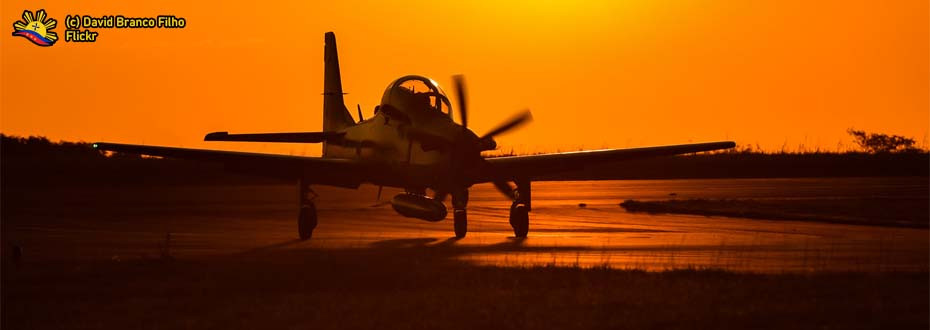
The Philippine Air Force is set to have its new Close Air Support Aircraft which is ultimately seen as a replacement to the old OV-10 Bronco aircraft that still obtained on its inventory, pushing its Modernization phase further into new, sustainable platforms that obtain affirmed support from its supplier for the years to come.

It is with this aircraft that the service branch of the Armed Forces of the Philippines sees its capabilities where it will provide additional firepower needed in augmenting the ground troops in getting the objective that requires such tools in making it done.

DISCUSSION OVERVIEW
A-29 Super Tucano Afghanistani Air Force
An Afghanistani Air Force A-29 Super Tucano Close Air Support Aircraft.
Obtained via Wikimedia Commons.
The Philippine Air Force is set to have its own new Close Air Support Aircraft which is set to replace its older OV-10 Broncos that this service branch of the Armed Forces of the Philippines currently uses, which sets a precedent for an eventual Modernization of the Air Force's 15th Strike Wing which will be the end-user for these platforms.

These units may help enhance the capabilities that the Philippine Air Force obtains for Close Air Support operations wherein it goes handy with the country's current resolve on its counterinsurgency operations against bad elements that compose of both communist terrorists and their radical Moro equivalents.

Furthermore, the deal regarding this kind of aircraft will come with six units while there may be more prospects for additional assets later along the way where it may serve as the primary or mainstay close air support fix-wing aircraft for the Philippine Air Force to use for many years to come.

Also, this serves as Embraer's first introduction to the Philippines as they managed to get a percentage of the country's defense market in which it will not be surprising for them to get more along the way as procuring more close air support aircraft usually comes at the rationale of getting similar assets, in line with streamlined logistics for maintenance and operations.

With its delivery as of this article's posting still suffers from the delay due to the outbreak of the pandemic which in itself is an understandable thing, let us discuss in the platforms in detail wherein these close air support aircraft are an improvement or enhancement from an older variant of this line of aircraft that was once discussed on this blog website.

RECALLING THE EMB-312 TUCANO
Read more: Knowing the EMB-312 Tucano, written September 2016.

To understand more about the historical aspect of the A-29 Super Tucano Close-Air Support Aircraft that the Philippine Air Force will soon be having in its inventory, kindly check the linked article about its development, particularly to the earlier variant of such types of aircraft made by Brazil's Embraer aircraft namely the EMB-312.

A product made in the 1980s, the EMB-312 Tucano serves as a stepping point for Embraer to enhance this aircraft further into what is now known as the A-29 Super Tucano in which, like any aircraft across time, is integrated with many upgrades that affect its avionics, propulsion, weapons displacement capabilities and others that currently composing this aircraft which will be discussed on its specifications.

Adding up more information regarding this aircraft, it is originally designed as a basic trainer aircraft intended for the Brazilian Air Force's aspiring pilots to enhance their skills especially on experiencing actual flight with its outset having a jet-like experience that will prove useful for the aspirants once they embark on a more realistic aircraft much like what the current KT-1 Woongbi trainer aircraft that the Korean Aerospace Industries (KAI) offer to the Philippine Air Force for such similar project.

With around 500 orders internationally during that time plus 168 orders for the Brazilian Air Force, it can be said that Embraer's marketing of the EMB-312 (or A-27) Tucano is effective in the sense that it helps propel the product further into its current iteration, now being categorized as Close Air Support Aircraft that is helpful for countries like the Philippines to have in augmenting its current platforms in service.

That being said, the EMB-312 Tucano and the orders that it has shows the ideal interest surrounding this aircraft in a manner that it benefits its manufacturer Embraer in the long run, now reaping further benefits in securing multiple customers across the globe especially respective national armed forces that are eyeing the capabilities of this trainer aircraft as well as its younger, close air support cousin.

SPECIFICATIONS
Click to enlarge. Screengrab Source.
As compared to its EMB-312 Tucano Trainer aircraft predecessor, the A-29 (which also known as the EMB-314 Super Tucano, came with a similar service ceiling of 35,000 feet as designed although the A-29 is heavier at 11,904lb max takeoff weight as compared to its predecessor trainer variant at 7,000lb especially given that it came with an external payload capacity as indicated above that define its close air support capabilities even further.

Also, the A-29 Super Tucano has the maximum level speed of 320 knots which can be equated to around 368 miles per hour (mph) as opposed to the EMB-312 that only has 241 knots or 278 miles per hour (mph; clean at 10,000 ft) which is justifiable as the A-29 is heavier wherein a faster airspeed is required to get its ideal glide ratio.

Regarding its armaments, the A-29 Super Tucano is apparently capable of equipping with both the AIM-9L Sidewinder air-to-air missiles and AGM-65 Maverick air-to-ground missiles which are both available currently with the Philippine Air Force inventory for armaments as well as other precision-guided bombs that the service branch currently obtains. Moreover, it is also ideally equipped with a 12.7mm machine gun on its wings which should be supplied by FN Herstal, a Belgian company which is seen as a current problem as its Wallonia province implements an arms restriction against the country, prompting Embraer to source this subcomponent from other notable sources.

Take note that these Belgian-related arms restriction concerns also cover the Light Tank project wherein both Indonesia's PT Pindad and South Korea's Hanwha offered their respective products - the Harimau Hitam and the K21-105 tanks with turrets made by Belgium's John Cockerill, formerly known as CMI Defence.

Hence, the Belgian concerns prompted Embraer to look for other sources in terms of its machine guns, wherein it remains to be seen to which supplier is willing to fit their machine gun products onboard the A-29 Super Tucanos that the Philippine Air Force ordered in a sense that it subtly creates a different variant of such aircraft for the Philippines which is different from the usual Belgian-equipped ones that Embraer produced.

THE AIRCRAFT IT INTENDS TO REPLACE
OV-10 Bronco Philippine Air Force
The aging OV-10 Bronco of the Philippine Air Force's 15th Strike Wing.
This discussion also covers the close air support aspects of the Philippine Air Force which primarily tackles more on its aging fleet of OV-10 Broncos wherein these assets are needed a replacement which eventually comes as newer assets like the A-29 Super Tucanos are on their way.

At its overview, the OV-10 Broncos became the mainstay of the Philippine Air Force's 15th Strike Wing and its Close Air Support Capabilities since the late 1980s as it was intended to replace the AT-28D Trojan which in itself is a close air support/attack derivative of the original T-28 Trojan trainer aircraft and also the one of the most capable aircraft of its time before the replacement.

First developed and produced in the mid-1960s, the OV-10 Bronco is already considered an old design although its performance is still can be seen as relevant especially that it played a role in Close Air Support operations against radical Islamic Insurgents that wreak Marawi City in 2017 which still gives an idea regarding its relevance into the modern spectrum of combat that focuses on counterterrorism operations which are the very thing that the newer A-29 Super Tucano aims to have, playing a similar role with this kind of capability.

In a nutshell, the country's southern archipelagic neighbor Indonesia also possessed OV-10s at one point in time for their close air support capabilities which helps them quell internal unrests in Aceh and West Papua until it was eventually replaced by the newer A-29 Super Tucanos which is definitely the direction that the Philippine Air Force faces as the years come by.

With the Philippines and Indonesia being the primary users of such type of aircraft in the Southeast Asian region, these nations may further benefit on logistics chain as other countries like Colombia, Ecuador, Dominican Republic, and Embraer's mother nation of Brazil also uses the A-29 Super Tucano for their respective close air support needs wherein there will be multiple sources for spare parts that are helpful to keep these flying weaponry operational and in proper order.

TO SUM IT UP

The Philippine Air Force's procurement of A-29 Super Tucanos is just a process of keeping the assets of the 15th Strike Wing up-to-date in the same manner as its regional peers in Southeast Asia do in terms of getting military assets to the current times just like in the case of Indonesia when it replaced its older OV-10 Broncos with this newer, similar aircraft originated from Brazil.

Also, this development may help Embraer extending its marketing reach in the region wherein they cover both the Philippine and Indonesian military markets which later may improve their reputation further shall a future purchase of additional units takes place or the expected after-support help that they may provide as part of the contract that keeps these platforms in the tip-top shape.

Being an improvement over the older EMB-312 Tucano, the A-29 Super Tucano shows that it gets more capable than its designed predecessor that it can perform more than just a trainer aircraft which in this case is being a decent close air support platform that may get its job done just like the older OV-10 Broncos that it has set to replace which is the main premise to why it has been preferred by prospective end-users such as the Philippine Air Force that will form its updated fleet of military aircraft.

As it enters active service to a military branch of the Armed Forces of the Philippines, it is worth seeing its capabilities as things got on the way as its performance may prompt the end-user to consider for more additional assets later on, upon their discretion as the current situation in the country temporarily pushes Modernization plans a bit as the budget has realigned just recently to cope with the pandemic.

Nevertheless, it is still a good thing that such aircraft may still end up being delivered to the Philippine Air Force as these six brand new units are considered as a significant addition to the close air support capabilities of the 15th Strike Wing wherein it may be nicer if more units of such aircraft may get considered along the way.


(c) 2020 PDA.
Share:

Time

Translate

Articles

Total Pageviews To-Date

Webpage Visitors

Free counters!
