


Reasons Why BT-67 Basler is Not Appropriate for PAF

This machine, derived from original C-47/DC-3 fuselage of the Second World War, is once again being offered to the Philippine Air Force with the use as a gunship and medium transport. However, albeit the cost-effectiveness, such a plane will not have its effectiveness in a modern-day battlefield.

OVERVIEW
This is the BT-67. A C-47 derivative. From Airport Journals Website.

In this article by IHS Janes 360 dated October 13, 2016, aircraft company Basler offered its Product which is the BT-67 aircraft, to the Philippine Air Force (PAF). This had looked like a replacement for the aging OV-10 close-air-support aircraft that the PAF gets in its arsenal. Considering this, they are offering on a gunship version of this aircraft wherein this DC-3 derivative plane, according to the said article, is the most proven airframe there is since it gives an exemplary performance during the Second World War. Accordingly, the only difference this plane has with the original ones are the digitized avionics, turboprop engines, and other improved electrical systems.

However, the offer slowly becomes of a discussion matter across defense outlets wherein this offer, albeit its affordability, is an issue of its own. 

Considering that, the company offers a design that is proven once from a great war which will render obsolete in modern terms. 

Not to mention that other considerations such as the number of military users required before the Air Force obtain them. 

Add to that, the other better planes have there that can fit the gunship description with the sense of having a modernized airframe with avionics and engines at par or improved further than the BT-67. These in which we need to get considered.

Among these things, as well as the main point of this discussion matter, there are many reasons as to why BT-67 Basler is not appropriate to the Philippine Air Force.

KEY REASONS
Converting an old C-47 airframe to a BT-67 format

Here are the given key reasons why BT-67 is not appropriate to the Air Force in the sense that it gives the sense of loading its cargo and several other factors.

1. Nonexisting Ramp Door
US soldiers passing through a ramp door.

Ramp doors are a usual thing in the Philippine Air Force, especially in its logistics and airlift division. From the small CN-212 aircraft to the large C-130 planes, all of these air transports have ramp doors for easier loading and offloading cargo of various types.

This feature is indeed the first and the most important in the Philippine Air Force wherein such capability ranges from better loading to the rapid deployment of the said troops and equipment to the ground. That means that having a Paradrop from a C-130 plane which has a large rear ramp door is better than presumably, a C-47 where the BT-67 has derived where an airborne trooper needs to jump at the side of the plane. More unto this, ramp doors have the equipment which makes things easier in loading supplies into the plane. 

That includes several light vehicles. Here, though, dropping supplies and vehicles in a parachute with ramp doors is a better thing to do. Having this feature is very important where the lives of the crew and the airborne troops are at stake. These things do matter where rapid deployment is a matter of the overall success or failure of the mission provided.

Overall, the BT-67 fails in this first part of rapid deployment matters. Albeit its strategic importance in a form of the older C-47 during the Second World War, the same will no longer apply today wherein the modern dimension of the battlefield full of guided ordinances, albeit the questionable reduced signature against MANPADS, will never stand a chance at all.

2. Weapons capability, Airframe, and Rapid deployment
This is the Dakota Hunter Gunship. From their website.

Speaking of weapons capability, it can be seen as ideal to look back on the armaments such a plane can bring, especially from the C-47 planes that have been used as gunships, such as the Dakota Hunter in Vietnam. (Seen above)

Albeit the firepower that can be seen as effective in the theaters of Vietnam and Colombia as what the Dakota Hunter website has cited for, the reason number one can be put again as the prime reason where the space for extra ammunition is greater with planes with ramp doors than the BT-67/DC-3 plane. 

Not to mention that such aircraft acting at a role as a gunship needs to be rapidly deployed in the battlefield with its given needs where guns shall be immediately loaded in bulks which are deemed disadvantageous wherein time really matters. 

They indeed modernized this plane where FLIR and other sensors apply to this aircraft citing its purpose as a gunship. However, given these things ranging from weaponry to sensors, the airframe design or rather, the airframes given are also given in doubt considering that these are re-manufactured DC-3 planes that as being said before, these planes of such kind are rendered obsolete in today's standards. 

One factor that may show that it rendered such weapons obsolete is that the Philippine Air Force operated C-47 planes before, as well as several Civilian airlines/transports with the DC-3. But with these planes being retired with fatigue as one factor, it is as well not to have these BT-67 planes either unless if refurbishment of older C-47 aircraft is to be seen.

In this matter, one can also say that other aircraft like the recent C-295 that the PAF acquires have the better assessment of being a gunship where better guns can get installed than the BT-67 planes, not with the sense that conversion shall get needed compromising logistics, but gaining more aircraft of such type that may categorize as an air artillery.

3. Better Alternatives
A-29 Embraer Super Tucano

There are better alternatives than this plane that can give the Philippine Air Force more effectiveness in firepower, rapid deployment, maneuverability and other capabilities in which the BT-67 will surely be lacking.

As per the article provided by the IHS Janes, the BT-67 calls for replacing the OV-10 Bronco as a Close-Air Support (CAS)aircraft. But given the provided close-support, there are much better replacements to the said aircraft. First, there is the Close-air support program that the PAF undertakes, which the process is still ongoing. 

As far as the reports are given, the Embraer Super Tucano is so far the best bet for the said replacement since this aircraft, given its nature like the OV-10 which is a strike aircraft than gunships that BT-67 which will do runabouts where it risk the lives on board, is indeed appropriate to what the Philippine Air Force needs for a CAS aircraft. 

Moreover, there are also AW-109 gunships, MD-520s, and even land-based artillery that are better for area saturation than the BT-67s considering that these platforms have indeed proven within the AFP when it comes to battle. 

Speaking of these, it is better to stick on to these kinds of alternatives than having a plane based on the World War 2 design that is inappropriate to what the Philippines is facing today. 

And, as per given that it has proven in several air forces, including those in the United States, forget it. The Philippine Air Force is looking for platforms that suit its purpose given the needs of the whole armed forces, and these alternatives are indeed just right for that.

On layman's term, there are better things for the air force and the whole armed forces to have. Consider these factors: the whole armed forces are looking for a platform that gives what is best for the capabilities these said forces have. And with the BT-67, it only gives more disadvantages than the alternatives given here. Hence, buying what is the ideal platform is a necessity for every armed force, like the Armed Forces of the Philippines. It was just that given the things AFP has, BT-67 is inappropriate as an air asset for the air force to attain.

CONCLUSION

The BT-67 Basler, as its manufacturer's brochure has offered, has its promising features that may help the AFP to improve its forces whereas they may say that it's affordable, cost-efficient, supplementary spare parts and most of all, quick delivery from the company. 

However, the reasons given are worthy to share points why BT-67 is not appropriate for PAF to have, given the summary because the dimensions and the nature of the weaponry, systems and other factors the AFP and the Philippines as a whole does not seek such aircraft that may risk lives and decreases efficiency in time especially on loading and unloading and rapid deployment. 

Overall, such aircraft as what its manufacturer said may seem too good to be true but given the circumstances, it will not give the proper needs PAF is after for. Perhaps, a CN-235 gunship or a C-295 gunship may do, but citing it as a replacement for OV-10s, it may be appropriate to proceed in acquiring Super Tucano instead since this plane, like the OV-10s are strike aircraft that the PAF can enhance further. In summary, the Philippine Air Force, and the Armed Forces of the Philippines simply deserve better weaponry in the market. 

As they may say, one must not focus on cost alone, but focus instead on balancing it with its given effectiveness that gives an overall impact for the whole armed forces that affect the outcome of a mission.


(c) 2016 PDA. First edition 8-5-2022.
Share:

Alternatives for Rifle Procurement

The United States Government over the year supplies its weapons, firearms in particular, to its allies which include the Philippines. And recent reports suggest that a US Senator attempts to cut sales deals of M4 rifles to the Philippine National Police (PNP) where in fact it was not materialized and the deal is still on-going. But these come with a question: "In the event of such cutoffs taking place, what are the alternatives for the Philippine Government for it to sustain its weapons for the police, as well as for the armed forces?


OVERVIEW
M-4 rifle.
The Philippine National Police (PNP) is procuring around 27,000 units of M-4 rifles from a certain weapons company in the US. However, recent reports suggest that a certain US Senator wanted to block the sales of such rifles to the PNP due to the so-called human rights records with the connection to the recent clout in the Philippine-US relations as based on the Extra-judicial killings wherein it can be blamed to the President as part of its "War on Drugs".

Accordingly, these are the mere points given out from defense-related outlets where such weapons coming from the US are attached with strings wherein the terms of usage can be limited on where it will actually be used as per the recommendations of the US government. Moreover, the proposed stopping of rifles procurement, being said can be more on restraints wherein international sales on weapons can be cited as well through the Blue Lantern End User Programme which is implemented by the US Government since last year which it determines the evaluation of the user's records on weapons and armament usage where it can determine procurements, much like those people applying for credit cards. In the light of the events, several Philippine Senators like Sen. Panfilo Lacson slam the US government for its bully attitude as what this article citing that the actions made by the US is deemed unfair and not acceptable where the proposed cancellation of sales as the highlight in this issue.

The good thing is, the deal is still on the go as far as the two sides are concerned considering that the SIG Sauer, the supplier, sent a letter to its local supplier Intertrade Asia Pacific with regards to the rifles, as it is written here:

Consequently, Pitz Defense Analysis believes that such a decision may be overturned at quite some time considering the recent situations in the Philippines, but it is also ascertained that it might continue as well. Thus, only time will tell with regards to the situation.

These being said, the discussions of looking for alternative sources are still alive and need to be analyzed in the sense that such alternatives can give its advantages and disadvantages in the sense that these things, being weighed out, will determine the best alternative for the forces to consider.

ALTERNATIVES

There will be three alternatives given in this situation. That excludes the re-negotiation and improving the human rights situation in the Philippines as well as improving the ties between the US and the Philippines. Although these things are welcoming reports that by nature benefiting both countries, it is at best focus on these alternatives as we explain to you the standards that these alternatives do bear.

The alternatives are determined through its advantages and disadvantages as seen through the context of the Philippine Government and the organizations do involve as well as the technicalities, specifications and other measurements with regards to the weapons themselves. Moreover, the alternatives stick to the only theoretical situation where if the United States decided to cancel the sales of weapons to the Philippine National Police wherein it may reflect procurements of more, sophisticated weapons to the Armed Forces of the Philippines.

With these prerequisites, these are the alternatives that the Pitz Defense Analysis that may go possible in these kinds of situations may sprout out.

Alternative #1: Local Suppliers
Government Arsenal Booth.
Several senators agree on it, and the people wanted the government to go for it. Locally-produced weapons would mean more jobs for the people as well as growing domestically-produced weapons industry which will mean the portion of the nation's growth. Speaking of local manufacturing, several companies are for the production of ammunition, rifles, pistols and light arms that is for the needs of the military. Those known companies are:

- Arms Corporation of the Philippines (Armscor)
- Government Arsenal, Department of National Defense (GA, DND or simply GA)

These weapons companies are known to supply both the police and the military all over the years which determines the idealism on the words "self-reliance" that the government is after, where it goes on to the specifics: Self-Reliance Defense Posture or SRDP.

Now, to the specifics: the weapons these companies produced are based on the primary design of the US-made AR-15 where M-16 and later, M-4 was based on. These kinds of weapons are well-integrated to the use in the Armed Forces as well as to the Police and other organizations concerned such as those in BJMP and BuCor. Logistics-wise, it is ideal to have them since other countries as well as local ones can simply repair or produce them further like the Government Arsenal repairing some old M-16 rifles for government re-use.

Bureaucracy-wise, there are problems where several companies encounter various things that are not favorable to them. Privately-owned companies like UDMC are no longer allowed to sell their weapons to the AFP and PNP when the Government improved the mandate of its arms manufacturing arm Government Arsenal where it will be the prime and only supplier of equipment starting from ammunition, refurbished rifles and production of improved weapons for the government to use. But as of this moment, the Arsenal can't still produce more of them as what this article suggests, but it is as hopeful that they can have such capability again as per the given period.

It was cited from R.A. 9184 or the AFP Procurements Law where the provisions stated about the guidelines as for the government to follow where it hampers the ability of small local players like UDMC in joining government bidding projects due to the required experience in getting a previous contract worth 50% of projects being tendered. These in which may revise where the local companies can compete as well as getting involved in such a matter where these companies will cooperate one after the other as part of the SRDP model.

The improvement and further institutionalization of the Arsenal have deemed the part of Old AFP Modernization Program or R.A. 7898 which also coincides with the SRDP model which talks about the government leaning to producing its own and will not relying on procuring from others. Speaking of which, UDMC and others may opt instead to the civilian market where numerous retired military and policemen as well as others who wanted guns as part of their right to protect so that their business will be still on the go.

The only concern in this alternative is on the production itself, especially on producing those rifles in huge amounts like the PNP ordered from SIG Sauer which they procured 27,000 units. Such number of units are too big for the local companies to cope up with, not to mention that the pricing involving in the project may be so huge that when it comes to bidding requirements, it may subject to failure considering the facilities, investment, and the quantity to quality ratio which means sticking with the timeline of the procurement itself as what the contract, presumably goes to be.

In summary, here are the highlighted pros and cons for the first alternative.
Pros:
- Improving the Local Industry may lead to
 >More jobs for the people
 >Attribute for a better economy
 >Self-reliance where the country made its own
 >Increasing patriotism through cooperation.

Cons:
- Such action is disadvantageous due to
 >Procurement Policy
 >Lack of facilities for mass production
 >Limitations on support, especially private industries
 >Other bureaucratic and sensitive issues which it will never get discussed here.

Alternative #2: Procure from Eastern Block
Avtomat Kalashnikov 1947 (AK-47),
a masterpiece by Mikhail Kalashnikov (the one in the image).
Image Source.

In the light of improving relations between the Philippines and the Eastern Bloc countries like China and Russia, it is deemed possible to have an arms deal which it involves rifles where it was produced in these aforementioned countries.

Speaking of these, we may see having these several Russian made and its Chinese copy rifles in the arsenal in the inventory. Good as it can be where an AK-47 rifle alone saw combat in several hot spots across the world where such weapons are so light and good to use that even the evilest of groups obtain them to reap terror on the people.

There are also good assault rifles aside from the AK-47. The others are its sister AK-74, SVG guns, and several others including the Chinese ripoffs. These in which are the ones that the government may be eyeing right now considering the value that the relations may bring one over the other as well as having another source of equipment giving a big plus to the military.

But with such an alternative comes with a problem. First, with regards to operability. Both the PNP and AFP adhere to western-based weaponry which as discussed before on this page that the personnel is more used to weapons such as M-16 and R-4 Remington rifles. These in which require light sets of training where although it seems that OK, applying it to all of the personnel requires time where specializations are to be taken place in such a matter. On the bright side though, such operability may overcome later on with the sense of improving the skills of the personnel when it comes to handling different weapons.

The second thing to point on is logistics. Just like any other sophisticated weapons, logistics is one, major obstacle when it comes to procuring weapons especially from Russia and/or China. These in which that the spares of these weapons can be seen cannibalized for the others to function or procuring another set of weapons from the outside to replenish the overused ones. Seeing into this, it may cost some cash where it comes to procuring it once again not to mention that there are no local industries are making such a weapon. The good thing here is that it may overcome by having more orders by bulk where the cost will be lower in the sense that replenishment may be seen as a good thing there. Bulk orders of spares may also do where it is a big plus for such light arms. These in which will give the advantage to have these weapons alongside western-made ones.

And lastly, security nightmares. As of this moment, the Vivendi with China by the Philippines through the so-called "Charm Offensive" is so far working. But all of that does not dismiss the fact that the Chinese are still in the disputed West Philippine Sea/South China Sea area, having their artificial islands much better in function later, still doing patrols in the area, and having their fishermen do their thing despite that the local fishermen are allowed in the disputed zones such as the Scarborough Shoal. Speaking of these, in the event of the whole conflict, it may be possible that the Chinese will convince the Russians to cut off the trade or smuggling counterfeit copies where it will blend with genuine ones where it can render useless in the time of the battle. Hence, it is vital that such things might never happen or the rifle's performance maybe sabotage.

And here are the pros and cons for the second alternative:
Pros:
- More sources of weaponry
- Easier use and is lighter than the western ones
- More production in sheer numbers where it is variably cheap to acquire.

Cons:
- Operability issues
- Logistics
- Security concerns

Alternative #3: European Sources
The German HK SL8-5 semiautomatic rifle.
Image Source.

If procurement is impossible in the United States, it may be as ideal to have NATO-standard equipment from the European Community. Speaking of these things, there are many options to choose with as for what source the firearms will be getting, either from the French, or from the Austrians, or the Germans, or the Italians and so on and so forth.

The PNP, considerably ordered Glock 30 pistols from Austria as part of their improvements in their organization as they are up-arming them with such weapons that are light, easy to use and adhere to the NATO standards. One example is the award of a rifle to a wounded soldier.

The benefits that the European Sources given is that they offer weapons that are compatible to the standards both the AFP and PNP adhere as well as having more sources of equipment wherein the reliability on the United States will be decreased a little bit more but not totally eliminate it considering that there are several parts in these weapons are made in the US.

And with this comes as a problem: SIG Sauer is a German arms company, which means it falls in this alternative. And this specific company is the one who supplies the 27,000 units of rifles to the PNP which was proposed by a US senator to cancel the deal. The main reason for this is that Sauer has its facilities in the United States that built these weapons which are intended for the Police. Hence, such firearms deal are within the jurisdiction of the US Government not to mention the design and the standards that have used in these weapons are derived from the US firearm makers.

With connections in the United States weapons industry, it is not dismissable for a fact that a possible cancellation of sales included European-made ones. Albeit the higher chance for those ones that are made within CONUS, it is still possible for those units being produced in Europe as well considering that the technology and other things integrated are still originated in the US. Moreover, it can still be fixed where such weapons are still being insisted by host countries in Europe for the sake of business wherein the provisions are given that there will be no strings attached.

And here are the advantages and disadvantages of having them.

Pros:
- NATO Standard of use
- Easy Integration of firearms
- Better reliability and usage

Cons:
- Possible cancellation due to pressure
- It comes with restrictive uses.

CONCLUSION

These alternatives are given. And the question now is: "Among these alternatives, which we will choose?" The answer is in fact, none as for now considering that the deal is still ongoing and the relations are not that low as compared to the US-Russian ties which are on the low than those during the Cold War. 

However, it is at best that these alternatives are to be given attention wherein the decision-making body has the call as to what alternative will sound best. And in that, it is at best to say that all alternatives shall be considered wherein the advantages will weigh more than the disadvantages.

Overall, these analyses shed light on the idea that there are still alternatives to the problem where more cards are still at hand for the nation to consider. With this, it is ideal that the armed forces, as well as the police force, will be armed in the sense that the mandates given will be fulfilled by each personnel with responsibilities handling these reliable firearms that will determine life or death, victory or defeat, and glory or humiliation.
Share:

Is the M-113 Arisgator Ideal for the AFP?

The Philippine Army gets many M-113 armored personnel carriers in its arsenal. Having these APCs changed as an Infantry Fighting Vehicle already took place. With that raises the question of a floating kit that makes these APCs more amphibious than the way it used to be.

OVERVIEW
M-113 in the Philippine Army Arsenal

The Philippine Army since the Vietnam War already got these M-113 Armored Personnel Carriers. These are further increased when the United States delivered 114 of these units as an additional complement to its arsenal.

The army further enhances its M-113 by having changed versions of those gained from Elbit Company of Israel. It all started by having six RCWS-armed M113s in the arsenal. These are also further added by having three 30~40mm gun turrets in which it can complement with other changed M113s such as the repair version or the ones armed with scavenged Scorpion Turrets. 

Hence, these changed armored personnel carriers, called as infantry fighting vehicles, are an additive to the already-capable mechanized division of the Philippine Army with the chances of improving it to a more heightened level which adheres to the AFP's aim of a world-class army on 2028. Having these M-113 vehicles comes with the chance of having the Arisgator kit coming into play as a possible amphibious product for the Philippine Armed Forces, especially to its possible or say, presumably users Philippine Army and the Philippine Marine Corps. These kits for the M-113s have provided its worth in service in the Italian armed forces and the Indonesians are looking after it for their Army to deploy in Indonesia's swampy areas and deep rivers where such deployment is ideal.

This kind of discussion comes up with a question for a series of questions where these kits are possibly an excellent investment of the armed forces or there are more excellent alternatives where it comes to logistics, troop transport, and immediate deployment. These in which comes a good question that needs a good, technical and analytical question: "Is the M-113 Arisgator amphibious kit ideal for the AFP?

IN-DEPTH ANALYSIS
The same question has raised in the Defense of the Republic of
the Philippines, where such questions have already debunked in Timawa.

In order to solve this kind of question, let us have a kind of insight into where the planners are thinking about the ideal matter where in-depth technicalities may get explained thoroughly as the discussion goes on.

The M-113 Arisgator design have made out from the 1990s where the Italians purchased and gets such design. The Indonesian army is eyeing to have such amphibious craft in which accordingly will definitely help their army to deploy their infantry in swampy areas and deep rivers, somewhat an environment Indonesia have where the Philippines are also having as well.

In such case, here are the following variables where we need to answer these questions, which it provided them in the following list below:

1. Are these feasible for the AFP to get?
2. Is it ideal for the Philippine Marine Corps to have them?
3. Are there better alternatives for the PMC to have other amphibious craft other than this one, or complementary units coming onto it?
4. Is it ideal for the Philippine Army to get them since they have those large stockpiles or M-113s?
5. In connection to number four, citing Indonesian Army's interest to have them, is it good for the Philippine Army to adopt what the Indonesians are having?
The specifications of the M-113 Arisgator. Image Source.

According to Chris McNab's book Military Vehicles, the Italian company Aris developed a far cheaper floatation device or rather, a swimming kit, to an already-amphibious M-113 armored personnel carrier wherein itself have poor performance on the water. With these, the floatation device earned its name as The Arisgator, naming it from the Italian company who developed it.

With the information of its origin now is given, let us return to the question which will bear variable to the discussion in which the Pitz Defense Analysis will now give its answers based on other discussion matters relating to this topic as well as the analysis given from such discussions in which it bears logic.

1. Are these feasible for the AFP to obtain? Well, the answer to that is a clear yes since the swimming kit made by an Italian company made it become less expensive to obtain, not to mention that it was really meant that way since a fully dedicated amphibious vehicle is far more expensive when compared to this one.

Now, this is where the discussion gets deeper. It is an undisputed fact that it is affordable for the AFP to attain. Now another follow-up question sets in, which is "Which branch within the AFP will be the recipient of these vehicles assuming that we have them?" To answer that question, it has already given the series of questions and mentions earlier that two branches can have them. It is the Philippine Army and the Philippine Navy's sub-branch, the Philippine Marine Corps, which may get questioned to the number two regarding the ones who are really fond of amphibious landings.

2. Is it ideal for the Philippine Marine Corps to have them? Given the technicalities and the variables at play in this organization, it is possible for them to have such vehicles. But then again, back to the question, is it ideal? The answer is a big, big.....NO.

So, why not? The M-113 are so common in the AFP where compatibility is not an issue? And these things are affordable for the marines to have? The answer to these question is indeed technical in nature that the fundamental point of saying no goes to one, very important detail, somewhat a very important point for the marine corps to consider, which is the number of troops capable for an amphibious vehicle to carry.

Say, they are the Philippine Marine Corps and they will be the recipient to have such amphibious vehicle. Now, they have this doctrine which sets the standards as to what steps, procedures and ideal numbers, carrying capacity included, have written and have implemented strictly. 

So in their standards, larger carrying capacity has needed. Hence, that puts the Arisgator out of the picture considering that it is in their standards that it demands the immediate transfer of infantry, from ship to shore with sheer numbers that is needed to overwhelm beach defenses as well as reducing time for amphibious ships involved in the operations (Landing Craft Units, Landing Ship Tank, Landing Platform Dock) to get exposed from shore artillery which determines the victory of the operation. 

Hence, it is ideal for the marines to have a larger amphibious vehicle such as the AAV-7 (KAAV-7 are the Korean equivalents the Philippines at present may have) so that there will be shorter trips between ship and shore to deploy the whole Marine Battalion Landing Teams (MBLT). This comes up with another question related to this matter.

3. Are there better alternatives for the PMC to have other amphibious craft other than this one, or complementary units coming unto it? The answer is yes. There is a better alternative for the PMC to have other amphibious craft. In fact, it is already in the work-in-progress wherein some accounting and production have already taken place that it is the Hanwha Techwin (Formerly Samsung Techwin) will be the ones who produce the KAAV-7 which will complement the Tarlac-class LPDs the Navy obtain which is ideal for an amphibious operation. The reason for these things pertains to the marine's doctrine which was explained in answer number two.

4. Is it ideal for the Philippine Army to obtain them since they have those large stockpiles or M-113s? Technicality-wise, considering the compatibility and the logistical advantage due to the enormous number of these armored personnel carriers in its inventory, no doubt one can say it will be ideal so unto that. Moreover, the term "amphibious" that is defined here is so different from having it traverse a swamp or a river is different than the usual ones done by the Marines such as a shore landing in which it was given earlier. 

Although it was ideal for the army to have such vehicles to travel marshes, deep rivers and the like, a typical mechanized division, alternatively speaking, will be more opted to self-bridging or self-propelled pontoon equipment where alternative bridges are being built at places where already-made bridges are destroyed or the place renders no structured bridges at all. That will be possible by having the area air dropped by airborne infantry, then supplemented by reinforces through the transport helicopters, then that's the time the army engineers enter the scene by deploying the materials necessary to built a pontoon bridge for a mechanized infantry to passed by.

5. In connection to number four, citing Indonesian Army's interest to have them, is it good for the Philippine Army to adopt what the Indonesians are having? Well, considering the demands and requisites both forces are aiming, this kind of question cannot answered that easily because of the first and only the very reason there is to consider,  which is the doctrines of each of the nations have. 

Albeit the tropical climate that both countries have as well as having the same geography such as being an archipelagic nation does not detrimental than what has applied in Indonesia shall get applied in the Philippines. 

It is because that the different asymmetry of doctrines these nations have aimed for their different kind of interest and for different capabilities. Hence, the difference of these things have influenced by what are the threats prevailing in the environment plus the weapons these militaries think they suit the best for the operation. So, one cannot just simply adopt it.

CONCLUSION

Getting these KAAV-7s for the Philippine Marine Corps is the better decision rather than the M-113 Arisgator path. Got from Bemil Chosun Website.

Given the questions, we shed the light as about the good and the bad points about the Arisgator as an ideal amphibious vehicle to the AFP. With that comes a question of whether the Arisgator is ideal for the AFP? Well, with that, the ultimate answer here is that it can be ideal if the AFP is a cash-strapped organization where they resort to cheaper equipment so that they can conduct their mandate. 

But given the present stance of the armed forces, it can be seen as well as non-ideal vehicle considering that other alternatives will benefit the armed forces more than fully relying to these changed M-113s where its seating capacity is lesser than the KAAV-7 the Philippine Marine Corps will get as well as the good proposal of an ideal pontoon bridge like other armies would do. 

Overall, this vehicle is one, good amphibious machine that Italy gets for its armed forces where Indonesia is considering, while the Armed Forces of the Philippines is interested in something else rather than this one, it is a good thing that the alternatives in which they choose intends on benefiting the ever-increasing capabilities of the whole armed forces with its aim to become a world-class army by the year 2028.


(c) 2016 PDA. First edition 8-5-2022.
Share:

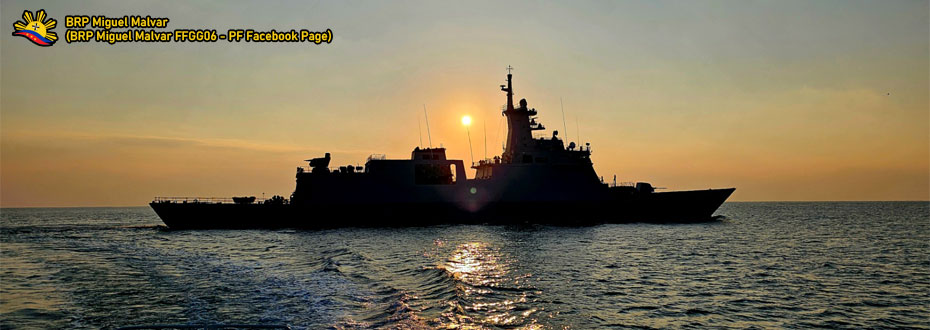
The New Philippine Frigate and Its Features

The Hyundai Heavy Industries and the Philippine Navy Signed a contract bearing at around $334 million U.S. Dollars (15.7 billion Pesos) to design, construct, and deliver the newest combatant ship in the fleet with the first one to arrive in 2019.

OVERVIEW
The contract signing took place on October 24, 2016
at around 2pm. Credits to unknown owner.
The contract signing was begun last October 24, 2016, at around 2:00pm. It was done through the agreement set weeks before the contract signing at around September and the first weeks of October. The signing was done by Defense Secretary Delfin Lorenzana and the Executive Vice President of Hyundai Heavy Industries Ki-sun Chung. The exact cost of the project is at around $334 million or around Php 15.7 million. This is considered to be the first big-ticket project signed by President Duterte's administration which the project originated back from the former Aquino administration and is part of the First Horizon of the AFP Modernization Program.

BRIEF HISTORY
HDF-3000. This is where the future frigates will be based. Courtesy of the Korean Navy.
Last 2013, the Department of National Defense – Bids and Awards Committee placed a bid for the acquisition of two brand new frigates with the contract price of 18 billion pesos after rejecting the decision of procuring the Italian Maestrale class Frigates due to an issue pertaining to its operation.

There are bidders who participated in the deal of procuring two frigates to the navy. Consequently, the duration of the program bid is a bit long due to the fact that the consultant was hired to tender the frigates to its needed capabilities, which it will be enough to conduct anti-submarine warfare as well as anti-air warfare. 

Upon the first stage of bidding, the participants reduced to six. These participants are named Garden Reach Shipbuilding and Engineering (GRSE), STX offshore, STX France, Navantia S.A, Hyundai Heavy Industries (HHI) and Dae Sun Marine Engineering (DSME). Upon the evaluations made in the second stage of bidding, two are found to get passed and is considered contractually flexible and these are HHI and GRSE. 

Upon price offer, GRSE is the lowest calculated bidder followed by HHI. Garden Reach offered the 109-meter Kamorta-class Corvette while the HHI offered the Incheon-class frigate. Thereafter, GRSE failed to pass the post-bid evaluation due to financial issues which brought the HHI as the winning bidder with the Notice of Award issued last September 1, 2016.
Conceptual design of the future frigate. It mixedly combines HDF-3000 and HDF-3500
Now, the project contract is being sealed HHI bagged the $340-million project. The ship’s ultimate design will be out by the end of the year 2017. Construction will be begun in 2018 and the two ships will be delivered to the Philippine Navy first in late 2019 and second in late 2020.

DIMENSIONS AND DESIGN FEATURES

Dimensions
Weight: 2,600t
Length: 107m
Beam: 12m
Endurance: 4,500nm at 15 knots
Top speed: 25knots
Engine Configuration: Combined Diesel and Diesel (CODAD)

Weapons:
-1x 76mm Oto Melara Super Rapid Gun
-4x SSM-700K C-Star Antiship Missiles
-2x Simbad Remote-controlled launchers for Mistral Missiles
-2x Triple torpedo tubes for K745 Blue Shark anti-submarine torpedoes
-1x MSI Defense Seahawk RCWS plus 30mm gun (Secondary Gun)
-4x manually operated M2HB 50-caliber machine guns

FFBNW
-1x 8-celled Vertical Launch System (VLS)
-1x Close-in weapons system (CIWS)

Combat Management System:
-Thales TACTICOS CMS

Sensors:
-3D Surveillance Radar: NS-106 AESA Radar
-Hull-mounted sonar: Thales Bluewatcher
-Fire Control Radar: Thales STIR 1.2 EO Mk.2 FCR
-Electro-Optical Tracking System: Thales Vigile LW
FFBNW
-Towed array sonar

Miscellaneous:
Countermeasure(s): Wallop Super Barricade countermeasure system
Tactical Data Link: Thales Link Y (with Link 16 and Link 22 as FFBNW)
Infomatic Photo: This is the specifications of the ship.
Pitz Defense Analysis/MaxDefense

ANALYSING THE SHIP

The ship, first and foremost, once will be commissioned, will be the most capable, modern combat ship in the Philippine arsenal is capable of antisubmarine and anti-air operations. In fact, this may be the first ship in the navy to have a fully integrated weapons capability system that will involve missiles and torpedoes to do its mandate.

Its systems and sensors are greatly influenced by the French company Thales. The ship’s CMS, TACTICOS, is one of the known and the most proven CMS there is in the market as of the present. Hence, it will benefit the Navy for its performance considering its weapons integration to the sensors, in which it is undoubtedly Thales ones.

Its sensors are a great leap for the navy capabilities, so to speak. The 3D surveillance radar will be supplied by Thales with its NS-106 AESA radar which is undoubtedly better than initial technical specifications given by the bids and awards committee which is 2D. Thales will also more sensors on the ship like the Bluewatcher sonar which will be used, STIR 1.2 EO Mk. 2 FCR for the 72mm Oto Melara main gun and the Vigile LW which is used for Electronic Warfare.

Regarding weaponry, the ship will be armed with a 76mm Oto Melara Super Rapid Gun in which it will fire at 120 rounds per minute (rpm). The ship-to-ship missile launchers will cater the SSM-700C-Star ASM in which it will be two twin launchers, two Simbad-RC launchers will also get armed in which it will be armed with Mistral missiles. Four M2HB 50-cal machine guns will also be armed in the ship and the FFBNW features will include 8-cell vertical missile system for air defense, close-in weapons system for both surface and air targets, and towed sonar array for submarine detection. These in which will give a great leap for Philippine Navy as it is revolutionary for the organization to introduce itself in the modern-day spectrum of the battlefield.

As per the dimension, its 107m length and 12m width may suffice the ship’s capabilities in present terms. However, such a dimension for the ship has little space for improvements when it comes to more weaponry attached, such as anti-ship missiles and the vertical launching system. More unto this, it is as hopeful for the navy to consider these things so that it will be fixed and properly set up as the ultimate design will be up. For instance, many from different defense outlets agree that the Simbad launchers shall be on the lower part of the deck of the ship, rather than the top of the bridge citing reloading reasons. Another is that the ship’s hull will definitely cover the main weapons, such as anti-ship missiles, torpedoes and the RHIBs, for armed assaults.

CONCLUSION
The deal is now set. Via Sec. Lorenzana's Twitter Account.
These ships, two new frigates from Hyundai are one of the big-ticket projects of the Philippine Armed Forces for the first horizon which may be done alongside FA-50PH from the country of South Korea where the ships will be made and the Tarlac-class landing platform docks from Indonesia where it gave the Navy its amphibious capabilities. It is ascertained that the weapons on these FFX-Philippines derivative ships will also get integrated on the Del-Pilar class Frigates for commonality, where it will give full significance on the capabilities of the Philippine Navy’s offshore combat force. 

Overall, these ships are one of the symbols of modernization that gives a drastic change to the Armed Forces of the Philippines in which by year 2028, as what they are aiming for, will be a world-class, fully capable force for which it fulfills the mandate to enforce the nation’s territorial defense.

(c) 2016 PDA Original Edition.
(c) 2022 PDA Second Edition (revised 4-4).
Share:

Time

Translate

Articles

Total Pageviews To-Date

Webpage Visitors

Free counters!
