


The Philippine Multirole Fighter Jet Procurement Program

As Horizon 2 funding now being approved and other procurements of military assets are in place, this program is one of the highlights for the horizon's list of big-ticket projects intended to bolster the capabilities of the Philippine Air Force further to the point that it can protect the skies once again and implement the Philippine Air Defense Identification Zone (PADIZ) along its way. This program, along with others, aims to have an armed force capable of minimum force deterrence against any domestic and foreign adversaries.

WHAT'S IN THE NEWS
One of the Philippine Air Force candidate for the MRF program -
The JAS-39 Gripen.
Throughout the years, the Philippine Air Force aspires to have many Multirole Fighter Jets in its inventory even it predates way back two decades earlier on the original provisions of the AFP Modernization Program. As of this article's writing, both news outlets the Manila Bulletin and The Philippine Star reported that the Philippine Government with the blessing of President Rodrigo Duterte that this said project is about to get momentum with funding sets to approval where eventually, he approved it and paves the way for the further materialization of projects slated such as these capable flying assets.

Apparently coming from these outlets, they reported that PAF is opted to have 12 units or one squadron based on our preferences of what number of jets is composed within a squadron. Given that these news outlets regarding the platforms, it is composed of six (6) units which make the number of squadrons on the reports up to two. 

Nevertheless, it may come as a piece of good, heart-welcoming news to have where throughout the years, the Philippine Air Force is set to have this big-ticket project materialized in the hopes that this along with FA-50 Lead-in Fighter Trainer Jets will emphasize control over Philippine Airspace. 

Hence, this discussion is set to indulge in the timeline of the program from its first inception on the original AFP Modernization Program up to the present date where, given the timeline, takes up to two decades in which several negotiations, offers, and assessments were made to come up of the compositions of these fighter jets and, the lineup of candidates which will be discussed along the way on this write-up.

THE MRF PROJECT IN THE ORIGINAL AFP MODERNIZATION PROGRAM
The original AFP Modernization Program (R.A. 7898) opts for three
squadrons of MRFs but discontinued as the result of the 1997 Asian
Financial Crisis. Photo: Boeing (McDonnell Douglas) pitches F/A-18
for the Philippine Air Force. From LT. Col Francis Neri via MaxDefense
The idea of the Philippine Air Force plans of obtaining Multirole Fighter jets in its inventory is definitely not the new one. The firsts of such plans coming out in the open dates way back the 1990s as the administration of then-President Fidel Ramos passed the Original AFP Modernization Program or Republic Act 7898.

The number of units should-be obtained from the original program was composed of three (3) squadrons equated to 36 units of these MRFs. As shown in the photograph, McDonnell Douglas (now part of Boeing) pitches to the Philippine Government to bag the F/A-18 fighter jets alongside other candidates such as Lockheed Martin F-16 C/D Block, Dassault Mirage 2000-5, and the Mikoyan Gurevich MiG-29 where it was demonstrated by the newly-democratic Russian Government that was also pitching at that time. 

However, such aspirations that almost went to fruition was simply disappeared as the region plunged in the 1997 Asian Financial Crisis that effectively, affects the Philippine economy which renders the resources wiped out and putting the original AFP Modernization Program at a stall. 

For this reason, the economy takes time to recover and as the change of tenures takes place as one administration takes over the other, this program wasn't materialized up to the point that the Philippine Air Force retires its last of F-5A/Bs in 2005 and beyond. 

It was only in recent times that this topic is being raised again and makes progress starting from the organization coming back to the jet age upon purchasing the Lead-in Fighter Trainer jet (LIFT) FA-50s from South Korea's KAI or Korean Aerospace Industries. 

From there, the aspiration for multirole fighter jets is emphasized given that these LIFT jets serve as an interim platform for primary protection of airspace at present as well as a training platform for pilots before embarking on projects like this. 

It is to have the training of operating and maintaining such aircraft hand-in-hand to the purchase of the airframes themselves, minimizing flight hours which lessens the fatigue for these jets on flying where in turn, lengthens its serviceable life.

Despite all of that, the program that is started in the original Modernization Program and wasn't made a reality that time somewhat provides the foundation in a sense that it shows the sense within the Air Force ranks where the dreams and aspirations of a fully-modernized fleet of aircraft simply do not fade away. With all of the negotiations and assessments made, the time is getting closer that the project will materialize once a go signal is given.

IN THE HORIZON 2 
The Lockheed Martin F-16 Block 70/72 Viper is one of the candidates
of the program alongside SAAB JAS-39 Gripen. Photo Source
As being said earlier, the number of units for multirole fighters slated for this Horizon equates to 12 units which are equivalent to one squadron whereas there will be another 12 units for Horizon 3, which amounted to overall 2 squadrons or 24 units for the whole AFP Modernization Program phase. Hence, in each horizon mentioned, there will be one squadron allocated for funding and procurement.

Apparently, for this program intended for the main multirole fighter jet program of the Philippine Air Force, it comes with two prevailing candidates as of present wherein its respective manufacturers are willing to sell their products as well as to bag the contract.

Add to that the number of additives and sweeteners that may entice the people of the Technical Working Group (TWG) to consider, ranging from after-support to the "real" transfer of technology in which may see the benefit for the Air Force in maintaining the aircraft. 

It is given in the sense that this program looks to be competitive, considering that these main airspace manufacturers provide their respective deals that may seem advantageous in its own worth as both sides aim to claim the Philippine market for these jets. Now, here are the candidates of the Multirole Fighter Jet Project where it will define the capabilities of the Philippine Air Force.

F-16 Block 70/72 Viper

The revelation with regards to this multirole fighter option traces to the post made by another defense page where, as asked by one commenter, the answer is clear that the Philippine Air Force-Technical Working Group (PAF-TWG) wanted brand-new airframes for its Multirole Fighters, and Lockheed Martin is willing to sell it

This information provided is somewhat astounding on its own worth provided that the Block 70/72 Viper is the most sophisticated or advanced version of F-16 presently available in the market in which it is still produced in Lockheed Martin's Assembly Lines. 

This should be chosen, will further enhance the capabilities of the Philippine Air Force given that it is equipped with further-advance avionics, active electronically-scanned array or AESA radar and also a compatible platform with the FA-50 LIFT jets the air force obtains at present given that these airframes in the inventory are derived from F-16s which eases the transition of the pilots that were trained in the Lead-in Fighter Trainer Jets. 

Add to these things that F-16V platforms are powered by General Electric F110 engines which is more powerful than the F404s from the same manufacturer that powers the FA-50 jets presently obtains where the former provides more thrust than the latter.

Basic Aircraft Specifications From Lockheed Martin Website.

Length: 49.3 ft / 15.027 m
Height: 16.7 ft / 5.090 m 
Speed: 1,500 mph (Mach 2+) 
Wingspan: 31.0 ft / 9.449 m 
Empty weight: 20,300 lb / 9,207 kg 
Engine thrust class: 29,000 lb / 13,000 kg 
Maximum TOGW: 48,000 lb / 21,772 kg 

Design load factor: 9 g 

Here is the document or PDF File about the F-16 Block 70/72 Viper.
This is the F-16V. This is considered the advanced version of such
jets recently in production with Lockheed Martin. Source
SAAB JAS-39 Gripen Block C/D

Read More: The SAAB Gripen and the Marketing Over Philippine MRF Program.

It is discussed widely from this website and across defense communities that the JAS-39 Gripen from SAAB is currently the top choice for the Philippine Air Force pilots for this project. 

However, unlike the Lockheed Martin that is willing to provide its latest version of F-16s, SAAB is keen to sell its still-producing JAS-39 Gripen Block C/D rather than the latest, developing Block E/F which is for delivery in nations like Brazil and Sweden which is far more expensive to purchase with. 

But, despite these things up, SAAB is still aggressive in its marketing strategies to get the local Philippine MRF market in a sense that, as discussed in the SAAB Gripen article, points to the company set-up of its office in Manila alongside naval offerings as well as getting negotiations on-going for eight to ten years as discussed in SAAB's annual Gripen Seminar dated last May 2018

Even though SAAB offers its C/D Block of its Gripen Fighter Jet, the company is reputable on providing sweeteners where in the case of Thailand, the deal includes a SAAB Erieye Airborne Early Warning and Control Aircraft on board a SAAB 340 aircraft, training, and command, and control system with data links alongside a squadron of JAS-39 Gripen. 

It may not be far that SAAB will offer the same thing to the Philippines or it may include other potential sweeteners such as "true transfer of technology", better after-support for logistics, and spare parts chain, among others. 

It might be better for SAAB to offer its latest version of Gripen which is the Block E/F to counter those of LM, but its offer of the earlier and cheaper C/D block plus sweeteners and aggressive marketing in the hopes that its deal may find its way enticing to the Technical Working Group. 

Nevertheless, it is at best the decision of the TWG given that their assessments are for the best of the Armed Forces like the air force in this situation. Call these deals from both SAAB and Lockheed Martin a tough, competitive call to have, because a tough, healthy competition is something for a military branch like the Philippine Air Force to benefit where both suppliers are doing their part to grab and reap the sales that may have come up from the program. 

Although as the multirole fighter program gets the sign that it will proceed, let there be a nice discussion on the existing aircraft in the Air Force that may get treated as Multirole Fighter although it is clear from the very beginning that the organization categorizes it as Lead-in Fighter Trainer jets or LIFT.

Here is the chart with specifications about all variants of JAS-39 Gripen, including both C/D and E/F Blocks. [pdf file]

The aircraft SAAB Offered is something several, if not most PAF
pilots and defense community members admire for the MRF Program.
However, the Technical Working Group's decision is still what matters.
Additional FA-50PH fighters

Since the delivery of a squadron of FA-50PH for the Philippine Air Force from South Korea, there are several calls that an additional squadron or two of these kinds of aircraft shall be purchased instead of multirole fighters given that these Lead-In Fighter Trainers are already capable of its own worth. 

In fact, their multiple news articles that pertain to this proposal. One of those pertains to the recent visit of President Duterte in South Korea where such jets were produced. These jets and their roles as a fighter as well as a trainer was well discussed in our 2016 article entitled: "The Role of FA-50PH as Both Trainer and Light Fighter" where, although it is capable for air interdiction, its capabilities are still in no match to primary Multirole Fighter jets such as the JAS-39 Gripen and F-16s. 

Well, these jets, capability-wise may be considered as "light multirole fighter" that is capable to shoot air-to-air missiles and drop bombs as demonstrated in Marawi Conflict. Nevertheless, its designation in the Philippine Air Force as a Lead-In Fighter Trainer or LIFT definitely states its role in the organization as a staging platform for willing-to-be-trained pilots to enhance their skills on flying such aircraft and for mechanics on maintaining such aircraft before proceeding on the real deal which pertains to the more-capable, purely-designed multirole fighter jets.

IN COMPARISON THE PROS AND CONS
This is to provide comparisons between the candidates given to provide the bigger picture. Note: LM as per posting is offering its
Block 70/72 with specs more advanced than the F-16 Block C/D
depicted in the infographic. Obtained from PAF Air Power Journal entitled
"M
ultirole Fighters For the Philippine Air Force" by Lt Col Augusto Padua.
Link to the Source
Among the two candidates and one option, each competitor has its own edges in terms of pricing, capabilities, freebies, commonality, logistics, and so on and so forth. These things do really matter given that it will affect the ways maintenance work and operations for future Multirole Fighter jets have done where the capabilities and the mandate of the Philippine Air Force to protect national airspace lies at stake there.

As for the Lockheed Martin F-16 especially that it offers the Latest Block 70/72, they definitely have an edge for logistics considering that many air forces across the world use the F-16 platform of various types, making it viable for several sources in terms of spare parts to keep these birds flying and operational. 

Moreover, their offer also has the greater capability given its more powerful engine which provides more thrust to the jet as well as this platform having its service record in combat as it is used by various air forces like the United States in several combat sorties it made throughout history. Although a bit more expensive as the block C/D JAS-39 Gripen of SAAB, its capabilities and potentials provided are as impressive of its own worth.

So as for the JAS-39 Gripens offered by SAAB which is the C/D Block, it is still ideal on its own worth despite being less capable than the aforementioned competitor given that its engines, the General Electric F-404s are compatible with the assets that are presently in service with the Philippine Air Force which is the FA-50PH from South Korea

From there, one may think that it actually minimizes logistical and interoperability issues given that both the maintenance and spare parts for these two different jets are as similar as the type of powerplants these assets are used. However, having such similarities may also mean almost equal capability in terms of thrust with the variance attributed to other factors like payload capacity, airframe design, and in some other ways, purpose. 

The point is that FA-50s are derived from the original KAI T-50 Golden Eagle which is intended to be a Trainer Aircraft. It was only that FA-50s are armed to teeth, capable of carrying both air-to-air and air-to-ground munitions that are deemed essential for the Philippine Air Force as a Lead-In Fighter Trainer aircraft. 

In other words, the offer of SAAB is affordable and compatible should maintenance comes in the story with the only difference is that the product they offer is less costly in operations while providing the capabilities that make it a multirole fighter aircraft

For FA-50s, having either SAAB JAS-39 Gripen or LM F-16s for Philippine Air Force's MRF program is beneficial in each respective, mutualistic way. That is, having resemblance with F-16s which is ideal for pilot training to such aircraft while having the same engine with JAS-39s that benefits the supply chain and maintenance matters. 

In each and every way, this competition is a tough one where one in every way, should one candidate be chosen, will provide the air force its intended capabilities while lessening the burden either on those given inputs, one way over the other. To add things further, both of these aircraft offered can be equipped with Link 16 Tactical Data Link (TDL) where both the Lockheed F-16 and the JAS-39 Gripen can be integrated into a secured military communications network in interoperability with the air forces that obtain such networks like those within the North Atlantic Treaty Organization or NATO. 

Hence, these things from specifications to sweeteners are for the Technical Working Group (TWG) to assess and determine with the primary aim is to provide the best capabilities on an ideal Multi-role fighter jet for the Philippine Air Force on a worthy investment where this goes to the assurance that the plans of implementing a Philippine Air Defense Identification Zone go on smoothly, in line on the organization's flight plan.

WHAT IS TO BE SEEN
This is to provide details that the candidates for MRF are
really between F-16 Fighting Falcons and JAS-39 Gripen.
As the Horizon 2 budget is now approved, it is worthy to see the procurement process rolling especially in the case of this big-ticket project of the Philippine Air Force where this lies the capability of the organization for more years to come especially in line with its Flight Plan 2028.

This procurement program is competitive in the sense that suppliers are willing to provide the needs of the air force on the slated budget allocated for a squadron of capable air assets. 

For sure, the PAF-TWG is doing its part where doctrine, organization, training, materiel, leadership and education, personnel, and facilities (DOTMLPF) are being considered alongside assets that the air force, as well as the other branches of the armed forces. 

That means, alongside the fighter jet acquisitions comes the training of the personnel to operate and maintain, updating the doctrine regarding the use of airpower, efficient supply chain, and other relevant things in line with the DOTMLPF process. (Note: this process will be discussed in a separate entry for more elaboration). 

Add to that, having multirole fighter jets not only improves the capabilities of the air force to protect the skies against potential adversaries coming from the air but also may provide the better image of the air force as an organization in which these assets, alongside others, are a symbol of stronger armed forces aimed for minimum credible defense which makes any intruder think for consequences before considering a strike or a conflict.

Hence, the dreams and aspirations for the Air Force alongside the Navy and the Army to be more capable on doing its duties and responsibilities is on its way to fruition wherein the Horizon 2 signifies the importance of deterring both internal and external threats that pose danger to the national security of the country where it put innocent lives of the citizenry at risk. 

This project, along with others, comes with the hope that assessments, negotiations, transactions and the process, in general, will carry on smoothly until the delivery of these assets come by wherein this finally provides the minimum credible the Armed Forces seeks before any formidable threat that endangers peace on the citizenry and the nation's very security.
Share:

What It Really Means to be Patriotic?

A country or a nation composes of citizens that live up their lives looking after their families, their community, and of course, the country itself. And being a citizen comes up with respective duties and responsibilities needed in order to improve and protect the  sovereignty and welfare of the Philippine Republic where in return it benefits all of the citizens of the nation for the efforts given. 

With various issues from Mandatory ROTC to the perceived warmongering attitudes in dealing with the West Philippine Sea disputes, let us dwell and share thoughts with regards to this ever-relevant issue of this time period.

THE PRESENT BRAVADO
Mandatory ROTC goes like this, cadets marching on the field. Photo Source
With the present situation that is brewing up beyond the coastlines of Palawan as well as the number of bravado that it constitutes, a typical civilian may end up yapping on blasting up Chinese outpost to smithereens or somewhat gone disappointed with the Freedom of Navigation Patrols made by foreign navies in the West Philippine Sea. 

To add it further, the primary aim of the Mandatory ROTC which is to make a more patriotic and militarily-disciplined citizens out of Senior High School and College Students is somewhat gone vague in the eyes of those that have undertaken the program where, unlike its voluntary equivalent, may loss all the essence of what it means to defend the country and to have the will of improving self-discipline all because that these things are being enforced by pressure to the students, with its significance gone once graduated except to the very few who is willing to serve the nation.

These things prompts a number of people especially the ones in military service to somewhat convince civilians to join or enlist to the Armed Forces in order to measure the means of being patriotic. 

No doubt on that, given that the sweat and blood of the soldiers are the ones that are given in exchange of the cherished freedom we experience today. However, being patriotic isn't being limited to be in active military service or to endure what Mandatory ROTC is to bring on a student. 

It isn't all about bravado as well simply based on what lies to the surface without barely scratching the details of the way military forces operates, their supply chain, or in other highly-technical matters that a civilian simply have a clue, or not at all.

In fact, the activities that are being made everyday suffice the needs on supporting nationalism or to be patriotic in a sense that what perceives as an insignificant thing or a routine one is actually a driving force for the nation's growth and development where in it supplants the needs of the military in the name of national security. All what it needs for a person to see is a change of perspective when looking on patriotic stance.

Hence, the details below will provide what it means to be patriotic in the sense that a small thing definitely defines the success of the nation as a whole. And to add it up, these things are instilled even in the most basic levels all the way back when we were still kids. At the end of this writeup, the primary aim is to provide knowledge on the things needed with regards of helping the nation on a humble, patriotic way.

WHAT IT SHOULD BE
An Editorial Cartoon of the Manila Times on "Keyboard Warriors"
that thinks that there is no other way to deal the situation but
either to declare war...or not. 
Patriotic leverages are at times being showed up on Social Media where at times, it is being lined up with various agendas on the line. Now, let us discuss on the editorial cartoon made by the Manila Times shown above. 

On the one point of view, it definitely pertains to the ones who are brave online and the ones that prefers conflict without thinking of the consequences it may bring to the nation and its security. On the other hand, it also tells another thing. That is, subduing to the interest of the enemy in order to keep such war from happening and feeling all of its harshest of consequences. How is that so? 

The message of the editorial cartoon limits to two things - to wage war or not. It does not even consider other things such as soft power like diplomatic pressure or putting a stand where there is the will to defend the nation. Nevertheless though, this creation of art definitely sends the message across the ones who are noisy enough in the internet that waging conflicts or blasting their outposts out of the water is the best thing that one can do. But to take note also that things shall not be tantamount to simply giving in to the demands which defeats the essence of sovereignty.

The details above provides the glimpse on how things view with regards on measuring patriotism on a person. This is in a sense that a range of understanding or defining patriotism varies on each individual's take with its general definition which is pertaining to a citizen's loyalty and support for the country and its interest. 

The ones in uniform takes their job as one way to support the nation in a way that their lives are to sacrifice all in the name of peace and security for the motherland they love as well as their family that relies in it. It is of no surprise if a personnel suggests to citizens such as "keyboard warriors" depicted above that drafting to military service is the best way for them to feel what it means to be patriotic, in a harsh, realistic way possible than powerful blasts of firepower that is only seen on video or in photographs. 

Well, on that note, the military people simply gives an idea that war by any sense is a harsh, destructive attrition that all nations prevents from happening especially in heated conflicts like this one considering that conflict is beyond from what is simply firepower and destruction of enemy targets. 

Hence, it is best to understand things more rather than just calling for something that is simply not favorable where there are other ways to resolve things like the contested waters of the West Philippine Sea.

Read: Ways of Promoting Patriotism - The Pitzviews Blogsite

Now, we provided a link to our sister page where it writes about the ways of promoting patriotism in a sense that these are the healthy way to propagate it as well as giving an idea that Patriotism goes in many ways aside from warmongering or implementing a program that is not applicable to all of the youth. 

Hence, to give us an idea, there are small ways to contribute to the nation in a sense where, a citizen can be considered a patriotic person in his or her own ways.

1. Working Functionally

Working in the private company or, better yet, working on a government office is at first glance, a nice thing where contributing on the family's welfare and development is something that every employed member shall do. And there is just more than simply doing routine jobs in every field ranging from the administrative offices to hospitals and military bases. 

Working functionally is in itself a patriotic act where, regardless of being a uniformed personnel or not, a soldier or a professional of respective fields, or simply being a rank and file personnel in the office, each and everyone obtains their respective duties and responsibilities where, albeit its small footprint, is something that contributes to the economic development of the nation as well as addressing respective important matters ranging from food security to welfare of reformed persons in penitentiaries as well as sacrificing blood, time and sweat for the betterment not only of the family, but also of the community, the city, the province and overall, the country. 

This is where that doing the duties and responsibilities is far beyond what is expected, and also beyond the salaries, benefits and job stability offers wherein these in itself are a big plus on the pursuance of a better life as well as for the betterment of the family's welfare and also of the nation in terms of its economy, health, social development, infrastructure and national defense matters.

Hence, being a uniformed personnel, although ideal if one is really willing to sacrifice to the nation he or she loves, is not a prerequisite for everyone to follow especially in terms of measuring patriotism. 

What it means is that, simply by being an everyday civilian working on respective fields like being on a respective, reputable government agency is sufficient enough for the contribution of the country's development where in it benefits the armed forces where each and everyone upholds their duties and responsibilities in a sense that it gives significance of what it means to be a country and its cherished sovereignty.

2. Paying Taxes

This is the primary reason why citizens of the nation at times concerned with regards to the expenditures of the government especially in terms of education, infrastructure, social development, health, and of course, defense. Although that the citizens have a say about things with regards to the government affairs like military and defense-related issues, it is the folks within the ranks or in the technical positions are the ones who know better what is best and what is not. Hence, the best judgement is let these people do their respective jobs well and, should any anomalies comes at hand, a citizen can criticize in a constructive way where the government processes and mechanisms will work the rest.

Now, on the payment itself. It is taken note that the TRAIN LAW takes its toll on the typical citizenry especially on the continuous inflation of primary commodities especially on the ones that have salary smaller than the minimum wage and the ones that are unemployed. 

Well, this is simply one part of the story where the other part pertains to the services that the government is set to materialize. Just recently, the Department of National Defense is set to materialize plans for the Multirole Fighter Program and other plans in the Horizon 2 where, just like any other procurement projects, derived from the people's taxes as well as other sources such as the proceeds from Bases Conversion and Development Authority (BCDA)'s transactions. Now, one will ask that as a taxpayer, the citizen requests that the military shall procure assets that obtains huge firepower that will blast any enemy out of the open. 

That is in case, a simple citizen request where those in the know will help that person understand what it means to procure highly-technical military equipment where specifications, maintenance, after-support and logistics being the highest of considerations over this matter. 

Hence, from there the person will becoming more educated not only about technicalities of the military assets but also on the bureaucratic process that passes on any government transactions, defense-related ones included.

To sum it up, giving taxes is one way to be a patriotic person where any contribution is something that will keep the government operating given that this is one of the primary sources of the government funding required to provide its services as well as to make the military capable of doing its mandated duty to protect the motherland. Adding it further, it is more appropriate to be an informed taxpayer where rather than giving useless ideas that does not fit the story. 

Not only that, being informed also means making constructive opinions that help improve things up as well as getting to know about technicalities which in turn, provides an idealistic thought which in itself a patriotic move on its own.

3. Instilling Discipline and Patriotism -- In Different Ways

Instilling discipline and patriotism is what Mandatory ROTC aspires to aim for the youth of the nation where on that specific age, they are expected to be highly-disciplined (as far as military discipline is concerned) and highly-patriotic that they will know how to love the country in their respective wholeheartedness. 

Although such move is welcoming in some sense, the idea in its entirety is considered unnecessary and non-ideal considering that first, there are other ways of instilling discipline and patriotism and second, not all of those who are part of the curriculum are willing to be active personnel in the armed forces, if not being a reservist in the long run given that respective individuals have their own respective goals in life. 

Moreover, in those things other than being an enlistee, understanding discipline and patriotism in some other way may somewhat inspires the individual to push his or her desire to serve the nation in some other way, given that his or her capabilities is of beneficial use as well as this instills the principle that national sovereignty is something that needs to be cherished and taken care of given that each and everyone's life and freedom lies in it. 

So, one may ask: What are those alternatives by the way? The answer lies in these two things: Home, and School. This means that discipline starts on each and every parent's obligation on taking care of their children in the sense that molding them into helpful citizens of the nation that contributes for the betterment of society is really something if being taught at home alongside etiquette and moral values. 

Patriotism is the role of the teachers at school where, flag ceremonies and retreats are being observed, history lessons and culture being taught and providing the knowledge of how to love the country alongside molding future professionals for national economic development in which this may find helpful as the children become contributors of the better nation. 

Hence, these things, whatever the ways being given, is in each and every way helpful in instilling patriotism and discipline for this nation's citizens to have where in the name of hopes and dreams, inspirations and aspirations, these things are a catalyst of having a better nation composing of citizens that are cherishing and protecting it, and it is better in a way that it comes voluntarily than making it as a measurement or a prerequisite.

TO SUMMARIZE THINGS UP
It is with honor and salutations that we cherish the country that
in some way provides us the goodness in living. Photo from Inquirer
Discipline and Patriotism is something that an individual aspires to have where in each and every way, these things will consequently influence the way they live should these things allow them to do so. Furthermore, every citizen have their respective roles to play where regardless of how big or small the contribution is, these things upon accumulation is something that propels the nation on its intended direction.

What matters here is that, each and every citizen of this nation shall unite with regards of safeguarding the integrity and welfare of the Philippine Sovereignty in its entirety where in terms of economic, health, social, educative and security matters, it is the citizens who will benefit where this matters affect the way of living of each individual in the country where having satisfaction on government services, primary commodities, being safe or life in itself in general is something cherishable for the people.

Therefore, it shall be willingly instill to the citizenry that each and everyone fills in the shoes of making the advocacy, even in simplest of way, to promote nationalistic ways in a sense that it shall be centered to the country and its attributes in general while setting aside political and cultural differences. In this way, better things will be attain on what it means of cherishing the country, its sovereignty and the people who sacrificed blood and sweat for it.
Share:

The Final Specifications of the New Philippine Frigates

The Philippine Navy is set to have new large vessels that will soon become part of its growing fleet as part of the Horizon 1 process. We are referring to the New Philippine Navy Frigates that is set to be built by Hyundai Heavy Industries. In line with this, we are about to unravel the entirety of the ship and its specifications as agreed between the shipbuilder and the Philippine Department of Defense with details specified where a big picture of the frigates will be disclosed. This is with collaboration with our other defense community counterparts.

OVERVIEW
Department of National Defense Representatives led by Sec. Lorenzana with Hyundai Heavy Industries workers in Ulsan Shipyard.
Last May first, South Korean shipbuilder Hyundai Heavy Industries (HHI) starts building the two hulls, namely P159 and P160. These are the project numbers that refer to the New Philippine Navy Frigates that will be delivered sometime two years from now in 2020. This comes after months of negotiations and reviews agreed between the Department of National Defense (DND) and HHI at a certain point that controversy was made over the project worth the contract price of approximately 16 Billion Pesos. Nevertheless, the project proceeds as usual with incurring delays and at present, it is now taking shape in a shipyard in Ulsan, South Korea. With this project rolling comes with two questions: "What are the ship's specifications?" and "How its final design look like?"

HOW ITS FINAL DESIGN LOOK LIKE?

To answer the question, it definitely goes like this: It was taken note that a year ago, we posted an article here on Pitz Defense Analysis regarding the partial specifications of the ship before the revisions made by both HHI and DND. Take note of the CGI created by Hyundai Heavy Industries for the ship. 
The CGI of the Philippine Navy ship to be built by Hyundai Heavy Industries.
This will be the final design of the ship with minor changes that took place during the design review of the project initiated by the parties involved. The design will be the first for the Philippine Navy to have in which it will soon obtain a ship with a hull that reduces the hull's radar cross-section or the radar signal bouncing back to the enemy radar receiver. 

Such reduction of the ships' radar signature is given due to the clean superstructure incorporated into the ship's design wherein it partially deflects radar which in turn, decreases its susceptibility when detected by enemy radar. This is a trend on modern warships where the superstructure blends with the ship's hull with degrees in inclination are shown. 

ASEAN Navies like Singapore have these attributes on their Formidable-class Frigates as well as Indonesians on their Sigma 10514 Frigates. Technically speaking, these ships can be called as "stealth frigates" given its partially-sleek structural setup where, it may be better if the middle portion of the ship where the small Rigid Hull Inflatable Boats (RHIB), the torpedo, and the anti-ship missiles are situated shall be covered as well to further reduce its naval signature. This is if, both sides decided to have it included to have its susceptibility even lower. Nevertheless, this is a good start for the navy that still obtains old World War 2 vessels at a present date where it lacks the stealthiness that these ships will possess once in action.

The ship's design is among those that are revised aside from the subsystems that both the Hyundai Heavy Industries and Department of National Defense agree in which it composes the finalized specifications of the warships once being in active service with the Philippine Navy two years from now. 

Before we proceed, here is the tidbit for the Finalized Philippine Navy Frigate Design. Chances are, the scale model of the ships may find its way displayed on the upcoming Anniversary of the Navy as an organization part of the Armed Forces several weeks from now. So, from there, the opportunity perhaps may be provided to see the final design at hand, up close.

REVISED FRIGATE SPECIFICATIONS

Just to take note folks, this is the diagram that shows partial specifications originally provided by Hyundai after they won the bid where its specifications going in this way:
Before Revision.
And here is the revised and final version of the frigate subsystems with slight changes on the dimension of the ship and the positioning of several of the components available on the ship. Take note of the revised specifications as agreed by both the shipbuilder and the Defense Department that can be found in this new diagram made by this page in collaboration with our counterparts in MaxDefense Philippines:
After the revision/final specifications of the ship.
Now that two of the diagrams are shown out, one will ask: "What's the difference between these two ships?"

First, let us discuss the dimensions of the ship. As observed, there is a slight change in the beam and length of the ship in its entirety. The difference in these dimensions between the original and revised version of the ships are 107m / 106.4m in length and 12m / 13.8m in the beam, respectively. The ship's hull, in this case, became slightly shorter while it became wider where flows in the terms involving the Length-Width Ratio of the ship. Its size is roughly almost similar to the Sigma 10514 ship design of Damen Schelde that is in service with the Indonesian Navy as the Martadinata-class Frigates.

Another slight change given in this ship is its superstructure especially in the hangar portion of the vessel. Take note that the T-shaped platform intended for the Close-in Weapons system and the Decoy Launching System that improves the setup in that portion of the ship more from the previous design. Also, the other change that is not depicted in the diagram is the bridge where its structure and design are inclined with the windshields facing downward, just like the ones seen on the South Korean Navy's Daegu-class Frigates rather than the stealth-based depicted in the CGI.

There are no changes given on the ship's engine configuration as well as on speed and endurance. More of the noticeable changes are seen on the frigate's subsystem or components that define its capability as a combatant. Let us discuss the "final subsystems fitted into the ship in deep detail.

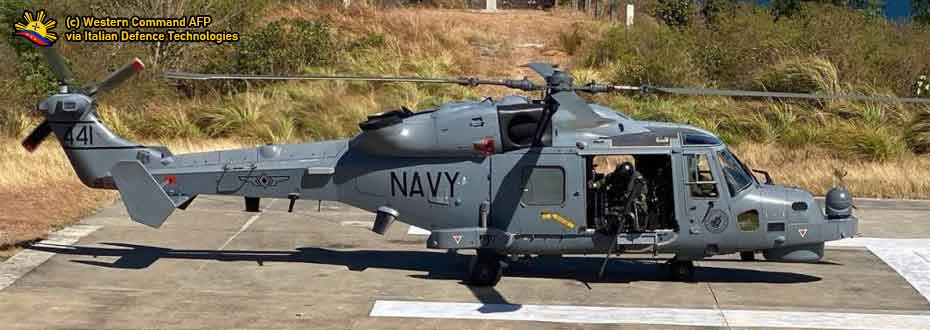
Note: The ships usually have a helicopter from the Naval Aviation designated in its respective hangars. In this case, the new frigates will come up with the Leonardo AW-159 Anti-submarine Warfare (ASW) helicopters. Being a separate asset on its own worth, this bird will be discussed in a different article.

Elbit Elisra NS 9003 Aquamarine ESM
Here is SAAR 5 or known as the Eliat-class Corvette of the Israeli Navy.
The Elbit Elisra ESM is seen on the uppermost mast of the ship.
From Naval Technology
As seen on the uppermost tip of the ship's mast, the Elbit Elisra NS9003 Aquamarine ESM is designed as an early warning sensor about ship self-defense especially when it is related to electronic warfare matters. This will enhance threat detection such as enemy radar signature as well as situational awareness where it can detect advanced threats that provides reaction time for the navy personnel on board to do evasive action. This is considered a leap of capabilities for the Philippine Navy with regards to this kind of technology where this is the first within the fleet to obtain this electronic weapon suite.

Harris Model 997 Hull-Mounted Sonar

The Harris Model 997 Hull-Mounted Sonar as described in the company's product section is a medium frequency sonar which functions as it is intended - to detect submarines and torpedoes at a depth which is an attribute for the frigate's antisubmarine warfare (ASW) capabilities. 

This will come in a combo with Tow Array Sonar which will come separately or in defense terms, Fitted-for-but-not-with (FFBNW). This platform in itself like the Elbit Elisra is an improved capability for the Philippine Navy to obtain where this once-obtained capability is once again gaining on-hand the same way as FA-50PH LIFT jets helping the Philippine Air Force returning to the jet age after the retirement of F-5A/B fighter jets.

MBDA Simbad Remote Control Launchers

Being one of the subsystems that went unchanged, the MBDA Simbad RC Missile Launchers as advertised is a lightweight launcher intended for ship defense. This may be seen as an immediate solution over the Close-in Weapons System (CIWS) that is also categorized as a system primarily intended for ship defense. 

Both of these weapons are the last line of defense for a ship like these frigates may have. Given the "fitted for but not with" attribute of the Philippine Navy frigates over the CIWS, these Simbad Launchers that is situated the hangar portion at both sides with the SMASH Gun System, will provide the defense needed in the ship with its Mistral Missiles being its ammunition. 

Oto Melara 76mm/62 Super Rapid Main Gun

Also being one of the unchanged subsystems since the shown original design, the Oto Melara 76mm/62 Super Rapid Main Gun is officially the one that will install on the new Philippine Navy Frigates. Take note that the information provided by the Navy Recognition that the Hyundai WIA 76mm main gun will be used is definitely false. For the sake of discussing this in detail, here is the requirement is given on the maker's list of the Philippine Navy for the frigates.
The photo source redirected from here.
Given the details, the requirement fits more to the Oto Melara 76mm/62 Super Rapid Gun considering that this main gun fires as what the operational requirement suggests which is at 120rpm or rounds per minute. Meanwhile, the Hyundai WIA 76mm main gun operates at only 100rpm which falls short to the requirement. Some side note folks, there is at one time that Oto Melara S.p.A and Hyundai Wia Corp. caught up in a spat against each other with the former claiming that the latter committed a trade secret infringement in which the South Korean Court rejected on technical grounds. Despite these things rolling around, the Philippine Navy will end up having Oto Melara guns which are ideal considering that it also runs compatibly with the main guns that the Jacinto-class corvettes and Del Pilar-class frigates use where it lessens the complications in maintenance and logistical matters on spare parts.

Kelvin Hughes Sharpeye X and S-band Navigational Radars

This is definitely a piece of good news on its own worth considering that this is definitely a navigational radar far more sophisticated than commercially-based radars. In this article news posted by the maker Kelvin Hughes, these radars obtain a sort of solid-state technology with systematic features that are applicable for naval and maritime security operations. This navigations system is ideal for a naval ship like these New Philippine Frigates to have, considering that the Del Pilar-class frigates also obtain such technology onboard in the form of MantaDigital surface radar system.
SharpEye's Radar Display. From Kelvin Hughes' Website.
Leonardo NA-25X Fire Control Radar
Check its technical details in a document here.

From the manufacturer of AW-109s that both the Philippine Navy and Air Force presently obtains actively in service an soon the supplier of AW-159 anti-submarine warfare helicopters that are also assigned to these new ships, the Italian weapons company Leonardo will supply the NA-25X Fire Control Radar in exchange to the original specifications for a fire control given which should be Thales with its STIR EO Mk. 2 Fire Control Radar. This Fire Control Radar is in service with the Italian Navy and, as the document claims, in service with 20 other navies of the world. Hence, the NA-25X FCR is worth for itself wherein given the present assets available in the fleet, this is an important improvement with a more sophisticated fire control radar in the fleet since the Navy presently obtains the older Mk. 92 Fire Control Radars installed in the Del Pilar-class Frigates.

Safran PASEO NS Electro-Optical Tracking System
Check its technical details in a document here.

Given the news reports from the maker's website [link here], the Philippine Navy seems to be the first user of these Safran PASEO NS Electro-Optical Tracking System that also doubles itself as a Fire Control System just like the Leonardo NA-25X that precedes this one. Given this nature, it technically makes the Philippine Navy some sort of a "testing platform" where the actual performance of this system will be pushed through by the end-user at the expense that there are no guarantees whether this Electro-Optical Tracking System will work or not. 

This will definitely go against Republic Act 9814 or the Revised Government Procurement Act that safeguards the end-user from kinds of transaction like this one, preventing an organization into being some sort of "guinea pig", while risking of having a failed system which affects the overall performance of the vessel, wasting taxpayers' money in the process. Nevertheless, take this as a benefit for the doubt, where only time will tell whether this system works for not. Side note folks, this is the system in place of the more proven LIG Nex1 SAQ-540K Electro-Optical Tracking System which is in service with the Korean Navy.

ASELSAN SMASH 30mm Secondary Gun System

The Turkish-based company ASELSAN will provide these 30mm Secondary Gun Systems for the New Philippine Navy Frigates in place of the Original Spec's MSI Defence Seahawk 30mm Remote Controlled Weapons System (RCWS) which is ideal for the Navy to have considering that it obtains a 25mm variants of this weapons system on some of the Philippine Navy Ships, simplifying logistical issues on spare parts and maintenance in the process. 

The SMASH is fitted with a 30mm Mk. 44 Bushmaster II Cannon that is in service with various armies and navies across the world. So far, the Philippine Navy presently obtains BAE Mk. 38 Mod 2 RCWS which is in service with the Del Pilar-class Frigates alongside the 25mm MSI Defence Seahawk RCWS in service with ships like the Jacinto-class Corvettes.

Terma C-Guard Decoy Launching System

These Decoy Launching Systems from Terma as advertised is a self-defense or self-protection solution that keeps the ship and its crew safe from coordinated attacks ranging from multiple missile barrages up to incoming torpedoes. 

Reports from Naval Technology dated November 9, 2017, provided the details with regards to the capabilities that this decoy system can give to these new Philippine Frigates such as providing whole 360-degree coverage on the ship's defense as well as using SeaGnat 130mm decoy rounds for its function. Some interesting information about the SeaGnat folks. This countermeasure made by Chemring is in conformity with NATO standards which in it comes to the guarantee that this is a sort of solid-state technology sufficient to defend the warship from threats.

2x2 LIGNex1 SSM-700K C-Star Anti-ship Cruise Missiles

This missile system intended for the new Philippine Navy frigates will be considered as a milestone where at present is being started by MPAC Mk.3s in a form of SPIKE-ER Missiles from the Israeli Defense Company Rafael

More commonly known as the Haesong Anti-Ship Cruise Missiles, this weapons system is in service with the Korean Navy where it is seen installed on ships like the Ulsan-class Frigates and the Incheon-class Frigates where the latter serve as the basis for the New Philippine Navy Frigate design. 

In the ships, there will be two twin launchers with aims both at the port and starboard sides of each vessel that goes with the usual antiship missile setups of present combatants at the fleet. 

This may be upgraded up to the discretion of the key decision-makers on the later date where each ship may end up having two quad launchers in the same way as the ones in service with the South Korea Navy.
This Incheon-class frigate obtains two quad-launchers for C-Star Haesong.
Credits to its photo owner.
To see how it functions, here is the video with various South Korean Navy ships launching the missile from its respective launchers.


Once in service, the C-Star Haesong will serve as one of the primary armaments with having a long-range anti-ship missile installed in the ships that make these newest assets armed to the teeth. Aside from this missile system, there is also another component in the New Philippine Navy Frigate specifications that is as important as this one.

SEA J+S Triple Torpedo Launchers

This is the torpedo launcher system that aside from the Philippine Navy, their counterparts in fellow Southeast Asian Countries Thailand and Malaysia will also obtain this platform which is in conformity with NATO standards and presently in service in various NATO members like the United Kingdom

With this notable development with regards to the increasing number of users, this provides a good opportunity in the long run where numerous source for spare parts provided for these launchers to function is in place, decreasing the burden for troubleshooting and maintenance, as well as for logistical-related matters. 

The ships will obtain two units of these triple launchers per hull where it will install on both port and starboard sides of the ship in front of the RHIBs or Rigid Hull Inflatable Boats (see illustration as provided in this article).

After all of these weapons subsystems that compose of the Philippine Navy frigate are being enumerated, let us proceed to the very important feature of the ship which at some time plagues with controversy where, in no avail, the shipbuilder's preferred system still finds its way to the ships despite the objections of the end-user. 

Aside from these matters, the Fitted For But Not With (FFBNW) features are also being discussed where the potential candidates of these separate purchases may be ideal to have its way installed on the warships.

Hanwha Systems Naval Shield Baseline 2 Integrated Combat Management System
Read the related article for this system in a Pitz Defense Article Here.

This controversial Combat Management System stands in place against the Thales TACTICOS CMS which is in service with a couple number of navy ships across the world. As discussed across the two linked articles about our previous discussions on these systems, the Hanwha Naval Shield in itself was derived from the Baseline 0 of the Thales TACTICOS as a result of the then partnership of Samsung Thales before the breakup years ago with Samsung's successor Hanwha and Thales going separate ways. 

The arguments here are that several key Navy officers prefer the Thales TACTICOS CMS while the Department of National Defense together with the shipbuilder Hyundai Heavy Industries prefers the Hanwha Naval Shield. 

Nevertheless, both Combat Management System, in each and every way, is still an improvement for the Philippine Navy with the naval field composition not obtaining such a sophisticated system as this one. 

One argument that entangled this matter is the compatibility of the Tactical Data Link 16/22 to a Combat Management System wherein the assurance is more firm with the Thales TACTICOS given its record compared to the Hanwha Naval Shield. And for the record, both companies that create these said CMS also creates the Tactical Data Link with Hanwha's version is named as follows:

Hanwha Systems Link-P Tactical Data Link; Allocation for Link 16 and Link 22

This is Hanwha's offer of a Tactical Data Link which comes in line with its Naval Shield Integrated Combat Management System in which it is only limited to the Korean Armed Forces

Apparently speaking, their Baseline 2 of the Naval Shield is seemingly not in line or compatible with the required or should-be subsystems such as Link 16 and Link 22. This is the preferred Tactical Data Link of Hyundai Heavy Industries over Thales Link Y Mk. 2 with Allocations for Link 16 and Link 22, both of which being originally Fitted For, But Not With. 

In the compatibility issues that prevail on this matter, one can only be certain on its functions whether it goes as designed once it is active along with the ships. Nevertheless, the good thing that this is an improvement for the Philippine Navy fleet on its own worth wherein having more firm communications suite is in place on an organization that does not obtain such technology. 

This may pave the way for the personnel to enhance the skills needed to operate it where it provides the experience and knowledge needed for more future vessels that will obtain such tactical data link more solid-state than this product from Hanwha.

MTU/STX 12V1163-TB93 Combined Diesel and Diesel (CODAD) Engine
Check a Document for STX Naval Engines including this one here.

These naval diesel engines are indigenously produced by Korean Company STX Engines that are under license from the German company MTU-F. Given on the document linked above [in PDF form], each of these 12V 1163 TB93 engines produces 3,600kW to 7,400kW with 4,440kW on Fuel Stop Power with 1,300rpm on fast military vessels with low load factors. 

Take note that each ship as provided in the diagram will be provided four units of these massive engines in which it may help on the ship's propulsion and electricity needs as provided in the specifications in the contract where the ship will obtain a 25-knot top speed, on a 30-day endurance and having a 4,500nm range as well as the needs of keeping the electronic components of the ship functional.

Addendum: 4 x S&T Motiv Daewoo K6 12.7mm/50 general purpose heavy machine guns

For extra security just like any other ship in the navy, machine guns are meant to be installed on the ships wherein this manner, will be situated on the superstructure just behind the bridge where the MBDA Simbad RC Launchers is supposed to be installed as per original design. This Korean-made version of the M-2 Browning Heavy Machine Gun provides that small arms fire that will shoot small enemy surface vessels when approached within its range. 

FITTED FOR, BUT NOT WITH OR FFBNW SUBCOMPONENTS

Aside from these subsystems that will be installed on the vessels as agreed upon between two involved parties, there are also the subcomponents that simply come up later, once the ships are in active service. These are the Fitted For, But Not With subsystems which further improves each of the vessel's capabilities alongside the ones that are sure to be installed.

8-Cell Vertical Launching System

This "purchased separately" component aside from the C-Star Haesong will push the ship's firepower a step further. Ranging from defense to offense, anti-ship to anti-aircraft, this system upon the discretion of the end-user is helpful to give leverage especially in terms of the sailors on board to enforce their mandate of protecting the waters that embody Philippine Sovereignty and its Sovereign Rights covered under national interest. 

Given the Korean attribute of the ship, one possibility coming from this one is the idea of installing a Korean-made Vertical Launching System on the ships, considering the push of the shipbuilder to "go Korean" with the Hanwha System Naval Shield ICMS as an example. Just to take note folks, The Korean Vertical Launching System (or known as K-VLS) is also produced by the one that made the Tactical Data Link as well as the Combat Management System which is Hanwha Systems. 

And with that, the possibility for this VLS for installment is high given its compatibility with the respective Combat Management System due that it is produced by the same manufacturer.  Albeit the possibility, there are still chances that other suppliers of the Vertical Launching System may have their products on the way to the Philippine Navy Frigates depending on circumstances that may take place later on.

Close-in Weapons System (CIWS)

This component is considered the last line of defense that protects the ship from incoming surface threats like missiles and small hostile vessels. This works in unison with the installed components like the MBDA Simbad RC Launchers which obtains the same function as well as the Decoy Launchers by Terma. 

With regards to the question "Which CIWS will be the ones installed on the frigates?" The possible answer may come two things, that is either the Phalanx CIWS or the SeaRAM. The thing with these two CIWS is that the former is compatible with the Hanwha Naval Shield due to its service with the primary combat ships of the Korean Navy like the Incheon and Daegu-class Frigates and the latter being in the interest to be fitted in the ships wherein it will also function accordingly given that it is a rolling airframe missile version of the usually gun-based Phalanx which are both products of Raytheon.

Towed Array Sonar 

Another feature in this Fitted For But Not With subcomponents is the towed array sonar. As we took note, the frigates will be produced with the Harris Hull-Mounted Sonar installed on the ship which gives it the detection on subsurface elements such as submarines or incoming torpedos. 

Alongside the hull-mounted sonar, this component will provide the additional picture of the seafloor as well as for enemy detection which its function where necessary actions will be made for it like evading from an attacking submarine that fired torpedoes to eliminating it altogether. 

So far, there is no information with regards to which towed array sonar will be provided to the ships separately. Nevertheless, this FFBNW feature is a plus for the capabilities of the Philippine Navy especially in terms of the tools provided for anti-submarine warfare.

IN SUMMARY AND THE THINGS ONCE THE VESSELS TAKE SHAPE

The final specifications of the Philippine Navy frigates are different and a bit less capable than the partial designs provided by Hyundai Heavy Industries after it won a bid for the project. Given the situation, somehow, the fleet will end up, still with a capable warship that is better than the ones provided in its inventory at present.

From an incorporated design that reduces radar cross-section of the ship's hull to the sophisticated weapons and sensors that each vessel will carry, this provides the first for the Philippine Navy to obtain which is to have a warship that can be said as a "par" with the more-capable warships in the region. This is something that will boost morale for the sailors as well as for providing the way to a more-capable fleet with better-armed warships as the time passes by. Should various mistakes that may take place in this project that sparks controversy, that may serve as a lesson that provides the necessary actions on a next big-ticket project such us the Corvette Acquisition Project that an organization like the Philippine Navy will undertake, with decent funding and planning.

The new Philippine Frigates is still worth having for despite the imperfections that it obtains, considering that in each and every way, these warships, in the end, will conduct the mandate of the Armed Forces in the same way as other vessels on the fleet will do. Once active, the ships will further enhance and improve its overall capabilities that are designed to do the duties and responsibilities of a navy sailor that is to defend territorial waters and sovereign rights which is detrimental to the peace and security for the country, its sovereignty, and its citizens. 

======================================
UPDATES as of August 11, 2018

The scale model of the Philippine Navy ships was already released across Defense outlets including our Facebook Page with regards to what the final design (unless changes are requested to be made), will be for the Philippine Navy Frigates made by Hyundai Heavy Industries. As noticed, the center portion of the ship is exposed with the anti-ship missile, drafts for the RHIBs, and torpedo tubes showed up which by any sense induce its radar cross signature upon detection by some enemy ships.
The scale model of the ship. Photo from the FB account of Rafael Alunan.
But so as just to take note, such design may have a justification to why the shipbuilder opts to have it in the first place given the fact that the steel is cheap and it may get covered if revisions are provided. 

One consideration to be taken is that this ship may get slower than its intended speed of 25 knots (or slower if based on other vessels with the maximum speed of 30 knots) which makes it less ideal for maneuvering given that the steel makes it much heavy. 

Another consideration is that the set-up of the weapons and RHIB components in the middle portion renders it not ideal, given that the design was provided by the shipbuilder in such a way that the RHIBs may freely move or the anti-ship missile tubes having an exit for its fuel exhaust that provides the power for these weapons to propel and set for the target. 

Take note that several South Korean ships such as the Incheon-class frigates have its middle portion exposed as well, with so far no concerns for radar cross-section as far as information is concerned. 

Nevertheless, the platform is still better than what the Philippine Navy obtains at present. To add it further, another design feature that can be seen on this ship is the L-shaped pedestal for the Close-in Weapons System (CIWS) to be installed. 

From a point of view, it may be seen as an awkward feature where it is more ideal to simply have an island for the CIWS to be installed given that it may be seen by several observers as an uneven distribution for the ship that may affect its stability. 

While such issues on stability may not be held on the account is given that fewer proofs can suffice the justification, perhaps such a feature is something that only the shipbuilder knows where its usefulness remains to be seen unless proven that it may be seen as an annoyance.

Hence, as the ships are now being built, things remain to be seen to whether the L-shaped pedestal or the open middle feature of the ship pushes through as what the scale model was depicted. 

Nevertheless, if the design itself proves itself to be insufficient, it might as well a nice lesson to consider where better deals may come up after this warship later on. To keep the benefit of the doubt, it is a nice thing still, to see a ship that is suited to replace the old, World War 2 vessels the Navy presently obtains alongside the pending Corvette and Offshore Patrol Vessels of the Second Horizon. 

Hence, at the time of its delivery, we can see how the warship fare with what it is to be within the fleet, in active service.

==================================================
UPDATES as of May 20, 2019 (exactly one year since this article was first published).

The ships, now called the Jose Rizal-class Frigates, are now shown on the following image provided by our friends in the other defense-related outlet which is the MaxDefense Philippines.
Image Source.
Key Summary (obtained from MD page):
Frigate Acquisition Project - Lot 1 Frigate Platform with Launchers

* End User: Philippine Navy (Offshore Combat Force)
* Quantity: 2 units
* Modernization Phase: Horizon 1 Phase of RAFPMP
* Project ABC: Php16,000,000,000.00
* Acquisition Mode: 2-Stage Public Bidding
* SARO Release: TBA
* Winning Proponent: Hyundai Heavy Industries (HHI) of South Korea
* Product for Delivery: HDF-2600 frigate (Jose Rizal-class)
* Contract Price: Php15,744,571,584.00

Additional information:

The expected date for the launching of the ship may depend on the conditions that will satisfy between the South Korean and Philippine side where estimates may range from within this month up to the next month. 

Nevertheless, it will take a certain period of time more before this will be delivered in the country and eventually to be put into service within the Philippine Navy as the most armed and capable vessel that will it handle as a service branch within the Armed Forces of the Philippines.
Share:

Time

Translate

Articles

Total Pageviews To-Date

Webpage Visitors

Free counters!
