

The Spotted Chinese Tracking Ship and the PH-CN Pragmatic Relations

Since the tribunal decision in 2016 where the present government decided to set-aside for goodwill, pragmatic and "Charmy" relationships with China, the frequency of this naval ship visit becomes rampant as it defines the current, closer ties which cause sentiment to several citizens of this country given the conflicting issues between the two. This is in the light of the intensified issues that are taking place over the contested territories that both sides claim for their respective sovereign integrity.

WHAT'S UP?
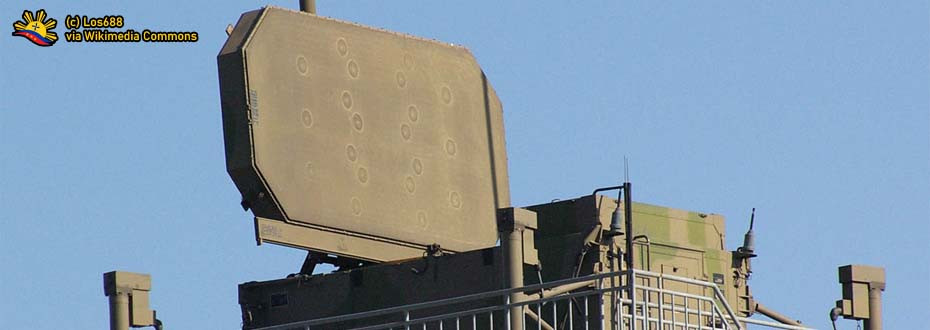
A Yuan Wang-class Tracking Ship spotted in Davao's Sasa Wharf
Just recently, A Chinese Naval Tracking Ship was spotted in Sasa Wharf (see above photo) clearly seen among passengers onboard a RoRo vessel especially the ones that have vacation-related itineraries in the nearby island of Samal (which in itself obtains a number of breath-taking and worth-taking spots).

This is the newest among the ships visiting such particular port since the change of stance in dealing against China last 2016 when the new administration seats in and the hallmark of the arbitral tribunal deciding against Chinese claims on the contested swathe of water which is also claimed by the Philippines. 

Let us take note that recently, Chinese President Xi Jinping visited Manila for a two-day state visit which was seen by the administration and supporters alike as a productive visit intended to fuel the investment on the local economy in terms of infrastructure projects and joint cooperation through the number of agreements signed by both parties. 

While things are as appealing and as hopeful as it can be for the country's growth and development, the sense of sentiment and disappointment also comes out among several citizens where arguments range from the country being a sell-off before the Chinese to a view that is seen as treasonous which is a no-no for national sovereignty. Furthermore, let us take note that recently, a news crew of GMA 7 was shooed by Chinese Coast Guard in the vicinity of Panatag Shoal which is still considered within the Philippine Exclusive Economic Zone or EEZ.

So, let us simply discuss the details about the ship that has docked in Davao as well as additional information that comes correlated with a couple of events that perpetrated in the country in relation to the disputed, contested waters with China.

THE SHIP SPOTTED
The larger view of Sasa Wharf, with the Chinese ship, docked on
the left side of the image.
The Chinese ship spotted in Sasa Wharf just recently refers to the Yuan Wang-class tracking vessel (远望 in Chinese) which means "Long View". According to this entry from GlobalSecurity, Such a vessel is intended for roles ranging from tracking Intercontinental and submarine-launched Ballistic Missiles down to satellite communication and data-related roles.

So as to its docking up in Davao City, it is done to the usual docking procedures which other ships also observe. The ship shown above is the Yuan Wang 3 tracking ship in which its area of assignment is in the Pacific Ocean. This is not the first time for the ship to dock in the Sasa Wharf, where the ship at several points in time already did the same prior to this latest spotting. 

One dates back July this year where it also finds itself docked in the area. Another, such as this one pertaining to the sister ship Yuan Wang 7, also docked in the area last August for re-provisioning and refueling prior to deployment on its intended assignment. There is another one for the Yuan Wang 7 last September. This makes their deployment in the area much as routinary where various Chinese crew may have an idea so as to the whereabouts of the City given that they may have the time visiting it. 

Moreover, this kind of norm goes as usual to the locals given that the ship is simply docked there in a way US Navy ships docked in Subic Bay which makes one wonder about this wonderful display of playing soft power in this country that is considered strategic regardless to what point of view or whether one sticks to the Chinese side or the US and its Allies side.

These Chinese ships are in Davao, where they made the City as a stopping point for their ships as lengthy voyage requires provisioning and fuel for the crew and the ship itself to operate according to their respective duties and responsibilities as intended. While such moves are seen as benign to this standpoint, just being a Chinese ship makes it uneasy for some of the citizens with the contested waters simply being a justification for it.

UNDERSTANDING THE PLAY - PHILIPPINE CHINESE RELATIONSHIP
Presidents Xi Jinping and Rodrigo Duterte Forged a deal - which actually seems
like China abides by Philippine jurisdiction.
Photo from
South China Morning Post [Link to the Article Here]

Pitz Defense Analysis Note: The following note is simply a point of view created with regards to the relations between two Far Eastern Nations. Inputs are provided by the author with respect to the facts raised.

While the forged deals are being seen with the utmost suspicion that it may get to the disadvantage of the country and its national interests, there is the other side of the coin that definitely speaking provides the insight of what it seems to be idealistic to the interest of the Philippines as a nation.

In a statement made by Acting Chief Justice Antonio Carpio just recently that one of the deals between the Philippines and China which is about the joint exploration of the waters in the West Philippine Sea obtains provisions in the Memorandum of Agreement of the deal that may be seen as compliance or recognition to the Sovereign Rights of the Philippines over the overwhelmingly-disputed waters where some of which is under control of China through its Armed Forces. 

While such point sees as a nice breakthrough for both sides for an agreement, it is worthy to understand that there is a bit of bleakness on this point of view given that China still controls several of the features like Panatag Shoal in the West Philippine Sea as well as having those Artificial islands that still poses the threat not only to the Philippines but as well to other claimants in the area such as Vietnam, Brunei, and Malaysia.

To understand further the points with regards to the diplomatic play in the area, it is worthy to understand the two sides of the coin. On one side, there is the Philippines, antagonizing China wholeheartedly which was done by the previous administration in a way that it triggers a couple of disadvantageous position to the country starting with Panatag Shoal down to the Artificial Islands in which they solidify the claim to these features situated in the West Philippine Sea - in which this is while waiting to the decision that the arbitral tribunal will make to the contested features of the sea. On the other side comes the present stance of the country -- the decision in favor to the Philippines being set aside (while being used as an ace card later on), forging a better tie with a nation that is perceived as an adversary like China and engage in economic trade that most likely benefiting both sides and forging deals that seems advantageous and compliant to the national interest and sovereign rights flowing through the adage of keeping friends like the traditional ally such as the United States close and adversaries closer. 

To take some note, this economic trade with China as perceived shows suspicion especially in the way debt or liability is being dealt with other nations in which the present administration sees to have consideration in it. In addition, the implying influence made by South Korea, Japan, and the ASEAN also plays the role for this kind of geopolitical approach, reflecting the growth and development of the services prevailing in the society in various ways ranging from meetings to donations of service and equipment as well as the number of naval visits and forging agreements which is to each its own.

Given the impression, there is the perception of openness as well as a pervasive plan to improve the country and its defense given that the Horizon 2 projects being on its way. While it may get commendable to have these respective projects approved and up for the taking, this will not satisfy nor prosper the minds of several citizens that have already shown discontent or disappointment to what the administration is doing like the "appeasement" that's being done to the enemy. Hence, their actions need a clear understanding so as any misinterpretations will be prevented. 

The situation of keeping a good relationship with a bully while fighting on the country's vested interest is a delicate measure that the government keeps on, where the perception of providing provocative moves means conflict. That is not necessarily the case, where a simple presence of a vessel in an area simply show that the country is standing on its claims, in a way that the intentions aren't for a full-scale conflict. A simple kind of deterrence it is while keeping tensions at bay. 

A war nor appeasement is the ideal key for the resolution of this situation but rather, by sending a strong and clear message to show the stance as well as getting in the negotiations table with the leverage such as the arbitral tribunal decision in place. This is to get the upper hand on the situation in line to the national interest of the country while giving importance of diplomacy in a way that tensions are kept at bay.

THE RECENT INCURSIONS IN PANATAG SHOAL
A Chinese Coast Guard Vessel spotted which are the ones patrolling
the Scarborough or Panatag Shoal. 
Photo Courtesy of the Philippine Star.

The situation in Panatag Shoal isn't changed since the last time the Chinese deployed their Coast Guard vessels in the area. They keep on shooing away fishermen whose living relies on that very fishing ground that China claims as part of what they call "integral territory". The latest incident in the area involves a Philippine media crew gathering some scoop for a documentary.

Just recently, the media crew for GMA's show Reporter's Notebook visited the area and see the situation up close where they encounter a Chinese Coast Guard Vessel that is in pursuit to their position. From there, the crew of the Chinese Vessel hesitates for an interview given that the Philippine Media Crew didn't obtain permission from China to hold such activity, especially on this part of the sea which they considered as theirs.

To see this feels like a realistic devastation on the part of the country that some other powerful nation which is China, implement its control over a feature that is the Panatag or Scarborough Shoal where it is within the 200 nautical mile Exclusive Economic Zone of the Philippines. 

While there is the fact that the country is weak when facing the Chinese which obtains the firepower to project their force in the region, this does not mean that things will simply stand down and admit that it is finally theirs where it is equated to the country is on the losing end despite being awarded by the arbitral tribunal that makes the Chinese Claim for the most of South China Sea null and void. 

Nevertheless, despite these bit disappointing things, countries such as the United States as well as its allies like Japan and the United Kingdom conducted their respective their own respective Freedom of Navigation patrols as well as a couple of naval exercise in the contested area as a sign of discontent and protest against the Chinese incursions in a way that they defy the provocative moves that the Chinese made in which may harm not only the claims of other claimants in the area, but also the maritime trade route itself given that the South China Sea or the West Philippine Sea serves as such where a number of goods and commodities pass the area that helps economies sustain and progress for the better.

So, the Philippines, despite the discontent from some of the citizens over the pragmatic relations with a country which have the conflict of interest issues over contested claims still obtains indirect support from forces like the United States and other allies in a way that countering Chinese influence in the region is something for them to have. 
That is, provided that China at the present date is modernizing its Armed Forces to the full - From its Army down to its Navy, Air Force as well as its Coast Guard that pose a threat to the primary U.S. Dominance in the Asia-Pacific Theatre of operations. 

With these series of situations and the order of positions that each country's governments obtain at present, time may only tell with regards to any changes of stance wherein the local Philippine context, may define with regards to the results of the foreign policy that it employs at present as well as what it will be to the defense of the country whether the Armed Forces' Modernization Goals may attain or not. Such things remain to be seen, on a certain time later on.

IN SUMMARY
The ship somewhat symbolizes the renewed relations between
the Philippines and China, which leaves a bad taste in
the events pertaining to the disputed sea issues.
The deployment of these ships that tracks ICBMs and SLBMs by China makes it at par with other countries that obtain such technology such as the United States and Russia. Such docking of such ship like the Yuan Wang-class tracking vessels somewhat gives the impression, the unofficial symbol of warming-up relations of both countries in the light of high tensions over the contested sea just off the coast of Palawan.

With a number of events unraveled with regards to the relations of two nations especially in line with the very essence of sovereignty and national defense, it might be nice to contemplate and understand it down to the depth wherein parameters are measured and considered so as the dedication of both sides to abide by the agreements as well as the potential risk and rewards on every move between both parties in a way that it is done both militarily, economically, diplomatically and in some cases, politically. The country can still stand for its national interest while keeping pragmatic relationships on hand.

To end this article, let us take this note for everyone to understand: It is nice and appropriate that as one nation, let us unite together with the government to push its goals for the development of each and everyone. Moreover, it is nicer to point out improvements or vent out sentiments about the necessity to improve the country provided that suggestions or criticisms are constructive in nature. In these things will find the nation grow, progress and integral to its very sovereignty.
Share:

The History and Resurgence of the Philippine Army's Mechanized Division

The Armed Forces, especially the Army ideally obtain mechanized divisions that come in aid with its foot infantry, especially for protection, deployment and fire support. With the recent news made by the administration for this year, this division within the Army will soon obtain its fair share of enhancements and improvements which come along the way as part of the Armed Forces of the Philippines Modernization Program.

INTRODUCTION - PRESIDENTIAL SALUTE 
M-113s were installed with Elbit-manufactured RCWS. Credits to
the late Mr. John Chua.
Last September 20, the Philippine Army Mechanized Infantry Division celebrated its 12th Activation Anniversary together with the Commander in Chief of the Armed Forces of the Philippines President Rodrigo Duterte.

In the speech provided, the president commended the division in its contribution to protecting the country and its citizenry as part of its mandate where peace and development are re-emphasized along with the improvement of communities especially in areas ravaged in conflicts such as the 2013 Zamboanga Siege and the 2017 Marawi Conflict. Not also to mention that this mechanized division plays a key role on the number of skirmishes against insurgents especially the ones situated in Mindanao where it further shows the significance of their role as well as the necessity for this division within the Philippine Army to have them provided with support and tools to get their job done. That's where the President announces that they will be provided with projects, apparently, acquisition-related ones, where 5 separate procurement programs will be materialized with the overall contract price worth Php 13 Billion overall. Given the threats in Mindanao as well as those of the communists who attempt to hamper eventual peace and development in this country, the necessity to gather resources to obtain these enhanced and better-armored vehicles are in a place where the capability of Government Troops improves in a way that they will get more of the upper hand in dealing with these vicious threats that endanger the country and its citizenry.

The statement made by the President is a nice continuation of this wonderful story of the Mechanized Infantry Division where, there are multiple cavalry divisions already incepted in the history of the Philippine Armed Forces with the hopes, dreams, and aspirations that newer assets, as well as doctrine and support on spares, facilities, and personnel, helps enhance further this capability that provides the fighting capability for the boots on the ground especially against bad elements that pose threat on the peace and security in the country.

HISTORY
A Philippine Army M-41 Walker Bulldog Tank. Obtained from
Philippine Defense Forces Forum - Tapatalk.
The history of Armored/Cavalry Divisions in the Philippines comes down deep in a century, starting from revolutionary Filipinos fighting colonial powers such as Spain and eventually, United States. To be specific, the roots can be traced back to 1896. Perhaps the rest about the history can be explained in this RTVM Video which we shared on our Facebook Page.


The first tank that the Philippine Army operates dates back to the Commonwealth period where the then Horse-based Cavalry received the Renault FT Tank (FT-7T as depicted in the video) where this was considered as the first tank (a light tank to be precise) that possess such revolutionary design of that time where aside from the Commonwealth of the Philippines, it was in service across the number of armies of the world at that time from the United States, United Kingdom, and France which is its home of origin as well as eventual Fascist countries of the Second World War such as Nazi Germany, Japan, and Italy and Communist Countries like the Soviet Union. More sophisticated armor come eventually as the Second World War comes to a close with countries such as the United States liberated the country and started rehabilitation for the nation to recover from the shambles of battle with the reorganization of the Armed Forces in a newly-independent republic. That enhancement started with the World War 2-era M-4 Sherman tanks that played the role in the country's liberation from the Japanese rule which was in service across allied countries at that time and then the M-41 Walker Bulldog Tank where both of these platforms comprises the post-war Philippine Armored Division. 

These light tanks comprise of what was once the firepower support vehicles that the Philippine Army obtains in a sense that these platforms help provide the troops necessary support at that time where it provides the benchmark of what the present Armed Forces assess on what it means to purchase a light and medium tanks as well as improving firepower on its existing armored vehicles in the aims to obtain better ground support for the troops on the ground and to deliver their mandate as prescribed by law.

THE PRESENT
FV101 Scorpion Light Tank of the Philippine Army. Courtesy to DRP Mother Forum.
As of date, the Philippine Army already obtains several Armored Personnel Carriers with some already enhanced with firepower needed to be classified as Infantry Fighting Vehicles (IFVs) or in the Philippine Context, they are called as Fire Support Vehicles (FSV)s. 

The depicted photo above is the FV101 Scorpion Light Tank of the Philippine Army. Reports as far as 2011 reported that there are 12 aging units where at that time was prompted for upgrades. Moreover, as far as deployment is concerned, these tanks last saw action in Zamboanga Siege where this photo obtained from DefensePH was shown. Nevertheless, some of this tank's components such as the turret found its way to the M-113 Fire Support Vehicles which are in active service in the Army.

The M-113 Armored Personnel Carriers and Fire Support Vehicles comprises the bulk of the mechanized fleet of the Philippine Army at present along with the GKN Simba FSVs and V-150 Cadillac Cage Commando Armored Vehicles forming the rest of the units in the inventory. With regards to the M-113 Armored Personnel Carriers, the Philippine Army obtains several units at present with several having its firepower upgraded with plans taking place to purchase more upgraded units of this type for future use. The performance of these upgraded M-113s especially the ones fitted with Elbit's RCWS or Remote-controlled weapons system proves its worth in Marawi as it sought action and use as proven from this video by VJ Norz in its YouTube Channel on its disembarkment from a Tarlac-Class Landing Platform Dock in Iligan City. Hence, this is a nice addition on its usefulness where more of such assets provides the sense of support the Army presently needs where, the realizations made by recent damage inflicted by terrorism increases the willingness of the Government to supplant the needs of the Army along with other branches, in a way that this further improves the delivery of their mandate as well as to make the country and its citizens more secured that less violence allows for peace and development sustain its growth further that benefits all citizens.

However, the caliber provided by these newest, sophisticated assets in some sense may still not suffice the needs especially if it is put against thicker structures and heavy fortifications posed by urban warfare which makes the recently-finished Marawi Siege as the fiercest one to fight on by troops on the ground. This puts the necessity of having more armored vehicles with more firepower punch as well as decent armor in which may provide better support for the troops to blast out well-fortified opposition forces (OPFOR) in complementary with other battlefield weapons ranging from area-saturating artillery to precision-bombing ground attack aircraft which includes light attack helicopters (AW-109), Close Air Support Aircraft (OV-10) and Lead-in Fighter Trainer jets (FA-50PH).

So this arises the proposal of obtaining light and medium tanks for the Philippine Army in which, the very detail of its project is still in the making with additional information awaits for disclosure. Many candidates will come up with this project, but it is nice to say that it is early to say any finality concerning it.

ARMORED VEHICLE PROPOSALS
The Joint Turkey-Indonesian Project for a Medium Tank known as
Kaplan, or as what the Indonesians call it, "Harimaw Hitam".
With the Revised AFP Modernization Program on the run especially with Horizon 2 projects already obtains respective budgets allocated to it, it might be nice to know the projects that come at hand for the Philippine Army especially to its Mechanized Division.

The modernization process is already exhibited by the M-113s as discussed in this article where it provides significant results that prompt key decision-makers to purchase more of such type with several of such upgrades pr conversions now include mortars installed onboard these Armored Personnel Carriers that emphasizes both mobility and firepower which in itself is a big plus on the capabilities of the Government troops. 

Without digging into the details, this article made by MaxDefense Philippines simply detailed it all about the mechanized division's "future plans". To sum the details of the article, the Army is looking for Tank Destroyers, wheeled Armored Personnel Carriers in replacement to the GKN Simba, Bravia Chamites and V-150 APCs in service with the Philippine Army as well as Light and Medium Tanks that this military branch aspires to have in its inventory. The materialization of these respective projects will definitely overhaul the mechanized division for the better to have better management of the situation especially of the recent difficulties faced in urban conflicts such as the one in Marawi last year. 

As for the Medium Tank category, one of the notable candidates that sees preferability among the members of the defense community is the Joint FNSS-PT Pindad project for a Medium Tank known as the Kaplan MT (shown on the photo above) or "Harimau Hitam" in Indonesian which means "Black Tiger". It is perceived to be the preferable one given the geographical setup and climate that both the Philippines and Indonesia shared provides the background or benchmark that the Army looks for a tank as well as other factors like logistics. Of course, this does not dismiss other candidates which they may stand a chance if evaluation confirms on their favor. 

The Kaplan MT or Harimau Hitam as per posting is still not in active service, although reports from Indonesian press says that Pindad, one of the company under the joint venture conducted some firing test for this new medium tank that may see service later in countries like Indonesia and Turkey. Nonetheless, it is still violable at present under the procurement law to obtain prototypes such as the Kaplan, perhaps this armored vehicle may get qualified once in service on the countries where it was developed. As detailed in that defense article, there are many options for the Philippine Army to choose. 

It's only on the matter of technical assessments of the Technical Working Group plus the budgetary assessments of the Bids and Awards Committee through the Requests for Quotation (that will define the contract price) that will determine which among the participants have the best offer for the buck if it is through bidding while having the best terms on negotiations if done under direct G2G or Government-to-Government deal.

The future is bright for the Philippine Army's Mechanized Division as seen that many project plans are laid ahead for it where it awaits to materialize with respective parties have the ball starts rolling for the procurement process that will overhaul and modernize the capabilities of the division for a new high. With the length of time for the implementation of the Modernization Program especially the Transformation Roadmap of the Army from the present thru 2028, there are still many things that may change depending on various conditions such as the economic performance and developments on the technology employed by the number of vendors.

SUMMARY
Some of the Armored Personnel Carriers sought action in
Zamboanga Siege as shown above. It plays a key role
in the City's security against the Separatist Forces.
The mechanized division of the Philippine Army, as well as its pre and post-war predecessors, share their colorful experiences with each personnel and crew involved have a story to tell along with the respective assets they utilize. 

As it with its past, the mechanized division faces a more, daunting challenge as the mechanics of warfare changes on with the trend leaning more on dealing with radical terrorists as well as the ever-continuing strife of respective "rebel bandits" which is a threat to the society and the development of the country as a whole. 

This arises for the need to further improving its present capabilities in the aims of having better support and an upper hand in dealing with threats based on the lessons learned on battles such as the one in Marawi City. 

With respective plans and projects set in their respective timeline with their allocated project and the evaluations and quotations still in the discussions of the key decision-makers, there are still many changes that may take place wherein there will be additions or reduction on the project line-up to attain the best capabilities package that tax money can pay at a price written in the contract as well as in line to the technical specification that the Army needs.

Hence, it goes with the hopes and dreams that the government, this administration shows the importance of the role of the Army especially those of the mechanized division where there is the chance that the tools will be provided to deliver their mandate more efficiently and effectively, that is to the very best interest of the military service, the national security and the country's sovereign integrity as well as those of the welfare of the citizenry.
Share:

More Details on the Philippine Multirole Fighter Jet Program

It is taken note that months ago, we wrote an article here about the overview of the Multirole Fighter Jet Program intended for the Philippine Air Force upon the implementation of the country's PADIZ or the Philippine Air Defense Identification Zone where it focuses more on both of the most prominent offers made by companies like the SAAB JAS-39 Gripen and the Lockheed Martin's F-16 fighter jet. With the time passes by, more details suddenly arise where arguments went hand in hand between the bettors of these type of aircraft offered wherein from there, they pointed out all of the advantages and disadvantages that both of the offered platforms were given. Not to mention that new information with regards to this development recently disclosed which provides the overall picture that can closely detail what kind of aircraft that the Technical Working Group of the Philippine Air Force is after for a multirole fighter.

FIRST NOTE - THE TECH SPECIFICATIONS
The Department of National Defense Recently disclose that
they are lenient to purchase JAS-39 Gripen C/D block for the
Philippine Air Force. 
Imagery designed by Mr. Paul Hernandez
First, let us discuss what is with regards to the Technical Working Group (TWG) under the Philippine Air Force's Bids and Awards Committee especially on the details that involve this fighter jet program where it is being around since the start of the Horizon 2.

So far, there are still no detailed specifications or parameters that the TWG provided for their preferences on their Multirole Fighter that the organization will be using for air interdictions. This quickly put more speculations on the matter where many possibilities may happen throughout the project period. 

So far, the only detail that is provided is for the usual process of providing Request for Quotation or RFQ to the respective suppliers where they are obliged on which products will they offer, at what price, and on what capabilities these assets have in line to the Contract Price or the Approved Budget for the Contract (ABC) of the whole budget in which it amounts to around Php 61 Billion. 

This does not put any finalization on which supplier or product will be bagging this project given that the bidding process or the direct Government-to-Government (G2G) negotiations aren't taking place yet. So, it may be nice not to speculate which is which for the project itself where the chances for both F-16s and JAS-39 Gripen are fair enough, with their own advantages and disadvantages on hand that only the people involved in the project fully understand what they need with regards to the needs and satisfaction of the Air Force capability, providing the best buck for the taxpayer's money.

So, as the project in itself rolls on with more discussions, brainstorming, and idea-sharing in place, any judgment in place so as which is which may be nice to have, although it is better to simply wait it out until more precise details will be provided in such sense that in any way, the organization still have a sophisticated multirole fighter it desires that looks after the capabilities and cost that they are looking for from such unit.

THE DEFENSE SECRETARY'S VIEWS
The Department of National Defense Building.
Courtesy of Department of National Defense, Flickr.
Just recently, the Secretary of National Defense Mr. Delfin Lorenzana disclosed on Philippine News Agency (PNA) that their organization is likely to acquire the JAS-39 Gripen in which they said that it is cheaper to maintain - in line with SAAB's marketing of the aircraft that provides a nice idea with regards to this consideration in line to the procurement process in the Philippines. It was also remembered that the Lockheed Martin F-16 Block 70/72 or V variant - the latest one that the United States offer is expensive to maintain despite that the U.S. pushed it for the third time and of course, with the Foreign Military Financing Option which is their equivalent of soft loans.

With the information for specifications not yet disclosed by the PAF-TWG, it may be said that these statements provided are simply words that uttered from the Defense Department where anything isn't being finalized yet out of the open. However, with such words coming out from the Defense Department itself, it is not avoidable that various outlets may treat this leniency as "final" in a way that they considered the JAS-39 Gripen of SAAB being the clear winner on this project. Well, just to clarify this up folks, as long as the bidding details aren't out nor finalizations on specifications being in place, it is safe to say that not SAAB nor Lockheed Martin bagged the contract for this project, yet. It is primarily premature to each and everyone to say that there is a clear winner although the people that are assigned to the project are still formulating their criteria that are needed to provide a clear picture with regards to which is which on the Multirole Fighter Jet project. 

So, it might be a nice tab for now that the project in itself is on the process where the gallant men involved are doing the best of their jobs to make it happen. So, it might be nice for them to thoroughly assess their things up based on the criteria they made, provide evaluation measurements and determine the one that they see as an ideal and capable fighter jet for the Philippine Air Force to use.

THE LESSONS FROM SLOVAKIA
Primary argument: The F-16s have longer loiter time while the
JAS-39 Gripen being short-legged. A big factor if patrolling
the huge Philippine Airspace is to consider.
Just recently, Slovakia and it's Air Force chooses F-16V over the JAS-39 Gripen C/D block due to the following factors such as the range/loiter time that the image above has shown from the assessments they made. The deal they have closely resembled the Philippine multirole fighter project deal taking place wherein it also involves two suppliers that participated actively in both Slovakian and Philippine projects, only that the former already made a decision.

Now with the short-legged argument, it is undisputedly known that the F-16s with their airframe-integrated conformal fuel tanks or CFTs increases the loiter time and range of these jets where they can patrol the airspace on a longer time period where, if applied to the Philippine context, provides more coverage to the airspace to patrol or to interdict with, where scrambling jets to the West Philippine Sea from an airbase in Luzon is possible. However, it is also taking note that these jets are more expensive which undermines the argument for its range and capability. Hence, the saying "Defense is not cheap" applies. Now, with regards to the JAS-39 Gripen and it's being short-legged given its range as shown to the Slovakian assessment. Take note that it is a cost-effective platform that is easy to maintain and not only that, SAAB also markets it as more capable of landing on highways given that the F-16 is also capable to do it. Given such short-leggedness, perhaps the JAS-39 Gripen may require landing on several airports or directly through the air refueling tankers before getting deployed in a military base such as Oyster Bay in Palawan which is the one nearest to the contested waters of the West Philippine Sea. The Philippines do not have any air refueling capabilities as of present, yet although its fleet of C-130s can be converted to that configuration which further helps increase the range of these Gripens. If such thing is considered by the people in the ranks, it may be nice that additional cost-effective C-130 airframes shall be purchased for this purpose, at least to have these jets as capable in terms of loitering time. 

Now, it will be nice to see as to how far it will be for these platforms to get in through the Philippine Air Force market, given that each airframe from different suppliers have their own capabilities to showcase with, in a way that each have its respective advantages and disadvantages that for sure, the gallant people of the PAF-TWG really consider for their assessment and documentation. 

THE "UNDENIABLE OFFERS" AND "SWEETENERS"
F-16 Scale Model with Philippine Air Force insignia in ADAS 2018.
The United States offers it in the form of Foreign Military Financing or FMF.
Courtesy to its respective owner.
Aside from the points aforementioned, another form of information to consider especially if it means a parameter is influenced by the likes of enticing offers or "sweeteners" where it convince the people of a certain Bids and Awards Committee and its Technical Working Group where it provides a silver lining to the capabilities that a military organization like the Philippine Air Force is looking for while retaining the cost as specified in the ABC or Allocated Budget of the Contract.

As for the JAS-39 Gripen of SAAB, Thailand experienced a nice deal where 12 units of such jets they purchased came with Erieye AEW&Cs radar installed on a SAAB 340 aircraft which help provides better systems integration as well as other perks that the company offered to the Royal Thai Air Force which was stated in the article above underlined and highlighted in yellow-orange. 

In the case of their pitch for the Philippines, such a possibility for a package may get possible where the Horizon 2 program calls for 12 units in parallel with the ones that took place in Thailand in terms of numbers. Such this thing is being pushed by the company in a package, it is a nice pitch for SAAB aside from it being much cheaper to maintain and operate that makes the PAF BAC-TWG determine for evaluation.

The F-16 meanwhile, is being pushed by the United States multiple times with the latest offer involves newly-built assets wherein it will be supplanted by a Foreign Military Financing, which is a form of a soft loan with terms differentially structured by the U.S. government to further improve the capabilities of an ally especially now in the face of China's rising power in the region where it showcases its capabilities a lot in the contested claims among nations which includes China and the Philippines over the West Philippine Sea/South China Sea region. 

To take note once again as mentioned above in the primary points of this article, the Defense Department takes the F-16 maintenance and operations as an expense that makes it a bit costly especially for its intended mandate for air interdictions. 

However, it does not dismiss the fact that it is still affordable for the Air Force to have even without the FMF mode of payment in place. Just to take note, the exchange rate to determine the contract pricing is set at US$1 = Php55.00 in the same way as this image provides about the details of the project in specific.

Despite these things, all of the offers are to be assessed and determined upon especially by the key Air Force officials where recently, they reopened the Basa Air Base which prompted the return of the 5th Fighter Wing to its intended nest wherein both SAAB and Lockheed Martin deployed their representatives as well as their scale models in the hopes that their products find its way to this place called as the "FighterTown". This is perhaps a nice thing in terms of the on-going process.

WHAT'S TO COME
Philippine Air Force F-16 Concept by Mr. Paul Fernandez.
The source can be seen here.
With the new details unraveled with regards to the Multirole Fighter Jet program, it is clearly shown that the process is there with the progress actively participated by the stakeholders involved.

So, it is nice to stay updated in this project that defines a significant portion of the Philippine Air Force budget as well as others being presented on the pipeline. The primary aim of every organization especially in the government offices is to provide the best output from the resources provided or to manage the best things out of it per relevant laws such as the R.A. 9184 or the procurement act. Moreover, the vibrant activity over this project shows the willingness of the suppliers involved to bag the project while supplying the Philippine Air Force the platform it needs to supplant its air interdiction capability which currently supplanted by the FA-50 Lead-in Fighter Trainer jets wherein once purchased, will help the organization obtain a capable, more credible squadron of combat fighter aircraft that suffices the needs in implementing the Philippine Air Defense Identification Zone or PADIZ as desired in the Flight Plan 2028.

These in which, among other projects, are the ones that will keep tabs as the progress of these military platform procurements means a lot for the Armed Forces as they are aspiring to modernize, motivate, and better organization doing their mandate with efficiency and effectiveness in such a way that they will further secure the country's sovereignty and security with the citizenry's best interest in mind.

=========================================================

First PDA discussion on this subject: June 24, 2018.
Article Title: The Philippine Multirole Fighter Jet Procurement Program
Link: http://pitzdefanalysis.blogspot.com/2018/06/the-philippine-mrf-jet-program.html

See related:
Competitors
- SAAB JAS-39 Gripen 
- Lockheed Martin F-16


(C) 2018 PITZ DEFENSE ANALYSIS.

Share:

Community Development and the Essence of Human Security

Defense issues, especially the topics usually being discussed here, covers about militaristic approaches on what it means to protect the nation from its perceived enemies, both domestic and foreign. However, national defense covers more than just military strategies and doctrine where Human Security and Community Development also plays the factor that defines the country in all degrees which include national security.

THE QUESTION
A soldier being with the kids. Photo Source.
This question comes from various discussions on Community Development where, while being civilian in nature, may influence the country and its conditions which in any way intertwine with military and defense-related issues.

The question is as follows: 

"The Philippines is lagging behind from the rest of the ASEAN countries in terms of development politically, economically, and socio-culturally. There are many factors influencing development, and many models and paradigms on how to achieve political and economic stability and progress. One of the paradigms is the model of Community Development in providing alternatives for people's empowerment and enabling environment. The concept of Community Development is holistic in its approach and methodology and process.

In the Philippine context, why and how Community Development as a paradigm vital in achieving comprehensive integrated development and for human security?"

THE ANSWER
Economics and Infrastructure play hand in hand with human and national security.
To answer this question, let us understand the factors that define a society. Such factors include culture, demographics, education, financial status, and government decisions that influence it. As far as it is concerned, areas of improvement are needed in order to improve as a country wherein it includes the attitude prevailing in the society with the stated factors playing an influence in each citizen's lives. 

Such factors though are what defines the makings of a society that may help propel the country in terms of both economic and social development as well as obtaining human security in the process. Community Development as a paradigm, in this case, is deemed vital to such progress given that its attributes, intentions, and case study matters regarding about it provides the essential so as what areas of improvement is needed for a country like the Philippines to propel at par or better than its ASEAN peers. 

These may include but not limited to: labor, social services, community peace, and security, skill-based education, information awareness, and other humanistic policies or programs centered on the betterment of the citizenry which in turn improves the country altogether, benefiting each and every person in a community. 

Moreover, factors such as infrastructure projects, foreign investments, better trade deals, and government policies on the economy ranging from remittances of Overseas Filipino Workers to encouraging the development of industrial sectors also influence Community Development in a way that it is done in an indirect manner wherein the citizenry benefits from utilizing infrastructures built such as highways for better flow of goods or providing career development for fresh professionals in business process outsourcing jobs. 

Better bureaucratic measures also are a plus for community development with shorter processing time for pertinent documents and accountability being the essential ones especially on government transactions of any degree whether it is a business or an individual. If these things are to be taken on a higher level, especially on the present Philippine context where several areas need special concern like poverty and accountability concerns in essential public positions such as being in the government, this will pave way for the country to catch up in economic, political and social development with the people aware of the laws implemented and diligently contributing to the eventual growth of the nation as a whole. 

No doubt, countries like Singapore are being emulated due to its reputation ranging from governance to the way economics is being done where it can be attributed to its citizenry who help it progress in its state today. The same applies to countries in the Asia-Pacific region which also gets progressing like South Korea, Japan, and of course, the rising economic power of the People's Republic of China. 

From there, these countries aforementioned as well as the "hows" provides the insight so as to the actions the Philippines may take for the betterment of the country and its citizenry, enhancing its Community Development that further defines the integrity and sovereignty of the nation through the security of its people.

TO SUM IT UP...
Every citizen, uniformed or not, is essential to the country's nation-building
and community development. 
Photo source.
Military and defense issues intertwine with other areas such as the ones mentioned above with the main emphasis more on Community Development and the ways to enhance the capacity of a nation to sustain its own population as well as managing things in a way that it also helps push the country in its initiative to have a better citizenry, infrastructure and economy with national security also playing its own hand.

So, it is of no surprise that plans are being set in place prior to being materialized and eventually, making projects and programs realized from these steps of planning in place. So, for a better-armed military requires a nice, performing economy and a citizenry getting all the skills and knowledge for nation-building. Slowly but surely, these are slowly being put in place where military programs such as the Offshore Patrol Vessels now obtain the option of being built in the country, by the citizens, for the nation's very own security. Step-by-step, things are getting in its respective place as time passes by, with developments being made in the community, in the country, and especially in the family.

To end this short write-up, let us take note once again that military and defense issues aren't limited to weapons, facilities, and personnel alone. It is more about how the citizenry performs as a nation, united together in making the country better and worth living in a way that the next generation will benefit from the sacrifices of today. A nice short-term thinking maybe a nice band-aid solution of the present, but a long-term way of thinking and planning things is better for the country's development, especially with military and defense matters being in the picture.
Share:

The F-16 Fighter Jet and the US Offer for PAF Flight Plan Modernization

A strong air force is the one that can do its mandate with the necessary tools to make their things achievable. This ranges from airlift through the use of utility helicopters and fixed-wing cargo aircraft to combat-oriented aircraft that caters close air support mechanism through the use of gunships and aircraft that is designed for such purposes. 

And there is also an air defense identification zone implementer where with the use of multirole fighter jets for both air superiority and support is there to have the skies safe against any potential adversary infiltrating in the airspace.

INTRODUCTION
The aspiring jet for the Air Force aside from the JAS-39 Gripen.
The Armed Forces of the Philippines is now on the shopping spree where several projects are on the process of being materialized to attain the capabilities needed for a better military which, in having tools means getting to have its mandate did by protecting the national territory, waters and airspace against all potential enemies of the state, both inside and outside, from putting harm into the citizenry.

The details specified on Article II Section 3 of the 1987 Philippine Constitution defines much about the role of the Armed Forces as being the protector of the people and the state as well as to keep the integrity and the sovereignty of the country and its national territory. By doing so, it needs to get its role more efficient and effective where along the process, a variable set of steps following the DOTMLPF analysis will be made. 

And by that also means gathering more resources for training, doctrine formulation, facilities, recruitment, and most of all military purchases so that a minimum credible defense posture is to attain. In the case of the Philippine Air Force (PAF), this means having a Flight Plan with the aims of having more cargo aircraft, close air support assets, and of course, the most essential of all with regards to their role - the primary air interdiction assets such as radars and Multirole Fighter Jets or MRFs. This is part of the process in which the Air Force is set to implement the Philippine Air Defense Identification zone or PADIZ in which this will be enhanced from Area Readiness 4 which covers most of the northern part of the country up to the Area Readiness 1 which it will cover the country as a whole. 

This implementation of safeguarding the Philippine airspace makes the purchase of Multirole Fighters very essential given that obtaining it will help enhance the mechanism needed for protecting the airspace thoroughly.

Talking about MRFs, this asset is primarily the main Horizon 2 project for PAF where it will be a tough run among two primary competitors such as the SAAB JAS-39 Gripen and of course, the primary topic for this article which is the Lockheed Martin F-16s in which they will offer the latest Block 70/72 version. Both of which will define the capabilities of what a future Philippine Air Force may bring to the skies.

THE NEWS THE TEMPORARY WRATH
F-16 is a future-proof aircraft which is still in production at present.
File Source.
While we're at it, the deal with regards to the F-16 multirole fighter jets to the Philippines caught attention as it became the main topic especially when it was talked about by the commander in chief of the Armed Forces -- President Rodrigo Duterte.

The deal made by the United States for the Philippine military especially with regards to F-16s as well as attack helicopters received an ire from the President, saying that this is "useless" given that the country doesn't have any enemies as of the moment as well as this showing the discontent by the administration on what is so-called "frustrations on previous deals" especially on rifles which are supposed to supply the Philippine National Police on its effort against illegal drugs. Hence, the President himself prefers light Close Air Support Aircraft and helicopters intended for counter-insurgency operations.

From there alone, one may say that the Multirole Fighter Jet program is as good as gone. But that isn't always the case here. Given that the Horizon 2 budgeting of around Php 300 Billion was already approved where it includes the ones intended for purchasing dedicated Multirole Fighters, this is an assurance that the program is still a go unless a written memo overrides it. Meanwhile, the Secretary of Defense also assures that the project will not be retracted to Horizon 3 where the deal is for the senior officers at PAF to measure and determine with the help of the people in their Technical Working Group. 

The said program, presently on the planning stage, is scheduled on the latter part of the Horizon 2 which in this case, will be somewhere between 2020 and 2022 given that this Horizon obtains 5 years for the Armed Forces to modernize which started earlier this year.

So, the chance given here is still up for grabs that a supplier like Lockheed Martin, SAAB, or even the Russian Aircraft Corporation - Mikoyan/Sukhoi may take. With them presenting their deals with sweeteners which will be discussed also in this article, may get this big-ticket acquisition project of the Philippine Air Force as interesting as it can be.

To know more about this candidate for the Multirole Fighter Jet program, let us understand with regards to the manufacturer, the development of the aircraft, and its reputable service across several air forces which in itself define its reliability especially on the functionalities it is designed for.

Pitz Defense Analysis Note: The Philippine Air Force and the Defense Department may change the outputs of the Multirole fighter jet program or may have a different set of results on the set that at present, this project is still on the "evaluation" stage with the number or nature of the participating suppliers may change. Hence, this article reflects the defense community's viewpoints that give relevance which, like the SAAB Gripen before, presently gives the Lockheed Martin F-16 being the best possible contender in the deal. This, in any connection, was not sponsored for and by the said US-based Company.

ABOUT THE COMPANIES THAT DEVELOPED AND IMPROVED THE F-16 FIGHTER JET
In the 1990s, Lockheed Martin offered their F-16s for PAF use.
But this was canceled after the 1997 Asian Financial Crisis.
Credits to the Owner of this photo.
This airspace industry is relatively known across the world as being one of the main suppliers for the U.S. Armed Forces in its needs as them being a nation stands on their national interest and principles where the company's products are some of the most sophisticated and most capable in their arsenal.

Their website: https://www.lockheedmartin.com/

Returning way back through history, Lockheed Martin became what it is today as two companies, Lockheed Corporation, and Martin Marietta merged way back in 1994 with the former specialized on aircraft and aerospace development. Before the merger, Lockheed Corporation already participated in aircraft manufacturing since its foundation in 1926 on the ideals set by one of its founders, the industrialist Allan Loughead. Throughout the Second World War, the company produced a couple of aircraft such as the P-38 Lightning which was sought action in various theaters the United States Armed Forced participated to flush out the fascist threat in the world.

After the war, the company produces more of its airspace products in which several of those are still in service at present. One of those things is the Lockheed C-130 Cargo aircraft that the Philippine Air Force obtained as part of its airlift fleet with 5 units present in its arsenal and one of such unit being modified as a Maritime Patrol Aircraft. Both of its role as a cargo lifting platform as well as a surveillance one, the Air Force may opt for additional unit aircraft of such given its multirole ability which goes to show the reliability of Lockheed's product such as this one for use ranging from military to civilian types such as the C-5 Galaxy aircraft, SR-72 Blackbird, L-1011 jet airliner and L-649 Constellation aircraft. 

Now, for the twist of this historical storyline about the companies that produce F-16: While Lockheed Martin presently is the one that produces the aircraft, the development is credited to another company that is still in the business of selling military hardware. This refers to the original designer and developer of the aircraft, General Dynamics Corporation

(Website: http://www.gd.com)

To take note, General Dynamics is notable of building military hardware ranging from warships like the Oliver Hazard Perry-class Frigates and Arleigh Burke-class Destroyers (Built by General Dynamics Bath Iron Works) to Land-based combat systems such as the M--1 Abrams tank and Stryker Armored Combat Vehicle. Before the Lockheed-Martin merger in 1995, General Dynamics sold its aeronautics business two years earlier due to a slowdown on F-16 orders at that time which may risk for its production line to close. 

From there alone, General Dynamics oversees the development of the aircraft from the prototype YF-16 to an earlier version of F-16 which is the A/B variant whereas the time goes by through the transfer of operations to Lockheed Martin up to present, this aircraft is still evolving up to the present sophistication it obtains with its present iteration, the F-16 V variant (Block 70/72) where it shares attributes with the F-35 which is also produced by the same company. The evolution of the F-16 from its inception until the present day result of it having different versions of aircraft as further development and upgrades were integrated to make it up to date. 

Some of the iterations include the earlier F-16 Block A/B version, F-16 C/D Block 25 and Block 30/32 versions, Block 40/42, Block 50/52, Block 60/61, and definitely the latest Block 70/72 version or the F-16V. More details about the versions can be seen on this website dedicated to F-16s or to this AirVector website here.

On the present news as of this posting, the F-16 is set to be produced to India from the United States through a partnership with a local Indian aerospace company Tata Advanced Systems Limited shall it be selected by the Indian Air Force (IAF) for its own Modernization/Capabilities enhancement program. 

From there, the production line for the latest F-16Vs will be transferred from the United States to India where, if the Philippine Multirole Fighter jet bid is to be bagged by Lockheed Martin after the transfer, it will mean that the country will the one among the others that will receive the jets which will be proudly made in India if the program proceeds.

Both Lockheed Martin and General Dynamics profit from this sophisticated aircraft which is used by many Air Forces across the world with the recent orders coming from Bahrain and Slovakia. The Philippine Air Force, in this case, is on its way to having one if they choose the F-16 for its multirole fighter role program. Talking about F-16 offers, the Philippines was already offered by the United States even before this Horizon 2-related topic even take place.

THE PREVIOUS OFFERS
The desire of having multirole fighters such as F-16 means
a lot for the country's protection of its Air Defense
Identification Zone. 
Courtesy to Lima Mike Romeo, DRP.
At present, the Philippine Air Force recently offered by the United States these F-16s that is the latest, newly-built one on the market which is the F-16V (Viper) Block 70/72. This may go with the option of U.S. Foreign Military Financing or FMF in which is a kind of loan or grant which may help the Philippines minimize its burden on capital outlay if this is to be implemented.

Just to take note once again people, the Philippine Air Force obtains funds under the Horizon 2 with the contract price of Php61,200,000,000.00, calling for 12 units of Multirole fighters at the local context, is equated to one (1) squadron. If FMF is to be implemented in the process, this allocated fund may get to other projects such as the attack helicopter program or to fund an additional squadron of MRFs which makes the Air Force more capable. Such a decision based on the scenario is for the ranking officers of the Air Force and its Technical Working Group to determine.

Throughout history, the Philippine Air Force was already offered these F-16s by the United States since the first AFP Modernization process through the original R.A. 7898 took place in the 1990s. It was worth taking note that the United States offered those embargoed F-16 A/Bs which were intended to Pakistan in which the Philippines at that time prefers the then-latest Block C/D versions. 

The original MRF program of the 1990s offered a wide range of multirole fighter jets ranging from MiG-29s to F-18s as well as Israeli KFIRs and JAS-29 Gripen. However, the Armed Forces at that time simply ended up obtaining F-5 jets in service at that time, with additional units purchased for additional capability and spare parts where, they were decommissioned altogether in 2005, rendering a step back to the capabilities of the Philippine Air Force with AS-211 filling the role for air interdiction.

The offers for F-16 Fighter jets went into topic once again way back year 2010/2011 when the then-President Noynoy Aquino assumes the post as the Commander in Chief of the Armed Forces of the Philippines. The request goes in a form that 12 used surpluses F-16 C/D variant shall be used in the light of Chinese hegemony over the region as they are about to build their enhanced outposts on their artificial islands at that time. 

However, priorities go to the Lead-in Fighter Trainers (LIFT) aircraft in which it is presently obtained by FA-50PH made by KAI or Korean Aerospace Industries which is a brand new fighter trainer aircraft with attributes shared with F-16s. Such aircraft was developed jointly by KAI and Lockheed Martin, which makes the FA-50s an ideal platform or stepping stone especially if the F-16 Viper Fighter Jets are considered wherein both pilots and mechanics may have a smooth transition as far as learning about aircraft operations and maintenance is concerned.

Now that Horizon 2 comes at hand, and the Philippine Air Force procurement plans include Multirole fighters in its pipeline, the offer is up again especially on the latest offer made by the United States which, as aforementioned here, was considered as useless especially on counter-insurgency operations. Perhaps, all of the decisions will be for the ranking officers in the Air Force to make, especially for the Technical Working Group to determine. At present, this is the preferred aircraft given its capabilities against its contender the SAAB Gripen C/D jet. Such measurement was proven by Slovakia in its own acquisition program that calls on replacing their older MiG-29 jets from Russia. 

With the United States throw an enticing offer such as Foreign Military Financing for these jets (which is on their own discretion) or the Air Force awarded the contract to Lockheed Martin for these aircraft after the bidding, perhaps the country, along with Slovakia will finally join the group of countries and their air forces obtaining such aircraft where maintenance and spare parts will not be much of a concern given that there are many sources to gather the necessities and to keep these aircraft operational in line to the mandate to protect the Philippine Air Defense Identification Zone or PADIZ.

WHAT IS TO BE SEEN
An F-16 Production Line at a Lockheed Martin Factory.
At this period of time with the Philippine Government being in a full shopping mode on different military platforms for internal and external defense, things are getting interesting given that the Horizon 2 Phase of the AFP Modernization Program provides a larger budget than its predecessor, with big-ticket projects in mind such as attack helicopters, corvettes, light tanks, and multirole fighter jets.

On this program, and with the recent reports provided, there is some bittersweet assessment in a way that the administration seems to reject it on one hand while things about its capabilities it brings to the Philippine Air Force are on the other. 

By that manner, perhaps the best thing that may come in this manner is to let the main stakeholders understand its importance, as well as to evaluate and assess properly with regards to its effectiveness and efficiency where it affects the overall impact to the capability of the Air Force especially with regards to air interdiction or protecting the Philippine Air Defense Identification Zone wherein it is being improved as part of the Flight Plan initiative where 100% of the country's airspace will be covered up with this air defense mechanism in which the Multirole Fighters like the F-16 play a key role. 

Not only that, since its role does not limit air interceptions alone, these jets can also complement those aircraft intended for close air support operations in which the government aspires to have that includes OV-10s and the incoming A-29 Super Tucanos which will be delivered later on. 

On the current disagreements made by the present administration, perhaps this plans to talk with President Trump may help given that the Defense Department and the Armed Forces are keen to get the tools they need per western standards for the sake of interoperability and maintenance in the case of some US-based weapons the Philippines obtained given that spare parts hulk is essential where the US, as well as other countries, obtain these parts to keep platforms operational.

With the things slowly putting in the place, the only thing that is to have is to wait for things up and to stay updated in which things are getting interesting where dreams and aspirations may get on hand if these things proceed. It is only up for both the supplier and the end-user to make these things a reality where it is affirmed with the aircraft flying in the country, carrying the banner proudly that it belongs to the Philippines especially to its armed forces.

See related: 
- Horizon 2 and the Budget Obstacle
- The SAAB Gripen and the Marketing Over Philippine MRF Program
- The Philippine Multirole Fighter Jet Procurement Program
Share:

Time

Translate

Articles

Total Pageviews To-Date

Webpage Visitors

Free counters!
