



Showing posts with label PN. Show all posts

The Need For Expanding Primary Philippine Naval Facilities

In discussing defense-related topics, acquisition projects relative to buying military hardware has always come as a norm, especially that the Revised AFP Modernization Program itself emphasizes the need of expanded firepower capabilities that align with territorial defense posturing of the Philippine government at-large, with it being the primary policy statement under the Comprehensive Archipelagic Defense Concept framework.

This topic will talk things other than getting the materials and specific weaponry needed to implement the Armed Forces of the Philippines' core mandate, and instead will deal with one key area that needs full development when the acquisition spree is still ongoing at the time this article publishes. And this refers to the current need for facility expansion, starting with the naval service branch of the Philippine military.

RAPID FLEET EXPANSION
The Philippine Navy is experiencing its rapid fleet expansion as it expects the commissioning of additional ships to its fleet composition in the next few years.
Image from the Naval Forces Central Facebook page.

Since the Revised AFP Modernization Program started in 2013, the Philippine Navy experienced its fleet expansion through the years up to the present time this article publishes in this website, whereby the service branch’s current fleet composition primarily composed of vessels bought from at least fifteen (15) years or less, effectively decommissioning most of its remaining World War 2-era vessels that comprised the fleet before the modernization acquisition spree took place.

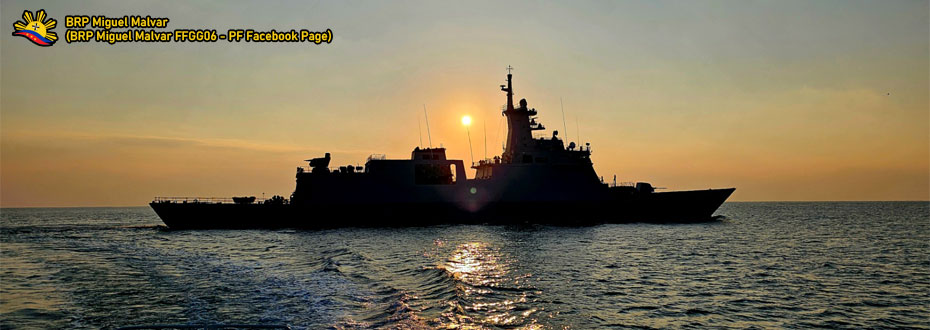
Previously bought vessels that are now part of the Philippine Navy’s Offshore Combat Force units from the turn of the 2010s are the following warship classes: three (3) Del Pilar-class offshore patrol vessels (previously classified as patrol frigates) which were Hamilton-class cutters of the United States Coast Guard, one (1) Conrado Yap-class corvettetwo (2) Jose Rizal-class guided missile frigates, and two (2) Miguel Malvar-class guided missile frigates.

Added to the list are the vessels belonging to the Philippine Navy’s Sealift Amphibious Force, ‌which this includes the two (2) Tarlac-class Landing Platform Docks bought from PT PAL Persero of Indonesia, and five (5) Ivatan-class landing crafts, which are basically former Balikpapan-class patrol crafts from Royal Australian Navy. Also, the Littoral Combat Force receives the Acero-class Fast Attack Interdiction Craft - Missile (FAIC-M), and the succeeding variants of the multipurpose attack craft (MPAC).

In the active pipeline of acquisition, the Philippine Navy receives two (2) Rajah Sulayman-class offshore patrol vessels out of six (6) ordered from HD Hyundai Heavy Industries, plus two (2) additional Miguel Malvar-class guided missile frigates ordered under the Full Complement Acquisition Program. Also included in the active pipeline is the likely transfer of the Abukuma-class destroyer escorts to the Philippine Navy from the Japan Maritime Self-Defense Force.

With the significant increase in the number of large hulls of eighty (80) meters above within the Philippine Navy’s own fleet, the question of facilities that will accommodate is unavoidable, as this usually comes as a follow-on question in a logical scheme of things of operating such capital naval assets that defend the country’s territorial and exclusive economic zone waters. And in terms of naval facilities and operating bases, the answer usually lies way beyond the recognizable waters of Naval Operating Base Subic.

DEFINING A NAVAL BASE AND OTHER FACILITIES
A naval operating base or station ideally comes with facilities that can sustain both naval assets and the personnel who own its planks, regardless of nomenclature.
Screenshot from Naval Shipyard 78th Anniversary AVP

When defining a full naval base or facility, one that comes to mind is‌ how the primary one in Subic comes that is relative to its structure and its full description, as what the Philippine Navy did was to take a portion of a former South Korean shipyard that since then bankrupted and then divided into parts, with the other parts of the former shipbuilding complex occupied by the likes of HD Hyundai Heavy Industries Philippines, a subsidiary branch that produces full naval vessels for the fleet.

At its basic definition, a naval base is an area of command for a naval force assigned to the area, and also serves as a primary hub that provides the logistical, administrative, and operational requirements needed in operating a fleet, ensuring its prolonged sustainment of naval support for maritime security operations needed for an archipelagic nation like the Philippines. Of course, this definition also intertwines what defines a naval station in terms of nomenclature that describes it.

Sticking to the nuances that will appropriately describe a Naval Operating Base in the Philippine setting, it is a primary hub that has the aforementioned features and attributes as already provided in its said basic definition, plus added berthing spaces for multiple naval assets of the fleet of large sizes to dock. The added space is a necessity, especially with the new, larger hulls that the service branch slowly introduced to the fleet as part of the ongoing capability expansion plans under its sail plan initiative.

Typically, a Naval Operating Base has expanded capabilities than that of the Naval Stations that the Philippine Navy has across the country, as the former usually come with facilities that can actually maintain the naval vessels that the service branch has, with personnel belonging to the Naval Shipyard unit providing the support mechanisms and expanded facilities required in sustaining both the ships and its personnel, along with providing additional space for berthing warships that moors in dedicated piers.

In comparison, a naval station in the Philippine Navy’s setup, setting aside Naval Station Pascual Ledesma - Fort San Felipe in Cavite (see image above), usually comes as a small naval installation deployed in areas across the country, with facilities sufficient to accommodate smaller vessels and at least one (1) or two (2) large naval assets of the Offshore Combat Force. While it might have facilities that can maintain naval vessels, its scope limits itself only to small vessels assigned to a naval station.

PLANNED NAVAL FACILITIES OTHER THAN CAVITE AND NOB SUBIC
Aside from NOB Subic and Naval Station Pascual Ledesma Fort San Felipe, the Philippine Navy aims to further develop Naval Station NABASAN, Naval Base Rafael Ramos, and Naval Support Base Misamis Oriental.
Screenshot from Naval Shipyard 78th Anniversary AVP

In the audio-visual presentation of the Philippine Navy’s Naval Shipyard unit, there were one (1) existing naval operating bases that is currently undertaking comprehensive and expanded construction works, one (1) expanded wharf near the vicinity of an existing naval operating base, and one (1) planned naval operating base in Mindanao. These are the Nabasan Wharf, Naval Operating Base Rafael Ramos in Mactan, Cebu, and the future area within PHIVIDEC Industrial Estate in Misamis Oriental.

The Nabasan Wharf is a single naval facility situated just southeast of Naval Operating Base Subic and near the vicinity of the Subic Bay International Airport, of which the Philippine Navy has a plan to provide an expanded pier that will add the capacity over the space available in the Naval Operating Base in the area, while having an added facility that will provide extensive maintenance and logistics to the fleet vessels, minimizing the concentration of activity to the Naval Operating Base within the Subic Bay area.

Meanwhile, the Naval Base Rafael Ramos is a naval facility that is currently undertaking construction works, sitting in the area southeast of Cebu’s International Port and on the Island of Mactan facing the shorelines of Cebu City itself. This is where Naval Forces Central currently operate from, as the current plan includes reclamation works that will increase the land area of the naval base, with facilities ranging from added piers for mooring, drydock and other maintenance facilities, and barracks for personnel.

Finally, the future naval base sitting within the PHIVIDEC Industrial Estate in Misamis Oriental will come as the expanded footprint of the Philippine Navy’s complex facility will accommodate the extensive support of its troops and personnel, and will probably be the one sitting in the Mindanao area. 

Owned by the Philippine Veterans Investment Development Corporation or PHIVIDEC, the Industrial Estate in Misamis Occidental is the one that the Defense Department aims to purchase, intended for the purpose mentioned.

The two naval facilities remaining that are on the map are both the Naval Operating Base Subic itself and the Naval Station Pascual Ledesma Fort San Felipe in Cavite, of which each aforementioned naval facility will get its upgrade that will serve the intended purpose of providing expanded care for the Philippine Navy vessels respectively belonging to both the Offshore Combat Force and the Littoral Combat Force, ensuring the smooth flow of operations resulting from the upkeep of the fleet and its personnel.

THE PLEA FOR EXPANSION
The future naval base in PHIVIDEC Industrial Estate in Misamis Oriental still awaits development.
Screenshot from Naval Shipyard 78th Anniversary AVP

While the plans presented by the leadership for improving and expanding the footprint of the Philippine Navy across the country come as a welcome development on their own, the pace at which the developments undertaken at the time this article has published presents the underlying concern, specifically regarding to its materialization timeline as compared to the fast turnout of the newly produced hulls that the service branch currently has in its timeline.

Apparently, it points to the complete absence of any development in the future PHIVIDEC Industrial Estate in Misamis Oriental citing the need for land titling, along with the slow progress of both the reclamation and construction of key facilities in Naval Base Rafael Ramos in Mactan Cebu. 

Both of which might present additional problems down the road, especially in of accommodating large vessels belonging to the Offshore Combat Force in terms of infrastructure for mooring and extensive maintenance purposes.

The presented slow overall progress and absence, if lack of development thereof, presents a problem particularly that the service branch has multiple acquisition projects that is currently in the queue, and is likely to get into active service five years from the time this article gets published. Currently, there are still four (4) offshore patrol vessels in production on top of two (2) already in service, plus the added order for two (2) additional full complement frigates along with the plans of transferring several Abukuma-class destroyer escorts and some other hull that the service branch has plans of in the future.

Going further into ongoing plans for development, there were expansion plans that did not come to fruition, as naval facility-building has ties to the primary key acquisition program of the Philippine Navy that has prospects for ‌expanded capability building. 

One of the said proposals presented involves Naval Group, a French shipbuilder, whereby they gave a facility development proposal for Naval Operating Base Subic plus a submarine pen attached to its Scorpene offer for the service branch’s Submarine Acquisition Project.

Of course, the shortcomings mentioned do not dismiss the ongoing efforts of the leadership within the service branch and the Armed Forces of the Philippines at large in expanding its footprint in the country and in plans of adding facilities for added logistical and maintenance purposes, although the acknowledgement presented between the timeline difference of introducing new hulls to the fleet and building the facilities that can accommodate and upkeep such hulls is a necessity for its immediate resolution.

LOOKING FORWARD
While part of the Philippine Navy's naval facilities expansion, Naval Detachment Oyster Bay deserves its own separate topic.
From Prime Marquez Portfolio WordPress.

Modernizing the Philippine Armed Forces goes beyond just talking about the specifications of military hardware or even the numbers that the end user from any of the three service branches of the organization, as the rationale of procurement also likely comes with the consideration not only with the sound doctrine that the Philippine military tries to achieve, but also on the current availability of facilities and the plans laid into expanding it to accommodate the expansion of bought military hardware.

The ongoing plans of the Philippine Navy into expanding its existing naval facilities and even going further than just establishing new ones serve as a testament of their ongoing pursuit of an enlarged footprint, aiming that an expanded coverage will help the service branch carry out their intended mandate, ensuring smooth operations of their naval assets maintained into prospective additional facilities for upkeep, while complementing the presence made by multiple naval stations dotted across the country.

Of course, while this topic only entails the expansion of the service branch’s primary naval facilities as mentioned, there are other areas in the country that sees development that have not discussed thoroughly in this article, such as the case of ongoing expansion taking place in Naval Detachment Oyster Bay that involves a dedicated facility intended for unmanned surface vessels or USVs. Given its unique nature, the developments relating to the Palawan-based naval detachment will come with its own discussion.

Focusing once again on the aforementioned primary naval facilities mentioned, there is a mix of optimism and a plea where, in summary, comes with the intention that the ongoing developments surrounding the planned expansions of existing naval bases and opening additional ones should have the implementation with time element into consideration, as the pace of modernization comes not only with the timely delivery of vessels under the contract but also on the overall readiness in having available facilities for its sustainment.

Ultimately, the expansion of the primary naval facilities of the Philippine Navy and the service branch’s footprint of an expanded presence for its sustainment infrastructure across the country comes alongside its ongoing pursuit of fleet expansion aligning to the ongoing Revised AFP Modernization Program, as its establishment comes as equally important to the procurement of highly capable hulls packed with firepower that is a usual theme among the discussions surrounding military defense and security at-large.


(c) 2026 PDA.
Published from a station in Eastern Visayas. 


Share:

Philippine Navy's Additional Anti-Submarine Helicopter Procurement

As the Philippine Navy increases the number of ships in its fleet, followed by the successful awarding of the Frigate Acquisition Project - Full Complement for the construction and delivery of two (2) additional Miguel Malvar-class guided missile frigates by HD Hyundai Heavy Industries, adding more anti-submarine helicopters into the fleet comes as a follow-on to this development relating to the service branch's ongoing fleet expansion.

AT A GLANCE
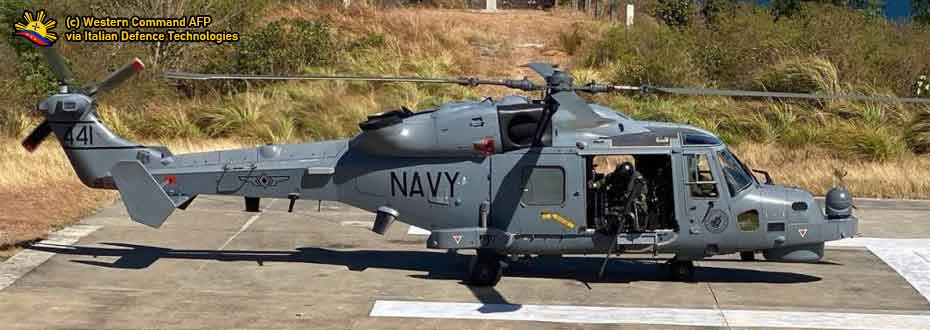
A single AW-159 Wildcat anti-submarine helicopter of the Philippine Navy on display.
Image Source.

Through the end of the year 2025, the service branches under the Armed Forces of the Philippines are securing one project after the other, especially with the Philippine Navy securing most of its fleet expansion and capability building programs as highlighted in the Procurement Monitoring Report issued by the Department of National Defense encompassing the second half of the said year. We already discussed one project as covered in this monitoring report, involving the purchase of two additional frigates.

Another project of the Philippine Navy covered in the procurement monitoring report covers the purchase of additional Anti-Submarine Warfare (ASW) Helicopters for the Philippine Navy, whereby it secured both the contract and the notice to proceed documents on December 29, 2025, just days before the calendar year ends. The pre-procurement conference took place on September 30, 2025, with Negotiated Procurement being the mode of acquisition as prescribed in Republic Act 12009.

The deal, which comes through an items-based form of procurement, will probably come with the Philippine Navy dealing with the Italian defense manufacturer Leonardo, involving the production and delivery of at least six (6) AW-159 Wildcat anti-submarine helicopters for the service branch's Naval Air Warfare Force unit or NAWF. 

Currently, the unit maintains and operates at least two (2) AW-159 Wildcat anti-submarine helicopters, typically in tandem with the Jose Rizal-class guided-missile frigates currently in service.

Amounting to Php 42.290 billion at its contract price, this is one of the most expensive acquisition project that the Philippine Navy has undertaken at the time this article gets published, at par to the contract price for two (2) additional HDF-3200/Miguel Malvar-class guided missile frigate under the Frigate Acquisition Program - Full Complement, which has a contract price of Php 42.195 billion. This increases the number of AW-159 Wildcats in Philippine Navy service to at least eight (8) units.

In this discussion, the details will delve less on the platform itself, as this was covered in a previous article on this website published in 2019, referring to the two first units already serving the service branch ever since. Instead, the details will cover the lineup of current and future naval warships for the six (6) AW-159 Wildcat anti-submarine helicopters that might get assigned into, along with the anti-submarine capabilities that came with the units ordered by the service branch.

THE DEAL WITH THE ITALIAN DEFENSE SUPPLIER
The AW 109 helicopter currently maintained by the Philippine Air Force.
From Jet Photos.

Since the start of the Revised AFP Modernization Program Horizon Levels in 2013, the Italian defense supplier Leonardo (then Finmeccanica) has provided rotary aerospace support for the Armed Forces of the Philippines as its weaponry requirements becoming more complex and expensive over time, as this is exhibited with the type of helicopter and the number of units that a service branch of the Philippine military has bought through the years through this supplier.

For context, the Philippine Air Force bought at least eight (8) AW 109 helicopters for its air support operations in a contract signed on November 2013, making it as the service branch’s mainstay attack helicopter until the purchase and arrival of the six (6) T-129 ATAK helicopter that they bought from Turkish Aerospace Industries through a contract that was signed in July 2020. The contract price for the Turkish-made attack helicopters amounted to US$269 million or Php 12.9 billion.

With the contract price of Php 3.441 billion during the contract signing in 2013 (Php 5.178 billion as adjusted to inflation), the perspective of the AW 109 helicopters bought by the Philippine Air Force today might count as a minor one compared to the current budgetary requirements for the purchase of six (6) AW 159 Wildcat anti-submarine warfare helicopters, as the latter comes with more complex and more sophisticated sensors and weaponry onboard fitting for anti-submarine operations.

The presented numerical perspective gives an insight into the growth of the relations between Leonardo as the supplier and the Armed Forces of the Philippines through the Philippine Navy as the end-user, although this deal comes at the basis of an inventory-based form of procurement, whereby the aforementioned service branch already has the skills and experience maintaining and operating the AW 159 Wildcat Helicopters, with the aim of just adding the units being the most logical way to go.

As the deal involves the purchase of six (6) units of anti-submarine warfare helicopters meant for the operational requirements of the Naval Air Warfare Force (NAWF) as a support component of the Philippine Navy’s Offshore Combat Force (OCF) and its primary naval combatants deployed at sea, the next point of discussion will delve primarily to the naval vessel composition of the Philippine Navy fleet where these naval helicopters will probably end up getting assigned into, along with its crew.

THE FLEET COMPOSITION AND PROJECTED HELICOPTER ASSIGNMENT
The Miguel Malvar-class guided-missile frigates are among the likely recipients of the new anti-submarine helicopters. 
From Clinton J Down Photography, via Image Source.

The orders made for the additional AW 159 Wildcat anti-submarine helicopters always gives correspondence to the tandem of warships that the units are most likely get assigned into, as this completes the capability of the Philippine Navy’s formidable combatant vessels relating to the detection and eliminating any underwater threats that are lurking in areas of concern, specifically on areas of water that are within the country’s archipelagic geography during the times of heightened conflict in a scenario.

For context, the purchase of two (2) AW 159 Wildcat anti-submarine helicopters in 2019 goes in tandem to the purchase and construction of two (2) Jose Rizal-class guided missile frigates that have gotten delivered in 2020 and 2021 for both BRP Jose Rizal and BRP Antonio Luna, respectively. 

This means that the purchase of both the ship and the helicopter forms a comprehensive anti-submarine warfare package for the Philippine Navy that applies to the purchase of six (6) additional anti-submarine helicopters of the type.

In this current setup, two (2) units out of six (6) units ordered will go to the newly commissioned guided missile frigates of the Philippine Navy from 2025, namely the ships BRP Miguel Malvar and BRP Diego Silang, respectively. The other two (2) units will go to the pair of ships produced under the Frigate Acquisition Project - Full Complement Program, which are basically a repeat order of the Miguel Malvar-class frigates already in service with the fleet, increasing the number of such ships in the class to four (4) vessels.

This leaves the remaining two (2) units ordered under this program for anti-submarine warfare helicopters, whereby it will go as intended by the end-user, either as a land-based anti-submarine platform or as a complementary one for the likely second batch of vessels under a new iteration of the Corvette Acquisition Project - similar to the one that the Philippine Navy did for the Frigate Full Complement Program that are now under construction in HD Hyundai shipyard at the time of this writing.

Upon completion, eight (8) anti-submarine warfare helicopters will form part of the Philippine Navy’s added capabilities in conjunction to the guided missile frigates already in service, plus two (2) more vessels should the service branch pursue it, whereby it adds the coverage into the territorial and exclusive economic zone waters of the country against threats that are lurking beneath the surface, where it will surely disrupt the country’s economic activity at the time of conflict.

KNOWING THE THALES UNDERWATER FLASH DIPPING SONAR
Dipping sonar systems play a crucial role in an anti-submarine helicopter's capability.
Image Source.

One crucial capability of an anti-submarine helicopter that was not previously discussed on previous articles made relating to this topic involves an essential detection feature that not only helps detect a submarine at a glance but also helps triangulate the detection of submarines, enabling both the helicopter pilots and crew onboard a surface combatant warship to close coordinate for eliminating the target from threatening the national interest of an archipelagic country, especially if it took place within territorial waters.

This essential capability refers to the anti-submarine helicopter’s own flash-dipping sonar, whereby it plays a crucial role in detecting submarines that is complementary to a warship’s hull-mounted and towed array sonar systems installed onboard. 

The said feature enables the navy to detect submarines without having much risk of retaliating back, as employing active sonar system features to detect submarines also reveals the location of the ping’s origin, making an unprepared vessel vulnerable to counterattack.

For the Leonardo AW-159 Wildcat anti-submarine helicopters that the Philippine Navy currently has, plus the additional units already on order, such capability comes through the Thales Underwater Flash Dipping Sonar, which comes from the supplier that provides the CAPTAS family of towed array sonars that have offered to the service branch for its surface combatants belonging to the Offshore Combat Force as shown in a demonstration during the 2024 Asian Defense and Security (ADAS) Exhibition in the country.

The Thales Underwater Flash Dipping Sonar comes with its own capabilities, one of which is already given among dipping sonar systems, which is to minimize exposure while hunting a submarine

Its capabilities also come with optimization regarding the automation of its deployment and recovery, giving added agility to the anti-submarine helicopter’s performance during demanding operations, aside from having an optimization of its detection by having a 750-meter maximum depth deployment. 

Already operated by eighteen (18) navies worldwide, including the Philippine Navy, the dipped sonar system provided by Thales for the AW159 Wildcat anti-submarine helicopters help complete the performance needed for these units as intended for its original design elements, as this gives an essential tool for the service branch’s Offshore Combat Force personnel to conduct operations that deter underwater threats that put risk both on security and maritime logistics lifeline of the country.

ENDING NOTE
The AW-159 Wildcat anti-submarine helicopter will be the Philippine Navy's mainstay ASW helicopter platform.
Image Source.

The purchase of six (6) additional anti-submarine warfare helicopters for the Philippine Navy provides a significant benefit not only in expanding the capabilities of the service branch’s Naval Air Warfare Force in deterring underwater threats, but also gives expanded detection coverage of the country’s continental shelf domain, as it is the duty for an archipelagic country like the Philippines to ensure the safety and security of the country’s maritime-related national interest.

This also presents an opportunity for the supplier, like Leonardo, to expand its share in the Philippine defense market, adding up to the portfolio of products successfully sold to the Armed Forces of the Philippines that are still in operation at the time this article has been written. 

Aside from the expanded market share, this also gives expanded benefits for a streamlined supply chain for spare parts support for the helicopter’s upkeep, as sharing a similar type provides smooth logistics and learning skills on its operations.

To add further, the additional AW-159 Wildcat anti-submarine helicopter presents itself as a continuous investment of both the Department of National Defense and the Philippine Navy in its expanded capabilities under the Revised AFP Modernization Program as enacted under the Republic Act 10349, as this comes in tandem with the ongoing and future fleet expansion projects of the service branch. The Miguel Malvar-class guided-missile frigates are among the recipients of this development.

With the ongoing purchase of additional frigates under the Frigate Acquisition Project - full complement and the likely plans for the future purchase of corvettes, the numbers presented for additional AW-159 Wildcat anti-submarine helicopter orders give sense, as its designed role in the fleet usually goes complementary to the ship it gets assigned into, especially with the ship’s onboard sensors and weapons suite also comes with hunting underwater threats like submarines in mind.

On its entirety, the Philippine Navy’s additional anti-submarine warfare capabilities presents an opportunity for the fleet to increase its capabilities on this specialized field, coming alongside its proposals relating to the purchase of its own submarines that gives added symmetry to the warfare dynamics that intertwine the country’s geography to its aspirations for a comprehensive Maritime Domain Awareness. This forms part of an external defense posture that is not limited to just weapons and arms purchases.


(c) 2026 PDA.
Published from a station in Eastern Visayas. 
Share:

Frigate Full Complement Project - Additional Miguel Malvar-class FFG

After the outstanding success of the two Miguel Malvar-class frigates delivered under the Corvette Acquisition Project, the Philippine Navy now embarks on another acquisition program, which now calls for the purchase of two (2) additional frigates under the project entitled 'Frigate Acquisition Project - Full Complement'.

As the project becomes clear that its direction aims on basically a repeat order of a naval asset already in service within the Philippine Navy fleet, this discussion aims primarily to this acquisition program where different designs got presented as usual, until the contract signing and confirmation that gives an affirmative on what is ideally be the increase of number of ships belonging to the same class of vessels in service.

OVERVIEW - THE CONTRACT HAS JUST SIGNED
The BRP Miguel Malvar (FFG06) mooring at port with signal flags raised on the mast as part of the commissioning ceremony activities.
The BRP Miguel Malvar (FFG06), mooring at port during the commissioning ceremony.
Image (c) Philippine Navy

In the final days of the year 2025, specifically on the day of December 26, the Department of National Defense signed a contract with HD Hyundai Heavy Industries for the purchase of two (2) additional frigates under the Frigate Acquisition Project - Full Complement Program, which come as an ongoing defense partnership between the DND and the said South Korean shipbuilder, now totalling at least twelve (12) ships ordered under this arrangement.

The frigate mentioned in this deal involves the production and delivery of two (2) frigates based on the HDF-3200 design, from which the Miguel Malvar-class frigates currently serving in the Philippine Navy, derives from. 

With the mention of the design at hand, it gives a clear signal that the service branch now likely aims to streamline its fleet of ships, as this inventory-based item of a purchase will come likely as a repeat order of the Miguel Malvar-class frigate, with it having its own set of subcomponent upgrades.

The update regarding the Frigate Acquisition Project - Full Complement’s procurement phase reflects on the Procurement Monitoring Report released by the Department of National Defense for the second half of 2025, showing that the department’s bids and awards committee took only five (5) months from pre-bid conference into the contract signing and issuing the notice to proceed document, easing the materialization of documents for the production to start.

Adding to this is that choosing a proven design and the one already serving within the Philippine Navy will surely lessen the time required to undertake the needed Critical Design Review, in which will give shorter time between the notice to proceed issuance to the delivery of ships to the Philippine Navy fleet. 

The move will also increase the number of Miguel Malvar-class frigates to at least four (4) vessels, with more likely to come , depending on the discretion of the leadership.

In this writeup, it will only delve on the primary key details relating to the Frigate Acquisition Project - Full Complement, on the other designs considered before settling into getting the additional Miguel Malvar-class frigate, the subsystems that will probably find its way on the new ships that are currently absent on the warships currently serving in the fleet, and other relevant details that will give a full scope encompassing this key topic under the Philippine Navy’s capability upgrade efforts.

THE FRIGATE ACQUISITION PROJECT - FULL COMPLEMENT PROGRAM
A scale model of the HDF-3500 design presented at HD HHI booth during the 2024 ADAS exhibition.
The eyes initially looked at this HDF-3500 frigate design, until the Procurement Monitoring Report confirmed that it is an item-based approach, suggesting a repeat order of the Miguel Malvar-class.
File image from ADAS 2024.

This program presented itself as the second iteration of the Frigate Acquisition Project as part of the Philippine Navy’s ongoing modernization efforts, amounting to Php 34 billion in contract price for Lot 1, encompassing the delivery of at least a pair of guided missile frigates complete with armaments onboard (hence, the full complement description), while a separate lot is for the delivery of the ship’s onboard munitions, ranging from missiles to the ammunition of the 76mm main gun and the Close-In Weapons System.

Before the awarding of the contract to HD Hyundai Heavy Industries, the design preferences for this acquisition project of the Philippine Navy narrowed down to only two (2) designs, both of which were presented by the South Korean shipbuilder during the 2024 Asian Defense And Security (ADAS) Exhibition. 

The designs mentioned refer to both the HDF-3200 frigate design that became the Miguel Malvar-class guided missile frigate, and the larger, 129-meter HDF-3500 frigate design.

As expected, the initial prospects went to the larger HDF-3500 design, of which it sports a larger hull, a bridge design similar to the Rajah Sulayman-class Offshore Patrol Vessels, a superstructure portion that linked the bridge to the exhaust funnel, and a similar design and subsystems principle found onboard the Miguel Malvar-class frigate with the 76mm Oto Melara Super Rapid Gun, 16-cell Vertical Launch System, a GOKDENIZ CIWS, 8-cannister C-Star anti-ship missiles, and two (2) triple-tubed torpedo launchers.

Since it is more of an item-based procurement, the awarding of the project to HD Hyundai Heavy Industries will probably be a repeat order of the Miguel Malvar-class frigate, which means the design will stick to the all-familiar HDF-3200 frigate design. 

This means that there is a lesser need for a critical design review, and a delivery date before the year 2028 will be achievable, provided that the queue for the remaining Rajah Sulayman-class OPVs gets cleared for the frigate construction to start.

With the prospects for a four (4) unit Miguel Malvar-class frigate for the Philippine Navy, the next case for this discussion will probably dwell on the current fleet configuration of the Philippine fleet’s Offshore Combat Force or OCF, as it already has four (4) frigates already serving the fleet as of this time the article gets published, composing of two (2) Jose Rizal-class frigates, and the two (2) Miguel Malvar-class frigates that have joined the fleet recently.

THE FLEET COMPOSITION AND THE NAVY SAIL PLAN
Here is an infograph of the Philippine fleet's Capability Upgrade Program or CUP, divided into four (4) parts.
Here is one of multiple iterations of the Philippine Navy's Sail Plan, of which this one calls for the fleet to get at least six (6) frigates.
Image from the Philippine Fleet.

In the original Philippine Navy desired force mix that was presented in the early 2010s when the Revised AFP Modernization Program was a newly enacted law, the fleet calls for at least six (6) frigates for its operational requirements, of which it originally aims for anti-air warfare capabilities. The same sail plan calls for at least twelve (12) corvettes that specialize more on anti-submarine warfare, creating a distinction of roles between the two types of vessels in the fleet.

From this point of view, this will mean that the frigate acquisition project - full complement will be the final one, as the Jose Rizal-class frigate and the first pair of Miguel Malvar-class frigate already in service, with the pair of Miguel Malvar-class repeat orders under the said acquisition project completing the minimum six (6) frigate requirements. 

That, of course, might still depend on the leadership’s discretion, as reclassifying the Jose Rizal-class to corvettes might mean another room for 2 more frigates to purchase.

In this hypothetical scenario, if the Jose Rizal-class frigates got reclassified as corvettes, then it gives the impetus for the purchase of two (2) additional frigates, likely another repeat order of the Miguel Malvar-class frigate, to satisfy the six (6) frigates that the desired force mix calls for. But this hypothetical scenario only applies if the desired force mix is still the one that the Philippine Navy follows,‌ which changes are already taking place since its first iteration in the early 2010s.

Ultimately, hypothetically securing at least six (6) Miguel Malvar-class frigates or another repeat order after the current procurement of two (2) frigates from this class will adhere to the rule of three (3) arrangement for ship deployment cycles, whereby one ship undertakes maintenance schedules and routine subcomponent upgrades, the second ship conducting actual naval operations underway, and the third ship on standby, ready for deployment at a moment’s notice, all ensuring the combat readiness of the naval force.

As the Miguel Malvar-class frigate might likely end up increased to four (4) ships operating by the Philippine Navy following the repeat order, a procurement for another batch of two (2) warships of this class won’t be that bad for the leadership planning to consider, as it gives optimization for the operation of the frigates for deployment, balancing its time on undertaking maintenance downtimes and on its actual at-sea operation requirements.

THE ‘FULL COMPLEMENT’ DESCRIPTION
Thales presentation with their offer of the CAPTAS-1 Variable Depth Sonar to the Philippine Navy warships.
Thales offered the CAPTAS-1 Variable Depth Sonar to the Philippine Navy.
(c) Thales, via Naval News.

One thing noticeable in this second batch iteration of the frigate acquisition project is its added description for ‘full complement’, which is an impression that this project will come with complete subsystems onboard, something that is absent on both the first frigate acquisition project that came the Jose Rizal-class guided missile frigate (FF), and the corvette acquisition project that eventually get reclassified into what is now the Miguel Malvar-class guided missile frigates (FFG).

The first thing that comes into mind in discussing the ‘full complement’ part of purchasing two (2) additional guided missile frigates for the Philippine Navy to use is on the towed array sonar inclusion into the ship’s construction, of which it initially comes absent from the purchase of Miguel Malvar-class frigate of the Philippine Navy and counts as a separate purchase under the ‘fitted for, but not with’ or FFBNW scheme. This project now has this subcomponent as part of the package.

There are multiple towed array sonar solutions that the second batch of Miguel Malvar-class frigates might take, of which there are still no final details on the specific sonar solutions for consideration. One potential candidate for a sonar solution will be the Thales CAPTAS family of sonars, specifically the CAPTAS-2 sonar variant. The cheaper CAPTAS-1 sonar variant that Thales offered to the Philippine Navy during the Asian Defense and Security Exhibition (ADAS) 2024 will also count as a preferable candidate.

While there are no certain specific solutions for the frigate acquisition project - full complement’s towed array sonar system, its inclusion already gives a boost to the capabilities of these repeat order of the Miguel Malvar-class guided missile frigates, so much that they may get the first two (2) ships of the class already in service in the Philippine Navy undertake its first repair/maintenance schedule to receive a similar system for commonality on capabilities.

Ultimately, the capabilities that will probably be found on the full complement version of the Miguel Malvar-class guided missile frigate will probably find their way to the first two ships of the class, effectively making the batch 2 procurement of the additional guided missile frigate a primary basis on improving the capabilities of existing ones in the fleet. This effectively gives both commonality and expanded fleet size, which might serve as a reference for future repeat orders, especially if they are to be pursued. 

IN SUMMARY
The lead ship BRP Miguel Malvar (FFG06) moored off an area of water within the country.
BRP Miguel Malvar moored at port.
File Image.

The Frigate Acquisition Project - Full Complement Program of the Philippine Navy incorporates previously absent subsystems that counted as ‘Fitted For, But Not With’ into the new ships, which then will count as a fully packaged guided missile frigates with new subsystems that might get its way onboard will eventually trickle to the other active vessels on the fleet, expanding the capabilities on the broader ecosystem provided by the service branch’s Offshore Combat Force.

On the area of warship design, the decision of sticking to the HDF-3200 frigate variant that the Miguel Malvar-class guided missile frigates are based on makes it ideal for the Philippine Navy’s delivery prospects, particularly in the sense that significant time for a critical design review gets reduced as they choose a design already approved previously for end-user requirements. This will hasten the time needed for the construction of the ships and eventually their introduction into the fleet.

Aside from faster construction and delivery date, the decision of having the Frigate Acquisition Project - Full Complement based on the HDF-3200/Miguel Malvar-class guided missile frigate design also helps the Philippine Navy streamline its commonality and logistical chain in training, operating, maintaining, and sourcing spare parts for the upkeep of the vessels, as keeping similar design features helps identify the areas for troubleshooting and improvements better.

With the current numbers now increased to at least four (4) frigates of the type, it will not be surprising if the Philippine Navy pursues more of this proven ship design for its expanded fleet of surface combatants that form the Miguel Malvar-class guided missile frigate, as it gives the effectivity of it being the backbone of the fleet’s offshore combat force capabilities, especially as part of a naval force that augments the security of the country’s national territory as the current focus of the Philippine Armed Forces.

Ultimately, this might help the fleet improve and secure a formidable naval force that secures the country’s territorial and exclusive economic zone waters, befitting for an archipelagic country surrounded by multiple bodies of water that it serves as a vital lifeblood of the entire nation, from providing food security to its citizenry through the vast marine resources it contains through shipping lanes that drives economic growth and development. 

All of which gives importance to the role of a formidable navy in securing the country’s survival.


(c) 2026 PDA.
Share:

Strategic Importance of a Northern Luzon Naval Base In The First Island Chain

The Bashi Channel serves as a strategic point, not only for the trade of goods that passed through this body of water, but also as an important passage for Chinese naval vessels into the Pacific Ocean, playing its crucial role in its purported plans of conquering the small island nation of Taiwan.

This important strategic point also comes with a great responsibility for the Philippine Navy, as it fits well into their domain given that the Bashi Channel sits well between Taiwan and the Philippines, particularly in its proximity to the province of Batanes. 

The presence of key military sites under the Enhanced Defense Cooperation Agreement under the Philippines and the United States near the area highlights that responsibility that goes beyond the country's national security efforts, and well within the scope of the strong bilateral alliance of both countries since the ratification of the 1951 Mutual Defense Treaty.

This article, as contributed by DreTheGrater here on Pitz Defense Analysis, highlights such concerns, as its national security importance is as equal, if not greater than the threats posed by Chinese vessels in the West Philippine Sea.

We like and appreciate DreTheGrater in his research work, considering that this is the first for the Pitz Defense Analysis website to have a guest writer.

Most of the Philippine Navy's bases in Luzon lie in the western part, such as NOB Subic, which comes with an expanded proposal at one point. 
Image from Naval Group, via Naval News.

INTRODUCTION: STRATEGIC CONTEXT AND REGIONAL OBSERVATIONS

China’s recent announcement and execution of large-scale military exercises, designated “Justice Mission-2025,” conducted on 30 December 2025 in the immediate vicinity of Taiwan, once again highlights the rapidly evolving security environment in the Western Pacific. More importantly, it disclosed how preparedness, geography, and infrastructure directly shape a state’s ability to respond to emerging contingencies.

Taiwan’s reaction was both swift and coordinated: the Republic of China Navy (ROCN) was able to deploy surface combatants and supporting assets with minimal delay, encountering no significant logistical or operational friction.

This level of responsiveness is not incidental. It reflects decades of sustained investment in forward-deployed bases, hardened facilities, and an integrated naval, air infrastructure designed to support continuous operations under pressure. Taiwan’s experience reinforces a broader strategic lesson: deterrence is not defined solely by platforms and weapons systems, but by the ability to move, sustain, and command forces at speed.

In this context, a clear contrast emerges with the Philippine posture in Northern Luzon. While the Philippine Navy (PN) maintains a presence through the Northern Luzon Naval Command (NLNC), the region continues to suffer from limited infrastructure depth and restricted operational flexibility. As regional military activity intensifies and strategic competition expands north of the Philippine archipelago, the development of Northern Luzon becomes increasingly critical. Strengthening this area is not merely a matter of regional development, but a necessary step in building a layered defense network capable of constraining external freedom of movement and reinforcing deterrence along the Philippines’ northern maritime approaches.

CHALLENGES WITH NAVAL BASE CAMILO OSIAS AS A NAVAL FACILITY

Naval Base Camilo Osias is officially designated as one of the four major naval bases of the Philippine Navy and is also included as a joint-use facility under the Enhanced Defense Cooperation Agreement (EDCA) with the United States. However, despite its formal classification, the base currently falls short of functioning as a fully capable naval operations hub comparable to Subic Bay or the future facilities planned in Cebu and Misamis Oriental.

At present, Naval Base Camilo Osias operates with limited infrastructure. The base features a modest airstrip and aircraft facility measuring approximately 870 meters in length, a handful of detachment offices, personnel barracks, and a small pier or wharf that is likewise shared with civilian fishing activities. In practical terms, the installation functions more as a naval station than a true operational base capable of sustaining major surface or air operations.

The existing pier infrastructure can only accommodate vessels below 100 meters in length. This restriction confines operational use to smaller ships primarily suited for littoral and near-shore missions within the waters of Cagayan and the Batanes group of islands. Such limitations significantly constrain the Philippine Navy’s ability to surge forces, conduct prolonged patrols, or support larger combatants in a contingency scenario in the Luzon Strait or surrounding areas.

Prospective plan for Naval Base Camilo Osias, an EDCA site in Santa Ana, Cagayan Province.

STALLED DEVELOPMENT AND UNREALIZED POTENTIAL

The strategic importance of Naval Base Camilo Osias was highlighted in 2023 when it was designated as one of the additional EDCA sites. At the time, discussions between the Philippine and United States governments included proposals to upgrade the existing airstrip and construct a larger naval pier capable of supporting heavier vessels. These improvements were envisioned as force multipliers that would allow both nations to enhance operational reach, improve interoperability, and strengthen forward presence in Northern Luzon.

Via Philippine Navy.

Despite these plans, visible progress on infrastructure development remains limited. The absence of tangible upgrades underscores a broader issue: strategic intent without timely execution risks leaving critical gaps unaddressed, particularly in an environment where regional military posturing continues to accelerate.


EXISTING SOLUTIONS AND PATHWAYS FOR IMPROVEMENT

Given its EDCA status, Naval Base Camilo Osias presents a viable platform for joint Philippine Navy-United States Navy development. The question, therefore, is not whether development is possible, but rather how it should be prioritized to generate the greatest operational value.

U.S. Navy Lt. Cmdr. Michael Dobling, left, commander of Underwater Construction Team 2, gives a coin to a Philippine navy sailor at Naval Base Camilo Osias, Santa Ana, Cagayan, Philippines, May 11, 2018. (Kryzentia Richards/U.S. Navy)
Image Source.

First, the construction of a larger and more capable wharf or pier is essential. Such a facility should be designed to accommodate offshore and major surface combatants, including the Del Pilar-class and the forthcoming Miguel Malvar-class frigates. Complementing this should be the establishment of dry dock or maintenance, repair, and overhaul (MRO) facilities. These would allow hull inspections, minor repairs, and sustainment activities to be conducted locally, reducing the need for vessels to return to Subic or Misamis Oriental and significantly improving operational endurance.

Finger piers play a crucial role in naval base development.
Screen grab from Naval News.

Second, the development of the existing airstrip must be addressed. Extending the runway would enable operations by larger fixed-wing aircraft such as the C-130H and C-130J-30 Super Hercules, greatly enhancing airlift, logistics, and rapid response capabilities. This effort could be undertaken as a joint initiative between the Philippine Air Force and the Philippine Navy, enabling a more integrated maritime-air operational framework. Such an upgrade would also support the sustained deployment of platforms like the Hermes-900 UAV and the ATR-72 Long-Range Patrol Aircraft, expanding surveillance, reconnaissance, and maritime domain awareness across the northern approaches.
C-130 Hercules of the Philippine Air Force.
Image Source.

Third, additional facilities to support Marine and naval personnel movement are required. Expanded barracks, command offices, and staging areas would allow the base to host rotational and forward-deployed units, effectively transforming it into a secondary operational hub rather than a purely administrative outpost.

HISTORICAL PRECEDENT AND OPERATIONAL LESSONS

The 2013 Balintang Channel incident between the Philippines and Taiwan offers a clear illustration of the advantages conferred by forward naval infrastructure. During the incident, the ROCN rapidly deployed twelve naval vessels, including destroyer-type ships, to monitor and escort Philippine naval elements operating in the area. This demonstrated how proximity, readiness, and infrastructure can decisively shape operational outcomes, even in limited or non-kinetic confrontations.

Taiwanese drills that took place in the Bashi Channel at the climax of the 2013 incident.
Screen grab from Formosa News.

For the Philippines, this episode highlights the importance of having a credible and sustained naval presence in the northern region. A capable base in Northern Luzon would not only improve response time but also enhance the ability to monitor, deter, and limit the movement of external actors within Philippine waters and adjacent maritime corridors.

LONG-TERM STRATEGIC BENEFITS

The development of Naval Base Camilo Osias addresses multiple structural challenges facing the Philippine Navy. Beyond extending operational range and endurance, such an investment would help mitigate congestion at Subic Bay, particularly as major naval operations are expected to cease there by 2028 as they now slowly transition to the smaller Nabasan Wharf.

More broadly, decentralizing naval assets reduces the risk associated with over-concentration in a single location, enhances survivability in a conflict scenario, and provides greater flexibility in force deployment. A strengthened Northern Luzon naval facility would fill existing gaps in the Philippine maritime defense posture, reinforce coverage of vulnerable sectors, and contribute to a more resilient and layered maritime domain defense architecture.

In strategic terms, the development of Northern Luzon is not merely an infrastructure project, it is a necessary step toward aligning Philippine naval capabilities with the realities of an increasingly contested regional security environment.

CONCLUSION: STRATEGIC IMPLICATIONS AND THE WAY FORWARD

The case of Naval Base Camilo Osias illustrates a broader structural challenge facing the Philippine Navy: the gap between strategic intent and operational capability. While the base occupies a geographically vital position and carries formal designation as a major naval facility and EDCA site, its current limitations prevent it from fulfilling a decisive operational role in Northern Luzon. Without meaningful upgrades, the base remains constrained to low-end, near-shore missions, leaving a critical gap in the country’s northern defense posture.

Developing Naval Base Camilo Osias is therefore not a discretionary enhancement but a strategic necessity. Investments in pier infrastructure, maintenance facilities, airfield expansion, and personnel support would transform the base into a credible forward operating node. Such development would enhance deterrence, improve response time, and enable sustained presence in one of the most strategically sensitive corridors of the Philippine maritime domain.

In the long term, this approach supports the decentralization of naval assets, reduces overreliance on Subic Bay amid its impending operational drawdown, and increases survivability through dispersal. More importantly, it aligns Philippine naval planning with the realities of a contested regional environment where speed, proximity, and sustainment increasingly determine strategic outcomes.

Ultimately, the development of Northern Luzon, and Naval Base Camilo Osias in particular, should be viewed as a cornerstone of Philippine maritime defense. It represents an opportunity to translate geography into advantage, partnerships into capability, and strategy into credible operational presence.


(c) 2026 PDA and DreTheGrater.


Share:

Time

Translate

Articles

Total Pageviews To-Date

Webpage Visitors

Free counters!
